The illusion of online public opinion in Lebanon’s political conflicts · Global Voices

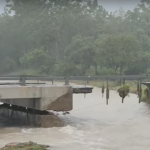
The Qasmiya Bridge on the Litani River, which connects Southern Lebanon to the rest of the country, after it was destroyed by the Israeli army on March 22, 2026. Photo by Megaphone on Wikimedia Commons (CC BY 4.0).

The Qasmiya Bridge on the Litani River, which connects southern Lebanon to the rest of the country, was destroyed by the Israeli army on March 22, 2026. Photo by Megaphone on Wikimedia Commons (CC BY 4.0).

By Mohamed Soufan

Social media platforms such as X (formerly Twitter) are often treated as reflections of public opinion, with journalists using social media trends and posts to infer broader sentiment, especially during political conflicts.

Trending topics and viral posts can give the impression of broad, representative debate. But this perception can be misleading. An analysis of online discussions related to Lebanon showed that a small minority of users can dominate visibility and interaction, with the top 1 percent accounting for more than 60 percent of total engagement.

If a handful of highly active accounts shape most of what we see, what does “public opinion” online actually represent?

A small minority

Engagement — likes, reposts, and replies — is not evenly distributed. A small group of highly active or highly visible accounts captures a disproportionate share of attention. As a result, a limited number of voices can shape narratives, amplify specific viewpoints, and set the tone of discussion.

This is not always obvious. Repeated exposure to similar messages can create the impression of consensus, even when it is driven by a narrow segment of users.

This becomes clear in a dataset I compiled of Arabic-language posts about Hezbollah on X. The dataset includes 15,767 posts from 8,148 unique users collected between March 1 and March 8, 2026. Posts were identified using Arabic-language keyword variations of “Hezbollah,” and engagement was measured as the sum of likes, reposts, and replies. Accounts were classified as media or non-media based on profile metadata, supplemented by manual review of the most engaged accounts.

The results reveal a sharp gap between participation and visibility. Non-media users make up 89.6 percent of accounts and produce 79.9 percent of posts, yet the top 1 percent of users capture 61.5 percent of total engagement. The top 5 percent capture 90.6 percent , and the top 10 percent capture 96.2 percent.

Media accounts, although only 10.4 percent of users, account for 29.6 percent of the top 1 percent most engaged users and receive roughly 34 percent more engagement per post than non-media users — about 41 interactions per post on average, compared to 31. At the same time, most total engagement (74.8 percent) still comes from non-media users because of their much higher volume of posts.

Beyond social media

The implications go beyond social media itself. In practice, journalists, researchers, and audiences often turn to X during fast-moving events to get a sense of what is happening and how people are reacting. Trending topics, widely shared posts, and visible engagement can quickly become shorthand for public sentiment.

But these signals are not neutral. Research by Shannon McGregor shows that journalists sometimes rely on social media trends as indicators of public opinion, even though the users driving those trends are not representative of the broader population. A widely shared post or a trending hashtag can give the impression of a dominant public mood, even when it reflects the activity of a relatively small and highly engaged group.

Data from the Pew Research Center shows that political activity on X is concentrated among a small share of users. When the same accounts and viewpoints dominate what is seen, they can influence how events are framed, which voices are amplified, and which perspectives are overlooked.

This dynamic can reinforce itself. Content that gains early visibility is more likely to be seen, shared, and amplified again, making certain narratives appear more widespread than they actually are.

At the same time, social media data still provides valuable insights into how information spreads and narratives form, but it requires careful interpretation. This shifts the focus from ‘What is everyone saying?’ to ‘Who is being seen and heard — and why?’

In conflict contexts, this matters. When a small group dominates what is seen, it can create the impression of consensus where there is none. For those following events in Lebanon, highly visible reactions may reflect amplification rather than widespread agreement, making online discourse a misleading signal of public sentiment.


Mohamed Soufan is an independent computational researcher and software engineer studying digital behavior, information dynamics, and real-world trends using data. His work is available at: https://www.soufan.tech/


More Recommendations

The key to saving potato cultivation amid climate disruption in the Democratic Republic of the Congo · Global Voices - CAPSA Luotu seed potato repository. Image by GreenAfia GreenAfia first published this article on September 10, 2025. Global Voices republished […]
Interactive map honors LGBTQ+ people’s historic presence in Prague · Global Voices - Screenshot of the interactive Prague Gay Map from Teplá Praha (Queer Prague). In the Czech Republic, the debate on LGBTQ+ […]
Meet Filip Ondrušek, the Austrian-Slavic chef who believes that local food reflects national history · Global Voices - Filip Ondrušek is an internationally recognized chef, ecologist and activist with Austrian and Slavic roots, who combines his interest in […]
How much will it take to rebuild Venezuela after the earthquakes? · Global Voices - Collapsed building in Tanaguarena, one of the most impacted areas in La Guaira, Ground Zero of the disaster. Photo by […]
The invisible migration: How urban refugees are powering Uganda’s economy · Global Voices - Students at Bondeko tailoring their clothes. Photo by Godfrey Luzinda. Used with permission. This article by Ayebare Cinderella was originally published […]
Kenya outlawed the sharing of Indigenous seeds. A village choir is fighting back · Global Voices - A cross-section of soil with several green sprouts emerging, including one that looks like a musical treble clef, 2 that […]
Sold as brides, lost at sea: The trafficking of stateless Rohingya girls · Global Voices - A Rohingya refugee woman stands outside the Women’s Center in Balukhali camp in Cox’s Bazar, Bangladesh. Image via Flickr by […]
Turkish tennis player Zeynep Sönmez leaves Wimbledon with pride · Global Voices - Feature image created by Arzu Geybullayeva using Canva Pro. She left Turkey full of pride, for all the right reasons: […]
In Japan, Ryūkyūan Indigenous claim hindered by U.S. military bases in Okinawa · Global Voices - A number of Ryukyuans performed their traditional songs at the People’s Forum NYC on April 26, 2026. Screenshot from the […]
Water pollution in DRC attributed to Chinese mining company · Global Voices - Some of the polluted water discharged into the city. Screenshot from the video “LUBUMBASHI: Polluted water discharged by CDM is […]
Cameroonian rice farmers caught between national ambition and rural realities · Global Voices - Farmers harvesting rice in a rice field (paddy) in Cameroon. Screenshot from the video “How to grow rice in Cameroon?” […]
Reporting when the internet goes dark: How journalists find workarounds when cut off · Global Voices - Image from iMEdD, used with permission. This article by Elli Kostika, Katerina Voutsina, and Kelly Kiki is an excerpt from […]
Healing a region: How healthcare is bringing peace to Arauca, Colombia · Global Voices - MSF set up mobile clinics in villages affected by the conflict and where access to healthcare is insufficient. In this […]
Concerns grow as Jamaica ends Cuban medical programme · Global Voices - Feature image created by Janine Mendes-Franco using Canva Pro elements. Perhaps Jamaicans should have seen this coming when the government, […]
For LGBTQ+ people in Egypt, the internet is both a lifeline and a trap · Global Voices - Illustration by UntoldMag, used with permission By Enas Kamal This story, originally published on UntoldMag, was produced under the Feminist […]
How Nigerians are coping with heat waves amid crippling power outages · Global Voices - Pollution on a Lagos street, Nigeria. Image by Boluwatife Oguns via Unsplash. License: Free to use. Nigerians are currently facing […]
Between flames and smoke, Brazil tries to fight record breaking wildfires · Global Voices - Wildfire at the National Park, in Brasília, Brazil’s capital, on September, 15, 2024. Image: Fabio Rodrigues-Pozzebom/Agência Brasil, used with permission […]
How one community in Trinidad & Tobago pushed the culinary boundaries of pigeon peas · Global Voices - Pigeon peas image via Canva Pro. By Natalie Briggs When I first met Florence Warrick-Joseph, there were two things I […]
Coastal villages struggle to recover after oil spill disaster near Philippine capital · Global Voices - Coast Guard personnel and residents inspect a coastal area near an abandoned fuel tanker in Bataan. Source: Facebook page of […]
AI hype narrative reaches the public healthcare system in El Salvador · Global Voices - Image by Global Voices on Canva Pro. This story is part of Undertones, Global Voices’ Civic Media Observatory’s newsletter and […]
Feelings of statelessness: Watching the Cantonese opera ‘The Flower Princess’ in the UK · Global Voices - Photo taken by Benson Wong, used with permission. This post is also part of Global Voices’ July 2026 Spotlight series, […]
Beyond displacement: Examining the link between climate change and statelessness · Global Voices - The aftermath of Typhoon Sendong in the Philippines. Photo via Wikimedia Commons (CC BY 2.0). By Olivia Karp  This essay was written […]
The human cost of the data center push in Latin America · Global Voices - A data center. Image via Canva. This post is part of Global Voices’ April 2026 Spotlight series, “Human perspectives on […]
Somalia: Drought, fuel prices, and conflicts heighten famine risk · Global Voices - A market in Somalia. Image by Jjumba Martin for Mercy Corps. As of May 2026, Somalia, a country with a […]
What changes will arise from the Brazilian Supreme Court’s ruling on personal marijuana use · Global Voices - Image: Art by Global Voices. Free Use. Kindle Media/Pexels In a historic decision in June 2024, Brazil’s Supreme Court (STF), […]
No safety, no way out: The Rohingya girls caught between aid cuts and child marriage in Bangladesh · Global Voices - Inside a Bangladesh refugee camp, a classroom of Rohingya children sing English songs at a UNICEF learning centre, funded by […]
A lack of electricity and internet access hinders AI adoption in Sub-Saharan Africa · Global Voices - Screenshot of the video, “Why there are so many power outages in Africa”, from the Afrique en 365 jours YouTube […]
‘The light plays tricks on us’: Trinidadian photographer Marlon Rouse’s ‘Sacred Objects, Fruit of the Land’ · Global Voices - Photographer Marlon Rouse’s “Caraili,” part of his series “Sacred Objects — The Fruit of the Land.” Caraili (Momordica charantia) is a […]
Caribbean athletes shine at the 2025 World Athletics Championships · Global Voices - Feature image via Canva Pro. Much of the world has its attention focused on the 2025 World Athletics Championships, which […]
Inside Bangladesh’s Rohingya camps where fire continues to shape the existence of refugees · Global Voices - Volunteers and workers clear debris from blackened ground following a devastating fire in Camp 11 on February 13, 2026, at […]
Scroll to Top