A cross-section of soil with several green sprouts emerging, including one that looks like a musical treble clef, 2 that are shaped like human heads, and 3 regular-looking plants at the top. Illustration by Minority Africa.
This story was written by Ruth Nganga and originally published by Minority Africa on April 29, 2025. This revised version is republished below as part of a content-sharing agreement.
It is a sunny midday in Makongo Village, on the outskirts of Nakuru city, 159 kilometers (98.798 miles) northwest of Kenya’s Capital, Nairobi. Residents and livestock seek shelter under trees from the relentless heat. The parched ground, cracked and dust-blown by occasional breezes, bears witness to a land starved of rain.
Music blares through the air from one homestead, audible over a hundred meters away. This is the home of Francis Ngiri, a 60-year-old agroecologist, farmer, and songwriter. He is the brain behind Eden Indigenous Seed Farm Choir, a group dedicated to raising awareness about endangered Indigenous seeds.
Ngiri hosts weekly rehearsals at his home. Inside, he is seated with two of his choir members, Lucia Wambui, 81, and Rose Wanjiru, 54, in an unroofed, raft-walled meeting hall where the group practices. Ngiri explains that the idea for the choir was born in 2024, after he realised that many Indigenous seeds were either disappearing or already extinct. He turned to music, since he believes it has no bias and is cross-generational, to spread the message. He tells Minority Africa:
Many of our Indigenous seeds have already disappeared. Our people have embraced foreign seeds at the expense of our local variety that is more nutritious.
It is his passion for music and a desire to address the effects of climate change that drove him to think of composing songs about the threats facing the Indigenous seeds in Kenya and across Africa. The choir started with 20 members, ranging from ages 25 to 81. Over time, the group has dwindled to 12 due to various challenges. Yet, the mission remains unchanged: to conserve, preserve, and protect these seed varieties and their rich nutritional values.
Lucia Wambui Kuria, the choir’s eldest and one of its founding members, praises the initiative. She attributes the robust health of people in her youth to the widespread consumption of Indigenous foods. She says, “I am concerned that Indigenous seeds are disappearing fast, like this Nyakairu bean (black bean),’’ while holding a handful of the dark legumes.
She adds that Nyakairu beans are tasty, quick-growing, and more nutritious than modern bean varieties. She is sad that despite all these qualities, this seed variety is diminishing, as many people shun the traditional seeds.
Grace Rosa Wanjiru, another founding member, is happy to have stayed when others left. Her dedication has earned her opportunities to perform at public events and attend capacity-building workshops on Indigenous farming. She feels encouraged by the community’s response to their songs. She notes:
Our efforts in singing for Indigenous seeds are not in vain because many farmers have embraced and learned from them, and I am hopeful that it will appeal to more farmers.
Indigenous seeds are resilient in the face of climate change, with the ability to withstand severe droughts, pests, and diseases. They are handed down through the generations and are essential during periods of agricultural uncertainty, unlike commercial seed varieties.
Despite financial hurdles, the choir has recorded six songs since 2024. Recording costs at a studio in Nakuru city were covered by Seed Savers Network Kenya, a social enterprise that supports smallholder farmers and agrobiodiversity conservation. They contributed KSH 150,000 (approximately USD 1,216) to support the choir’s efforts.
Recorded in a mix of Swahili and Kikuyu, the choir’s songs include “Uongozi wa Wamama” (Women and Leadership), “Viazi Vitamu” (Sweet Potatoes), “Agroecology,” “Mama Mashinani” (Rural Women), “Mbegu Zilizokuzwa” (Traditional Seeds Grown), and “Mbegu Cia Tene” (Indigenous Seeds).
These songs convey various messages touching on the importance of seed banks, seed selection and storage, loss of seed diversity, seed certification laws and their limitations, agroecology, and women’s empowerment and leadership. These unique themes have earned the choir invitations to agricultural events nationwide, generating income to support members.
The choir’s advocacy has never been so important as Kenyan farmers are now facing the punitive Seeds and Plant Varieties Act that makes it illegal for farmers to share Indigenous seeds amongst themselves, threatening age-old traditions. In response, the choir founded Eden Seed Bank, a community-led initiative to preserve Indigenous seeds.
In Njiri’s home, the community seed bank preserves 144 Indigenous seed varieties collected from various farmers across the village. Seeds are stored in water-tight bottles to avoid moisture and pest damage. Some seeds, like maize, are traditionally smoked or mixed with ashes. Ngiri explains the reason behind each preservation method:
This is how the seeds are preserved, those in bottles are for short-term term between one to two seasons, while the ones that are smoked, dried or preserved with ashes are for long-term, meaning they can be used after some years.
The preservation of these seeds is meticulous. When the seeds are received, they are sorted to separate the healthy grain, extracted, and then recorded using codes according to varieties. Afterwards, they are passed through moisture tests before storage. Before planting, the seeds undergo a germination test, and only those that achieve 80 percent growth are retained, stored with ashes or silica gel for future use.
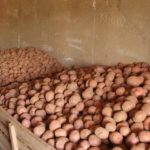
On Ngiri’s 10-acre farm, Indigenous crops teem with life. The farm is skillfully portioned into sections, each carrying a distinct Indigenous seed variety. One plot is reserved for characterising 15 types of Indigenous sweet potatoes, enabling farmers to compare traits like taste, growth rate, colour, nutritional value, and suitability for animal feed.
Ngiri is also experimenting with crossbreeding. One current project involves hybridising githigo (yellow maize) with a red-combed variety to develop a fast-growing, beta carotene-rich strain.
The importance of seed banks in preserving Indigenous seed varieties cannot be overstated, especially in Kenya, where agriculture contributes 30 percent of the Gross Domestic Product (GDP) and accounts for 80 percent of employment, mainly in rural areas.
International companies do not own Indigenous seeds. These ecological riches have long thrived in local farming communities and have been passed down for generations. According to research, 80 percent of smallholder farmers who feed Kenya’s population rely on informal seed systems and networks. An estimated 90 percent of the seeds planted across the country originate from these systems.
It is this deeply rooted tradition that Njiri and his choir seek to defend through their songs. Using music as a tool of resistance, they challenge laws that threaten seed sovereignty and strive to shift the narrative around Indigenous farming. But their advocacy is not without challenges. Demanding schedules often keep members from regular rehearsals, and limited funding makes it difficult to record music professionally. Promotion remains a hurdle.
Still, the choir takes pride in inspiring communities to return to Indigenous farming. Looking ahead, Njiri hopes to collaborate with other East African Indigenous seed farmers to create an anthem for the region. While the high cost of music production remains a barrier, he dreams of producing high-quality audio and video music with international appeal.
He also hopes their songs will help push the government to reconsider the Seed and Plant Varieties Act, which many see as restrictive. Njiri notes:
I hope these songs will help spread the message and influence the next generation to conserve Indigenous seeds before they are lost forever.