Israel destroys Palestine’s last surviving seed bank, echoing a colonial legacy of erasure · Global Voices

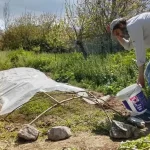
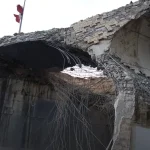
Screenshot of video shared by the Union of Agricultural Work Committees (UAWC), showing the destruction of the seed bank. Fair use.

On July 31, 2025, Israeli forces bulldozed the seed‑multiplication unit of the Union of Agricultural Work Committees (UAWC’s) seed bank in Hebron. Built from the ground up beginning in 2010, the unit had served as the only seed bank in the West Bank, safeguarding over 70 varieties of indigenous heirloom seeds, many of which no longer exist elsewhere in Palestine, according to Fouad Abu Saif, UAWC’s director general.

According to a press release by the UAWC, the devastation was swift and unannounced, with bulldozers and heavy machinery reducing into ruins the tools, propagation materials, and infrastructure essential to food sovereignty, constituting “a direct blow to Palestinian efforts to preserve local biodiversity and ensure food sovereignty.”  

A video showing what happened was shared on Facebook: 

With this act, not just a facility, but a living archive of Palestinian agricultural memory and cultural heritage — the result of generations of seed saving and ecological knowledge — was destroyed.

Erasure through agriculture

Seed banks are not neutral repositories: they carry the DNA of memory and of resistance. Vivien Sansour’s Palestine Heirloom Seed Library, based in the diaspora, intentionally framed seed saving as political resistance — a means to preserve not just biodiversity but heritage in the face of erasure. She described seeds as a “map to say: Look, this is who we are, this is who we were, and this is who we’ve been.”

Within occupied Palestine, seed saving is inseparable from resistance. Israeli policies have dismantled farmland, restricted access to fields, uprooted olive groves, and bombarded Gaza’s Baladi seed bank in Al‑Qarara — demolishing its store of native wheat, spinach, and barley, and displacing farming families, who have tried to rebuild from scratch.

800,000 Olive Trees Uprooted, 33 Central Parks. Infographic by Visualizing Palestine. CC BY-NC-ND 4.0.

The latest attack on the Hebron seed facility reinforces that pattern: eradicating the ecological and generational links between Palestinians and their land.

The targeting of seed systems is part of a broader strategy of cultural genocide, ecocide, and epistemicide — erasing not just people but modes of knowing, growing, and being. UN and nonprofit investigators have characterized damage to archives, mosques, universities, and farmland in Gaza as acts of systematic cultural destruction and a crime of extermination, and part of an ongoing genocide that has been found plausible by the ICJ. 

Seeds as targets of genocide

This is not a standalone incident. The destruction of food sovereignty has precedent in colonial and genocidal contexts: In the US colonial expansion, Native American agricultural systems and buffalo populations were systematically destroyed to force dependence and starvation. In her book, “An Indigenous People’s History of the United States,” Roxanne Dunbar-Ortiz writes that:

In an effort to create Indigenous economic dependency and compliance in land transfers, the US policy directed the army to destroy the basic economic base of the Plains Nations—the buffalo. The buffalo were killed to near extinction, tens of millions dead within a few decades and only a few hundred left by the 1880s.

More recently, with the 2003 Iraq invasion, the country’s national seed bank in Abu Ghraib was destroyed by US bombing and then looted “which led to the loss of Iraq’s thousand-year-old seed varieties.” A year later, the Coalition Provisional Authority issued Order 81 — amending state seed law to prohibit farmers from saving or replanting seeds, enforce corporate patents, and import Western hybrid and GMO seeds. By 2005, Iraq could produce only 4 percent of its own seed supply, locking farmers into corporate dependence and dismantling millennia of Mesopotamian seed sovereignty.

A group of Iraqi scientists salvaged whatever seeds they could and drove them to safety across the border to Syria’s International Center for Agricultural Research in the Dry Areas (ICARDA) seed bank in Aleppo, one of the oldest in the region. But a few years later, the Syrian seed bank, carrying over 150,000 seed accessions and deeply tied to local agricultural knowledge — declined in function as the civil war intensified in the country after 2011. Staff were compelled to evacuate and ship approximately 80 percent of the collection to the Svalbard Global Seed Vault as well as to Lebanon and Morocco.

Seeds, sovereignty, and the politics of erasure

Heirloom seeds capture biological diversity, memory, adaptation, and ancestral stories. They are built by communities over centuries to thrive in particular climates — and they are reservoirs of resilience. Destroying them, therefore, is not collateral: it’s a strategic method of biological warfare — denying communities the capacity to survive and to define their own future.

International civil society echoed that condemnation. La Via Campesina condemned the assault  as did Friends of the Earth International. The Irish Green Party described the demolition as “the final piece of the genocide jigsaw,” urging war crimes investigations at the ICJ.

International law recognizes destruction of cultural heritage and civilian infrastructure essential to survival as potential war crimes. Under the Rome Statute, such acts — if widespread and systematic — can qualify as crimes against humanity or genocide. Yet few governments or institutions have responded forcefully to the seed‑bank’s destruction or any other war crimes committed by Israel. 

The intentional razing of the Hebron seed‑multiplication unit is another strike in a broader campaign to erase Palestinians’ capacity to sustain memory, culture, and life. By targeting seeds, Israel isn’t merely destroying food systems, it is severing the ties between generations, lands, stories, and identity.



More Recommendations

How far-right ‘fear tactics’ affect girls seeking legal abortion in Brazil · Global Voices - Illustration by Noor, used with permission In a video posted by Chris Tonietto in early November 2025 on Instagram, the […]
Can AI help build peace? African youth are showing a path forward · Global Voices - Four friends with laptops smile and take a selfie at a monument in Cotonou, Benin. Photo by Iwaria via Pexels. […]
How one Kenyan community is building a new future on reclaimed ground · Global Voices - A woman sells beadwork outside a traditional Maasai dwelling. Photo by Cooper Austen. Used with permission. By Sydney Leigh Smith […]
Haiti’s ‘Grenadiers’ bring hope and joyful moments at World Cup 2026 · Global Voices - Feature image created by Janine Mendes-Franco using Canva Pro elements. Haiti has not played in the final phase of a […]
Wasting renewable energy comes at a high cost for the Dominican Republic · Global Voices - Feature photo via Canva Pro. By Zahiris Priscila Francisco Martínez Waste is costly. In the Dominican Republic, according to a […]
Australia’s Brewarrina fish traps may be the oldest human construction in the world · Global Voices - Brewarrina Fish Traps October 2025 – author’s photo Australia has two of the world’s oldest aquaculture sites, where fish and […]
The security we don’t see: A call for solidarity, not sympathy · Global Voices - Graffiti in the subway, underground in Vienna, Austria’s Favoriten district: ‘Solidarity not charity’ and ‘EU disarm!’ Photo by Herzi Pinki […]
How one community in Trinidad & Tobago pushed the culinary boundaries of pigeon peas · Global Voices - Pigeon peas image via Canva Pro. By Natalie Briggs When I first met Florence Warrick-Joseph, there were two things I […]
The human cost of the data center push in Latin America · Global Voices - A data center. Image via Canva. This post is part of Global Voices’ April 2026 Spotlight series, “Human perspectives on […]
Who is talking about artificial intelligence in Ecuador? · Global Voices - From left to right: Mónica Reinoso (Defensoría del Pueblo), Susana Cadena (Datalat), Carlos E. Flores (Openlab), Marco Insuasti (Mintel) and […]
Cameroon’s next generation is ready to take on the country’s technological challenges · Global Voices - Children in the technology laboratory. Image from Cynthia Ebot Takang. Used with permission Across Cameroon, especially during summer holidays (end […]
How much will it take to rebuild Venezuela after the earthquakes? · Global Voices - Collapsed building in Tanaguarena, one of the most impacted areas in La Guaira, Ground Zero of the disaster. Photo by […]
Sold as brides, lost at sea: The trafficking of stateless Rohingya girls · Global Voices - A Rohingya refugee woman stands outside the Women’s Center in Balukhali camp in Cox’s Bazar, Bangladesh. Image via Flickr by […]
Cocoa farmers in southeast Cameroon are adapting to EU regulations, but they still want a fair price · Global Voices - Cocoa farm in Ekombitie. Photo by Leocadia Bongen, used with permission. Forty cooperative cocoa farmers gathered at the chief’s home, […]
AI-ready data centers are booming in Indonesia but water woes loom · Global Voices - Nongsa Digital Park in Batam, Indonesia. Screenshot from YouTube video of Channel News Asia. Fair use. This post is part […]
Award-winning tragicomedic film by Croatian director traces the birth of fascism · Global Voices - The Italian publisher Arnoldo Mondadori and author Gabriele D’Annunzio (in the middle in uniform). Photo by Archivi Mondadori on Wikimedia Commons […]
Meet three young people driving ecological activism in the Dominican Republic · Global Voices - Environmental activism efforts in the Dominican Republic. Photo via Raíz Climáctica, used with permission. This article by Zahiris Priscila Francisco […]
What explains the global stardom of Dimash Qudaibergen, Kazakhstan’s cultural phenomenon? · Global Voices - Dimash performing Kazakhstan’s national anthem. Screenshot from the video “National Anthem of the Republic of Kazakhstan – Dimash Qudaibergen” from […]
Controversy ensues in Mongolia after the government lifts the ban on springtime horse racing · Global Voices - Mongolian child jockeys after participating in a springtime horse race. Screenshot from the video “Hunii Erhiin Undesnii Komiss 2015″ from […]
Healing a region: How healthcare is bringing peace to Arauca, Colombia · Global Voices - MSF set up mobile clinics in villages affected by the conflict and where access to healthcare is insufficient. In this […]
The lakes that should not exist in Pakistan’s mountain ranges · Global Voices - Ratti Gali Lake is an alpine glacial lake which is located in Neelum Valley, Azad Kashmir, Pakistan. Image by ARFayyaz […]
AI cameras are surveilling the roads in Dhaka, Bangladesh · Global Voices - Two security cameras mounted on a pole. Representative image by user Atypeek Dgn via Pexels. Used under a Pexels License. […]
Caribbean athletes shine at the 2025 World Athletics Championships · Global Voices - Feature image via Canva Pro. Much of the world has its attention focused on the 2025 World Athletics Championships, which […]
How Europe ships its waste to Morocco and calls it ‘recycling’ · Global Voices - Image by UntoldMag, used with permission By Khalid Bencherif and Federica Rossi This story, by Khalid Bencherif and Federica Rossi, […]
In Guadeloupe, ‘Creole gardens’ give climate lessons in a spirit of solidarity · Global Voices - A typical example of a Creole garden. This one is tended by Hugues Occibrun, who is trying to bring back […]
Some Caribbean podcasts to tune into on International Podcast Day · Global Voices - Feature image designed using Canva Pro elements. Monday, September 30 is International Podcast Day. As of June 2024, there are […]
Australia’s Budj Bim features one of the world’s oldest aquaculture systems · Global Voices - Screenshot from ‘World Heritage Nomination – Budj Bim Cultural Landscape’ by YouTube user Gunditj Mirring. Fair use. Australia has one […]
Countless endangered species are making a comeback due to global conservation efforts · Global Voices - An Amur leopard (CC BY 2.0), a coral reef (CC BY 2.0), and two greater one-horned rhinoceroses (CC BY-SA 4.0). […]
Harassment and security threats forced the cancellation of a Pride-themed community event in Malaysia · Global Voices - Promotional poster for the cancelled “Glamping with Pride” event. Photo from ARTICLE 19 website. Fair use. A two-day wellness program […]
How AI is upgrading African dictatorship · Global Voices - Illustration showing a dictator using surveillance and automated control to watch, predict, and suppress citizens. Illustration by Khalid Bencherif. Used […]
Scroll to Top