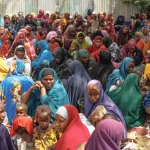
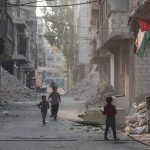
ICRC’s projects provided solar energy and clean water for hundreds of thousands of Yemenis in 2025 alone — vital for health, hygiene and survival in communities where basic services are facing serious challenges. Picture by ICRC, used with permission.
In Yemen’s capital, shifting weather patterns and ongoing conflict are no longer abstract concerns. They are actively shaping public health outcomes.
In a neighborhood of Sana’a, 17-year-old Malak Abdulmalik manages chronic respiratory symptoms that worsen with dust and seasonal changes. “I rely on my inhaler almost daily,” she explains, describing how air quality and temperature fluctuations directly affect her breathing.
Her cousin faced a different challenge. After consuming contaminated food, she contracted cholera, a waterborne disease that continues to threaten Yemenis. The illness caused severe dehydration and required 11 days of medical care. Shortly after recovery, she was diagnosed with Hepatitis A, an infection commonly linked to unsafe water and food.
According to the World Health Organization, Yemen has experienced recurrent cholera outbreaks driven largely by unsafe water and limited sanitation access, reporting the highest burden of cholera globally in 2024.
Stagnant water caused by flooding and poor drainage also creates mosquito breeding grounds, contributing to the spread of dengue fever.
The World Bank reports that climate change is expected to intensify extreme weather events in Yemen, which, combined with infrastructure destruction, places additional pressure on water and health systems.
Monitoring outbreaks and adapting on the ground
These cases reflect a broader pattern: environmental stress, damaged infrastructure from war, and limited health resources combine to increase disease risk.
This is what Hana’a Al-Zubairi, coordinator assistant at Yemen’s Ministry of Health and Environment, explains:
Cholera, dengue fever, and Hepatitis A are driven by both climate change and war-damaged infrastructure. Flooded sewage contaminates water, while stagnant pools create mosquito breeding grounds. Many respiratory illnesses remain unrecognized until severe.
“Respiratory illnesses are also increasingly common. Dust storms, rising temperatures, and seasonal shifts contribute to both upper and lower respiratory infections, placing additional strain on individuals and healthcare providers,” Al-Zubairi adds
Her response team conducts weekly district visits to monitor outbreaks, run awareness campaigns, and guide treatments. Seasonal disease spikes often coincide with harvest periods when crops are irrigated with unsafe water. Poverty and misinformation also limit vaccination uptake, leaving children particularly vulnerable.
Expanding health risks
Healthcare workers report that environmental and living conditions are influencing a wide range of illnesses.
Dr. Ali Al-Hamzi, a surgeon based in Yemen, contracted dengue fever after a mosquito bite in 2018. He describes the illness as physically and mentally exhausting, requiring weeks of recovery.
“Prevention is critical,” he says, emphasizing mosquito control and household protection measures such as window screens. In his case, the disease was relatively mild, but severe cases can require patients to be admitted to intensive care units, he explains.
Delayed care and community-level challenges
Ashwaq Abdullah, a nurse with over 15 years of clinical experience and founder of her own clinic, highlights delayed treatment as a major challenge. “Many patients wait too long before seeking care,” she explains. “By the time they arrive, dehydration or infection has already reached a critical stage.”
During outbreaks at Al-Sabeen Hospital in the south of Sana’a, she observed how poverty forces many patients, especially from rural areas, to delay care, sometimes leading to severe complications such as kidney failure.
She also notes that respiratory illnesses, worsened by dust and changing weather, are becoming more complex, with viral infections increasingly developing bacterial complications. Her advice is clear: “Seek early medical care and maintain hygiene practices such as thoroughly washing fruits and vegetables to reduce risk.”
The role of humanitarian organizations
According to the International Committee of the Red Cross (ICRC) in Yemen, six diarrhea treatment facilities are currently supported across Yemen, providing medical supplies, hygiene kits, staff training, and operational support.
Their water and sanitation programs aim to improve access to clean water, a critical factor in preventing disease spread. According to ICRC, more than 580,000 people gained improved access to health care services, while around 390,000 people benefited from improved access to safe water through its interventions in the first half of 2025.
Humanitarian organizations, alongside teams such as the Ministry of Public Health and Population staff and community-based health workers, continue supporting disease response efforts through medical assistance, water and sanitation interventions, healthcare training, and the maintenance of essential treatment services despite ongoing systemic challenges
From crisis to climate solutions and resilience
The connection between climate change, conflict, and public health is undeniable. It is visible in water scarcity, disease outbreaks, and the increasing pressure on healthcare systems. Yet focusing only on vulnerability does not reflect the full reality on the ground.
Alongside these challenges, there is a continuous process of adaptation. Communities are not only responding to crises , they are actively developing solutions. They are adapting through renewable energy, solar-powered water systems, improved hygiene practices, community health awareness, and local health workers who continue disease surveillance despite limited resources. Adaptation is no longer an exception; it is becoming part of daily life in Yemen.
Expanding renewable energy, particularly solar energy, represents one of the most practical climate solutions for Yemen. Solar power is not only an alternative energy source; it is a lifeline that supports clean water access, strengthens healthcare services, and improves living conditions in areas affected by infrastructure damage and climate stress. Yemen’s diverse geography also creates opportunities for expanding sustainable energy solutions in different regions of the country through locally driven approaches.
At the same time, effective climate action depends on collaboration with local actors because communities understand their environment, risks, and needs better than external systems alone. This local knowledge makes climate interventions more sustainable and more connected to realities on the ground.
What becomes clear is that Yemen is not only a place of crisis, but also a place of continuous problem-solving. Where challenges exist, solutions also grow. Where climate risks increase, communities continue to adapt and build resilience through practical climate solutions.
In Yemen, adaptation is ongoing. Solutions are already being built. Resilience is not theoretical — it is happening every day through communities, local knowledge, and climate solutions that are shaping a more sustainable future.