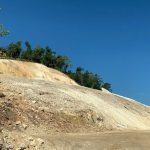
A mountain of plastic in Banten, Indonesia. Photo taken by Tom Fisk. Used under a Pexels license.
This post is part of Global Voices’ May 2026 Spotlight series, “Global crisis, local solutions.” This series will offer stories of resistance and successful climate action, insight into how communities in the Global South are fighting back against the crisis, analysis of what this might mean for future generations, and more. You can support this coverage by donating here.
In a context characterized by rapid urbanization, fragile waste management systems, youth unemployment, and growing climate vulnerability, artists, activists, musicians, and community entrepreneurs in Mozambique have been developing local responses to address an environmental crisis. Through recycling, art, music, and environmental education, they seek to challenge the traditional perception of rubbish and demonstrate that things which have been discarded can be transformed into tools for survival, artistic expression, social critique, and climate resistance.
In cities like Maputo, solid waste has become a visible part of the urban landscape. Plastic bottles clog drainage systems during periods of heavy rain, used tires accumulate in containers and empty spaces, while informal rubbish dumps continue to grow in outlying neighborhoods, such that in the rubbish dump Helene, people live in a seemingly different world.
Despite municipal efforts, waste collection and management remain insufficient in several urban areas. It is in this context that community initiatives such as Ecopoints have emerged as alternatives to simultaneously address environmental and social challenges.
Discarded tires turned into opportunities
For Vania Gonçalo, an environmental activist, reusing tires began as a response to a problem seen daily on Maputo’s streets.
In 2019, Gonçalo decided to create an initiative focused on the reuse of discarded tires after realizing that, while the environmental debate in Mozambique was heavily centered on plastic, tires were also a significant environmental problem.
From there, Gonçalo began collecting abandoned tires in residential areas, roads, and trash containers. After collection, the materials go through washing, disinfection, and transformation processes. Tires are converted into tables, chairs, vases, houses for domestic animals, and other decorative objects. The process combines creativity, sustainability, and entrepreneurship. Depending on the type of tire, different techniques are used with fabrics, wood, ropes, sponges, paints, and other recycled materials.
For Gonçalo, the project goes beyond recycling. It is also about raising awareness among young people and communities about environmental responsibility. In an interview with Global Voices, she said:
Queríamos mostrar à sociedade que aquilo que é jogado fora ainda pode ser reutilizado e transformado em algo valioso e em muitos bairros, os pneus são simplesmente queimados ou abandonados. Queríamos mostrar que é possível reutilizá-los sem necessidade de maquinaria cara ou processos industriais.
We wanted to show people that things which are thrown away can still be reused and turned into something valuable, even though in many neighbourhoods tires are simply burned or abandoned. We wanted to show that it is possible to reuse them without needing expensive machinery or industrial processes.
The initiative also reveals urban inequalities related to waste. In outlying neighborhoods, used tires often take on new informal uses, such as toys for children, makeshift seats, or structures for small community parks. In central areas of the city, on the other hand, they are usually treated only as waste to be managed.

Vânia Gonçalo’s sewing workshop in Maputo, Mozambique, in 2021. Photo by Herman Macamo & Tirso Sitoe. Used with permission.
According to Gonçalo, reusing waste can also contribute to debates on environmental public policies. In addition to producing recycled objects, activist organizations train young people in solid waste reuse, entrepreneurship, and environmental education. She explains:
Antes de criar políticas sobre pneus, precisamos de mais estudos científicossobre os impactos ambientais desses resíduos. Mas futuramente isso pode influenciar políticas públicas de coleta e reaproveitamento. O trabalho não é apenas ambiental. Também cria oportunidades de renda. Quanto mais pessoas envolvidas na reutilização de resíduos, menos lixo teremos no meio ambiente.
Before making policies regarding tires, we need more scientific studies on the environmental impacts of this waste. But in the future this may influence public policies on collection and reuse. The work is not only environmental. It also creates income opportunities. The more people involved in reusing waste, the less will be left in the environment.
Art, memory, and social critique

Mudungaze’s design workshop in Maputo, Mozambique, in 2021. Photo by Herman Macamo & Tirso Sitoe. Used with permission.
For the Mozambican artist Mudungaze, rubbish also has political and cultural significance. Using discarded industrial materials, scrap metal, and objects found in the streets, the artist creates masks and contemporary works inspired by African cultural references and the urban dynamics of Maputo. His work combines contemporary reflections on African identity, colonialism, cultural memory, and global inequalities in an exhibition on “African masks.”
According to Mudungaze, part of his motivation is the need to recover historically marginalized African cultural references. He explained in an interview with Global Voices:
Queria trazer a identidade africana para uma arte urbana contemporânea, usando objetos que as pessoas encontram no dia a dia, num contexto em que as pessoas foram e nsinadas durante muito tempo, que muitas práticas culturais africanas foram atrasadas ou inferiores. Hoje várias dessas ideias regressaram do Ocidente como algo moderno.
I wanted to bring African identity to contemporary urban art, using objects that people encounter on a day-to-day basis, in a context where people were taught for a long time that many African cultural practices were backward or inferior. Today, many ideas have come from the West as something modern.
Many of the materials used by the artist come from industrial waste, associated with large companies and imported products. Mudungaze said he tried to establish partnerships with companies to reuse discarded materials, but found little receptiveness. By taking abandoned waste and transforming it into art pieces, exhibited in galleries and cultural spaces, the artist also develops a subtle critique of urban inequality, waste management, and the elitism of art.
“We don’t produce most of this waste, but we suffer its environmental consequences,” he said.
This tension between urban center and suburan periphery also shapes the Mozambican art scene. Most of the galleries and cultural centres remain concentrated in central Mozambique and the capital Maputo, making access difficult for artists and audiences from other areas. As an alternative, Mudungaze has created an independent space outside the established cultural circuits. Social media has also come to play an important role in sharing his work. He explained, “Today digital platforms allow us to show our work beyond physical galleries.”
Rap, environmental activism, and digital mobilization
Environmental issues are also dealt with in music. For rapper and activist Osvaldo Iko MC, hip-hop can work as a tool for raising awareness of social and environmental issues. Influenced by engaged rap and the tradition of social commentary through music, Osvaldo began incorporating environmental themes into his lyrics after observing the increase in inappropriate waste disposal in public spaces.

Room of images by Osvaldo Iko MC in Maputo, Mozambique, in 2021. Photo by Herman Macamo & Tirso Sitoe. Used with permission.
His songs deal with issues such as plastic pollution, incorrect waste disposal, urban sanitation, and collective responsibility. According to the artist, the waste scattered around the city reveals not only environmental problems, but also social inequalities and educational gaps.
“The environmental crisis is also a social and cultural problem. If people are not educated about environmental responsibility, the problem will continue. Trash is left in public spaces, this also reflects social problems, inequalities, and failures in collective responsibility,” he explained in an interview with Global Voices.
Through music, environmental campaigns, digital content production, and waste mapping initiatives, Osvaldo seeks to engage audiences often far removed from formal debates about the environment.
“Music goes everywhere — in transport, to markets [and] houses, on the streets. It can help create awareness and change behaviors,” he said.
Digital activism has also become an important part of his work. With the use of photographs, geolocation, and digital platforms, environmental activists have documented sites of waste accumulation and environmental problems in different parts of the country. According to Osvaldo, social media help increase the visibility of Mozambican environmental issues and connect local activists to global debates on climate change. At the same time, the rapper argued that environmental responsibility should not fall solely on local authorities.
“These technologies make it possible to educate, document, and mobilize communities. There is a tendency to only blame public institutions, but environmental responsibility also belongs to citizens,” he said.
Between climate vulnerability and urban survival
Mozambique remains one of the countries most vulnerable to climate change, cyclones, floods, and failures in drainage systems and environmental management, which particularly affect urban communities with poor infrastructure and limited waste management services. In cities like Maputo, Beira and Nampula, the amount of discarded solid waste is enough to block drainage channels and exacerbate flooding during periods of heavy rain.
For many artists and activists, recycling and reusing waste are not only environmental or artistic initiatives. They are also strategies for survival, climate adaptation, and community resistance. Despite the lack of stable funding, institutional support, and adequate infrastructure, these initiatives continue to grow through community networks, creativity, and collective mobilization.
By transforming waste into art, furniture, educational campaigns, and tools for social mobilization, Mozambican communities are demonstrating how local solutions can help address global challenges. In a country where climate change and urban inequality intersect on a daily basis, rubbish is no longer just rubbish. For many young people, artists and activists, it has become a resource, a tool of resistance, and a possibility for the future.