Feature image via Canva Pro.
The year had started hopefully enough, what with Trinbagonian steel pannist Joshua Regrello registering his attempt at a Guinness World Record for the longest steelpan-playing marathon — a title Guinness would make official by May, bringing the country much pride. However, by January 10, Venezuelan President Nicolás Maduro had been sworn into office for a third consecutive term following July 2024’s fraught presidential election that resulted in widespread protests and thousands being detained.
Come February, U.S. President Donald Trump’s administration began mass deportations, making good on his campaign promise of cracking down on illegal immigration. No one could have predicted that by the end of the year, these two countries — the United States to the north and Venezuela to the south of the Caribbean archipelago — would have the region caught in the middle of an unfolding geopolitical standoff.
Naturally, many other things happened in the Caribbean over the past 12 months, some of them related to the developing U.S.–Venezuela situation, others not — but without a doubt, the ups and downs of 2025 strengthened the region’s muscles, hopefully making it better prepared to face whatever yet another New Year brings…
The arts and culture
As usual, this was a high point for the region, which is brimming with creative talent. Trinbagonian poet Anthony V. Capildeo won both the OCM Bocas Prize for Caribbean Literature, widely considered the Caribbean’s top literary award, as well as the prestigious Windham Campbell Prize 2025.
In a similar vein, two writers with Caribbean roots, Subraj Singh from Guyana and Chanel Sutherland from St. Vincent and the Grenadines, won the regional and overall titles for the 2025 Commonwealth Short Story Prize.
Reggae music, meanwhile, was celebrated via International Reggae Day with a focus on climate justice. In one of our favourite cultural stories of the year, we took a closer look at the vibrant city of São Luís, known as the Brazilian Jamaica, where reggae is a local identity.
We also applauded the achievement of Jamaica-born artist Melissa Koby, who became the first-ever Black artist to create imagery for the U.S. Open tennis tournament, and reimagined indentureship and identity through a powerful art exhibition in Trinidad and Tobago.
The valley to those mountains, however, came after the longtime title sponsor of the Bocas Lit Fest — the regional literary festival that has done yeoman’s service in reviving the culture of both writing and reading in the Caribbean — withdrew its support after 14 successful years. Far from a one-off event, the decision speaks volumes not only about how the region perceives culture and the artists who create it, but also about how they are valued.
In a post-pandemic world, when it became painfully obvious how critical art and artists are to survival, the fact that regional creatives still have to fight for financial support to do their work should be a pressing concern for a region internationally renowned for all aspects of its culture.
Climate justice
As it has been in past years, the ongoing climate crisis and the resulting question of justice were hot topics in the region this year. We ran many stories of innovative initiatives that have been put in place throughout the region, from (despite some wastage) the Dominican Republic’s move towards renewable energy independence — including hotels going solar — to Creole gardens and creativity in the service of zero waste in Guadeloupe.
This is not to say that Guadeloupe does not face severe challenges when it comes to agricultural waste, but rather, that it is not taking the crisis lying down. Neither is the DR, which has been extremely proactive about prosecuting environmental crimes.
Jamaica seems open to the idea of ocean renewables despite funding being an obstacle, and Barbados’s fishing industry has been integrating nature-based solutions into its disaster-preparedness strategy. Meanwhile, Guyana appears to be walking the fine line between being a new oil producer and contributing to fossil fuel emissions, while also having a massive carbon sink.
Yet, for every progressive initiative, there were stories of environmental concern: development displacing shorebirds in Anguilla and entire communities in Jamaica, where there is also disregard for environmentally protected areas and an ongoing battle against plastics; environmental degradation in Trinidad, and an “imminent threat” to coral reefs in Tobago.
By the time the annual Atlantic hurricane season rolled around, the region found itself at the mercy of Hurricane Melissa, with Jamaica being one of the hardest-hit territories. Local activists sent a strong message to attendees of COP 30, which took place in Brazil, the month after the storm affected the region.
Sport
Perhaps with the exception of the West Indies cricket team, the athletic achievements of Caribbean nationals were also a bright spot this year, from the region’s many wins at the 2025 World Athletics Championships, to the triumph of the Jamaican bobsled team at the North American Cup, which brought great joy to Jamaicans beleaguered by the impacts of Hurricane Melissa.
Honourable mention: two Caribbean territories, Haiti and Curaçao have qualified for the 2026 World Cup, with the latter having the distinction of being the tiniest nation ever to qualify.
LGBTQ+ issues
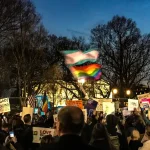
Seventeen years after former prime minister Bruce Golding infamously declared there would be “no gays” in his government, anti-gay rhetoric found a place once more on a Jamaican political platform, begging the question as to whether decriminalisation of the buggery law is in Jamaica’s future.
Trinidad and Tobago, meanwhile, was having its own struggles, with one report finding that the country needed to do more to stop discrimination against the LGBTQ+ community. This comes in light of the country’s Court of Appeal reversing the 2018 buggery law ruling, which means the case now heads to the twin island republic’s highest court of appeal, the UK Privy Council.
Obituaries
The Caribbean lost several stellar nationals this year: Trinidadian musician Roger Boothman, steelpan champion Mark Loquan, reggae icon Jimmy Cliff and other stalwarts of the genre, including Max Romeo, Cocoa Tea and Determine.
The region also bade farewell to Jamaican poet Velma Pollard, Trindadian Glen “Dragon” De Souza, who was influential in reviving the art of moko jumbie walking, and Rex Lasalle, one of the leaders of Trinidad and Tobago’s army mutiny in support of the Black Power movement in 1970.
The region also lost two seasoned journalists — Guyana’s Rickey Singh, who eventually made Barbados his home, and Jones P. Madeira, who, like filmmaker Danielle Dieffenthaller, hailed from Trinidad and Tobago.
Caribbean netizens also widely mourned the passing of Pope Francis.
Colonisation and politics
The lingering effects of colonisation continued to be a topic of discussion in the regional blogosphere, from netizens rejoicing at the U.S. presidential pardon of national hero Marcus Garvey to calls for the decolonisation of Trinidad and Tobago’s coat of arms.
By the time the UK announced it would introduce visa requirements for Trinidad and Tobago nationals, a regional discussion about ancestral trauma seemed long overdue.
While Caribbean leaders were united in their stance to defend the region-wide Cuban Medical Cooperation Programme after the Trump administration instituted its visa restrictions for foreign officials it considered “complicit,” cracks would begin to show when it came to upholding the region as a “zone of peace” after the U.S. began military strikes on vessels in regional waters.
While most of the Caribbean Community (CARICOM) held fast to the tenets of sovereignty and territorial integrity of regional states, Trinidad and Tobago’s newly installed prime minister Kamla Persad-Bissessar, in her support for and facilitation of U.S. troops in the region caused her to be accused of being “defiantly, even rudely, anti-Caricom,” even as her own citizens faced increased safety risks amid U.S.-Venezuela tensions.
While Trump maintains he is not ruling out the possibility of war with Venezuela, Trinidad and Tobago sits in the crosshairs. Most recently, the South American nation accused the twin-island nation of complicity in the U.S. blockade and reminded Persad-Bissessar that the country was once part of its territory.
What happens next remains to be seen, but with an already trying year behind them, regional citizens are undoubtedly hoping for a peaceful 2026.