The invisible migration: How urban refugees are powering Uganda’s economy · Global Voices

Three young girls sewing with a sewing machine

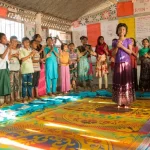
Students at Bondeko tailoring their clothes. Photo by Godfrey Luzinda. Used with permission.

This article by Ayebare Cinderella was originally published by Peace News Network on April 8, 2026. An edited version is being republished on Global Voices under a content partnership agreement.

Uganda has long been celebrated globally for its progressive refugee policy, one that avoids the restrictive encampments seen in other nations in favor of a model of integration and freedom of movement.

According to statistics from the Office of the Prime Minister, Uganda was host to 1,961,518 refugees and asylum seekers as of October 31, 2025. Of these, 91 percent live in refugee settlements. While rural settlements are the traditional destination, a massive, largely invisible migration is reshaping the nation’s capital, with nine percent residing in urban areas. Thousands are trading the dwindling rations of settlements for the grit and opportunity of the Kampala metropolitan area.

In the bustling suburbs of Makindye and Zana, refugees from the Democratic Republic of Congo (DRC), Somalia, South Sudan, Eritrea, Sudan, Ethiopia, Rwanda, and Burundi are no longer just asylum seekers. They are taxpayers, employers, and entrepreneurs.

Refugees from these countries have fled harrowing violence and instability involving civil wars, political unrest, and other major upheavals. Yet, they are now using entrepreneurship, including food, clothing, and cosmetic services, to power Uganda’s economy and build harmony amongst the diverse groups within refugee and host communities.

The stitch of resilience: John Babish Makando

In Makindye Division, a suburb characterized by its diverse refugee population, John Babish Makando operates a tailoring business that defies the common stereotypes of the trade. Having fled the conflict in Eastern DRC in 2019, Makando bypassed the settlement system entirely, betting on his skills to survive in the competitive urban landscape of Kampala.

For Makando, being a refugee is not a barrier to professional excellence. He has built a reputation for punctuality and precision, qualities he says are often lacking in the local market. Makando explains to Peace News Network (PNN):

I am removing the common client misperception about local tailors. Many are known for letting down clients by not meeting deadlines or spoiling designs. Here, it is different. I focus on quality and being a good timekeeper.

A man sewing with a sewing machine

Makando works in his shop in Makindye. Photo by Cinderella Ayebare. Used with permission.

Makando’s contribution to the Ugandan economy is tangible. Unlike refugees in settlements who receive humanitarian aid, urban refugees like Makando receive nearly zero financial support. Instead, in Kampala, small-scale entrepreneurs are the backbone of the local economy, contributing through structured taxes. Most pay an annual Kampala City Council Authority (KCCA) Trading License, ranging from USD 8.34 (UGX 31,500) for basic stalls to USD 23.83 (UGX 90,000) for salons and workshops. Additionally, artisans pay a Local Service Tax based on income, while market vendors contribute through daily dues. Despite limited capital, these micro-businesses ensure steady revenue for urban development and city infrastructure. Makando pays rent for his tailoring shop and fulfills his tax obligations, fuelling local development.

His journey to self-reliance began with a three-month vocational training course sponsored by the International Rescue Committee (IRC) and Great Lakes Peace and Reconciliation Ministries (GRS). Today, he is paying that gift forward. Makando noted:

I went for a three-month skill training and after that I did a short course in tailoring. After some years of getting experience, we decided to start transferring these skills to fellow refugees and host communities by training them how to make clothes using different fabrics.     

He added:

We decided to teach people to show them how we are connected to our Ugandan neighbours, because there is a saying that my neighbour is my first family.

Blending fashion and food: Amina’s fresh market

The economic ecosystem created by refugees extends from the wardrobe to the dinner table. 

Amina, another Congolese refugee in Makindye, ensures both refugees and Ugandans eat well. Amina has tapped into the high demand for fresh produce in the densely populated corridors of Makindye.

Her stall is a vibrant intersection of cultures. She specializes in vegetables like tomatoes and greens, but her real success lies in sombe (cassava leaves), susha, dodo, and eggplants, staples that appeal to Rwandan, Burundian, and Sudanese clients. Amina notes:

Ugandans love Congolese food and Congolese love Ugandan food.

Amina represents a form of cultural adaptation that goes beyond mere survival. By maintaining her stall, Amina is not just providing for her family; She is an active participant in the city’s informal economy, contributing to the tax base and promoting urban food security.

A woman holding green leafy vegetables

Amina cleaning and sorting her greens. Photo by Cinderella Ayebare. Used with permission.

Turning migrants into economic engines

At the heart of this transformation is the Bondeko Refugee Livelihoods Center in Najjanankumbi’s Stella Village. Founded in 1997 by Reverend Father Michael Lingisi, Bondeko has evolved from a simple safety net into a sophisticated engine of self-reliance.

Executive Director, Paul Kithima, is a vocal advocate for localization,arguing that the best solutions for refugees come from the refugees themselves. Kithima said:

We have livelihood activities where we train refugees in different areas like hairdressing, tailoring, ICT, and makeup.

He added that the center also has savings groups, which provide essential training in entrepreneurship and financial literacy.

We have a total of 37 saving groups, attending to 1,110 individuals, with each group comprising 30 people.

He continued:

We help them to register as Community Based Organizations (CBOs) so they can access financial institutions to explore options like loans and other products.

Last year alone, Bondeko assisted over 3,500 people, including both refugees and Ugandan nationals. This inclusive approach, training nationals alongside refugees, is key to maintaining social cohesion and preventing resentment. 

The center’s programs are diverse, ranging from a modernized bakery and mushroom farms to a law clinic that helps refugee families navigate asylum status and a youth center for children.

A new chapter of self-reliance

The shift toward urban entrepreneurship has become a necessity. With 2026 funding cuts slashing settlement rations to near-zero, the invisible migration is no longer a choice but a survival strategy. These individuals are moving away from aid dependency and toward active economic participation.

As Paul Kithima and the entrepreneurs in Makindye demonstrate, when refugees are given the tools to succeed, they don’t just survive; they build the future of the country that welcomed them.

More Recommendations

Archiving Nepal’s medicinal plants and Indigenous knowledge for future generations · Global Voices - Sanjib Chaudhary, while speaking his language, Eastern (Saptariya) Tharu. Photo by Subhashish Panigrahi in CC BY-SA 4.0. This post is […]
Waves of change: Can ocean renewables solve rising electricity costs in Jamaica? · Global Voices - Feature photo via Canva Pro. By Edgar Lewis Following the ferocious Hurricane Beryl last July, scores of Jamaicans expressed outrage […]
Africa’s ambitious push for vaccine independence · Global Voices - A nurse at Bukakata Health Centre III in the southern Uganda district of Masaka is administering an oral vaccine to […]
Social networks fuel youth mobilization on Argentina’s streets · Global Voices - Students protest with a banner saying ‘Science and public university are people’s rights.’ Photo by Diario UNO, used with permission. […]
Caribbean athletes shine at the 2025 World Athletics Championships · Global Voices - Feature image via Canva Pro. Much of the world has its attention focused on the 2025 World Athletics Championships, which […]
How Africa is harnessing space technology for early warning systems against climate disasters · Global Voices - From Left, Head of the EU Delegation to Namibia, Ambassador Ana Beatriz Martins; African Union Commissioner for Agriculture, Rural Development, […]
Nationalistic performance versus Bushido traditions: Debates over Japanese cleanup at the 2026 FIFA World Cup · Global Voices - Trash bags used by Japanese fans during the 2026 World Cup. Screenshot from the YouTube channel of user @taiyojr.10. Fair […]
When Chinese parents outsource control over their adult children · Global Voices - Young adults are forced to do physical exercise inside a behavior correction facility. Screenshot from BBC Chinese’s YouTube Channel. On […]
Melanesian nations vow to connect and expand marine protected areas · Global Voices - Coral reefs in Papua New Guinea. Photo by Brocken Inaglory. Wikimedia Commons. CC BY-SA 3.0 This post is part of […]
Do social security allowances empower or disempower endangered Indigenous groups in Nepal? · Global Voices - Festival preparation in Chepang village. Photo of Jimling Village in Rapti Municipality of Chitwan District, Nepal. Photo by Biswash Chepang. […]
Invisible strategies: How fear of being outed shapes LGBTQ+ life online in Serbia · Global Voices - Pins displaying LGBTQ+ symbols and flags. Photo by Marek Studzinski on Unsplash: License. This article was produced by the NGO […]
Reimagining Caribbean indenture in an artistically botanical afterlife · Global Voices - Image of the title wall of the art exhibition ‘The Botanical Afterlife of Indenture: Imaginative Archives,’ which took place at […]
Meta removes Bangladeshi community archivists’ pages through false copyright claims · Global Voices - Photo by Bastian Riccardi from Pexels. Used under a Pexels License. For the past several months, a coordinated digital campaign […]
Rubbish as a resource: How communities in Mozambique transform waste into climate solutions · Global Voices - A mountain of plastic in Banten, Indonesia. Photo taken by Tom Fisk. Used under a Pexels license. This post is part […]
‘Silence has become both more dangerous and more complicit’: An interview with Lebanese-British artist, Amale Khlat · Global Voices - Amale Khlat, ‘Fishing on a Tridacna’ Cosmetic Vessel, 2023. 34 x 49 cm (13.4 × 19.3 in). Watercolor and archival […]
No safety, no way out: The Rohingya girls caught between aid cuts and child marriage in Bangladesh · Global Voices - Inside a Bangladesh refugee camp, a classroom of Rohingya children sing English songs at a UNICEF learning centre, funded by […]
Sheep kurt: The tradition of Kazakh dairy · Global Voices - Photo by Bauyrzhan Bismildin and assistant Alexander Leonov via Vlast.kz, used with permission. This story by Aliya Bolatkhan (translated from […]
Why Venezuela’s earthquakes were so devastating: Geology, vulnerability, and years of structural neglect · Global Voices - Map of the earthquakes’ impact across seven Venezuelan states, highlighting Ground Zero: La Guaira. Screenshot taken from the YouTube video […]
The gap in the archives: Preserving the history of everyday objects · Global Voices - Family heirloom from Bihar, India: Kajrauti Kohl container with a steel body and brass handle in a paisley shape. Photo […]
Wheelchair user completes historic bungee jump in Nepal · Global Voices - Photo by Pradeep Raj Onta via Nepal Federation of the Disabled – Nepal (NFDN). Used with permission. Deepa Devkota from […]
How Nigerians are coping with heat waves amid crippling power outages · Global Voices - Pollution on a Lagos street, Nigeria. Image by Boluwatife Oguns via Unsplash. License: Free to use. Nigerians are currently facing […]
For LGBTQ+ people in Egypt, the internet is both a lifeline and a trap · Global Voices - Illustration by UntoldMag, used with permission By Enas Kamal This story, originally published on UntoldMag, was produced under the Feminist […]
Hong Kong artist Steven Tang brings local signature dishes to life through culinary art · Global Voices - Hong Kong artist Steven Tang. Photo by Kyle Lam/HKFP. Used with permission. This report was written by Kelly Ho and published in […]
Nepali Poet Viplob Pratik on literature, language, and a life shaped by words · Global Voices - Poet Voplob Pratik. Photo: Prabhat R Jha. Used with permission. Viplob Pratik is a leading contemporary Nepali poet, novelist, lyricist, […]
Trinidad’s border communities face rising citizen security risks amid U.S.-Venezuela tensions · Global Voices - The Independence variant littoral combat ships USS Tulsa (LCS 16), right; USS Manchester (LCS 14), centre; and USS Independence (LCS […]
Australia’s Brewarrina fish traps may be the oldest human construction in the world · Global Voices - Brewarrina Fish Traps October 2025 – author’s photo Australia has two of the world’s oldest aquaculture sites, where fish and […]
The importance of mangroves in addressing climate change in Ghana · Global Voices - Mangrove forest in Ada, Ghana. Image by Amuzujoe on Wikimedia Commons (CC BY 4.0). This story was written by Malachi Dorwu and originally published […]
When dry season never ends · Global Voices - An aerial photo of Guanacaste, Costa Rica. Image from Photo by Jean Paul Montanaro via Pexels. Free to use. Water […]
Introducing kobudo, Japan’s traditional martial arts · Global Voices - The 49th Japanese Kobudo Demonstration at the Nippon Budokan. Photo taken by Jo Carter. Used with permission. Nowadays, most martial […]
Green dignity and public visibility: GIA’s intersectional approach to transgender rights and climate justice in Pakistan · Global Voices - An FGD session at the GIA premises. Image from the Facebook page of Gender Interactive Alliance. Used with permission. This […]
Scroll to Top