Beyond displacement: Examining the link between climate change and statelessness · Global Voices

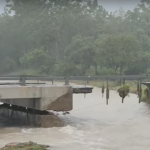
The aftermath of Typhoon Sendong in the Philippines.

The aftermath of Typhoon Sendong in the Philippines. Photo via Wikimedia Commons (CC BY 2.0).

By Olivia Karp 

This essay was written by Olivia Karp, courtesy The Global Movement Against Statelessness (GMAS), a content partner of Global Voices. This post is part of Global Voices’ July 2026 Spotlight series, “Statelessness.” This series offers insight into the issue of statelessness and how it hinders people’s freedom of movement, educational opportunities, political access, and more. You can support this coverage by donating here.

Tropical storm Sendong struck the Philippines on December 15, 2011, causing severe flooding in Cagayan and Iligan City. The storm displaced between 300,000 and 400,000 people. Some residents remained, while others sought refuge in nearby cities. The disaster resulted in widespread injuries, homelessness, and hardship.

Read more: Tuvalu aims to become a ‘Digital Nation’ amid rising sea levels

Pacific Islands such as Tuvalu and Fiji are also vulnerable to climate-related disasters. The World Meteorological Organization (WMO) estimates that at least 50,000 Pacific Islanders are displaced each year due to climate change. These islands face risks of statelessness and loss of citizenship due to environmental impacts. The relationship between climate displacement and statelessness is complex. This article argues that climate-related displacement increases the risk of statelessness, yet this issue remains underexplored in discussions of climate and migration.

What is displacement in the context of climate change and statelessness?

Climate displacement and statelessness result from extreme environmental changes that can cause displacement, territorial loss, and legal exclusion. Climate change intensifies these risks by threatening livelihoods, homes, and national identity, particularly as Pacific island nations face sea-level rise and inundation.

A photo of the Ocean.

Sea levels are rising and threatening to displace millions of people around the world. Photo courtesy of the author, used with permission.

Climate researchers Jane McAdam and Vikram Kolmannskog explain that those displaced by climate change and seeking asylum for climate-related reasons would not be recognized under international refugee law because there is no concrete definition of a climate refugee.

In the past, claims related to climate change have been rejected by New Zealand and Australia, and individuals from Kiribati and Tuvalu have been unsuccessful in making such claims on environmental grounds. Disappearing states do not automatically render their citizens stateless; a person is legally stateless only if no state recognizes them as a national. Statelessness law offers limited protection, but treaties may provide some rights if a state ceases to exist and its people lose their nationality.

Further work is needed to develop new frameworks and approaches that can enhance protection against statelessness.

Why this issue is overlooked

The risk of statelessness compounds the challenges faced by displaced individuals. Stateless people lack recognized nationality and often encounter barriers to education, healthcare, employment, and political participation. Climate change can intensify these risks by destroying countries and forcing people to relocate. Despite these challenges, climate displacement and statelessness receive less attention than other humanitarian issues, leading to gaps in protection and policy. Some scholars advocate for stronger international cooperation and legal frameworks to address these overlapping vulnerabilities.

These issues often develop gradually, rather than through sudden crises that attract media and political attention. Governments and international organizations typically prioritize immediate emergencies, such as armed conflict and natural disasters, over the slower impacts of climate change on displacement and statelessness. Legal and political complexities related to sovereignty, migration, and citizenship further hinder comprehensive protection for affected populations. Greater research and awareness are needed on climate displacement and statelessness.

What needs to change

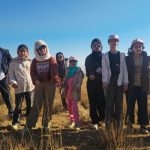
A mountain range.

Photo courtesy of the author, used with permission.

Addressing climate change, displacement, and statelessness requires stronger legal protections and increased global cooperation. Current refugee law does not recognize those displaced by climate change, leaving many without legal status or protection.

New international frameworks should recognize individuals displaced by climate change and those at risk of statelessness, providing access to citizenship and safe resettlement. Governments should invest in climate adaptation, disaster preparedness, and planned relocation to protect affected communities and their cultural identity. Policies must also include gender-sensitive approaches to address the specific vulnerabilities faced by women and girls during displacement in the global community for long-term climate action to raise awareness and spur action on climate change, displacement, and statelessness, as these issues become an ever-growing concern in our world today.  

As climate change intensifies, it is essential to educate others and raise awareness about its impacts, including displacement and statelessness. Communities affected by climate change are leading efforts to address legal barriers and promote effective responses. Now is the time to work together to create meaningful change. 


More Recommendations

For LGBTQ+ people in Egypt, the internet is both a lifeline and a trap · Global Voices - Illustration by UntoldMag, used with permission By Enas Kamal This story, originally published on UntoldMag, was produced under the Feminist […]
Feelings of statelessness: Watching the Cantonese opera ‘The Flower Princess’ in the UK · Global Voices - Photo taken by Benson Wong, used with permission. This post is also part of Global Voices’ July 2026 Spotlight series, […]
From wreckage to resilience: Bolstering Barbados’ fishing industry against hurricane impacts · Global Voices - Fishing vessels at the Bridgetown Fish Market, February 2025. Photo by Linton Arneaud, used with permission. By Destini Cummings, Jared […]
How far-right ‘fear tactics’ affect girls seeking legal abortion in Brazil · Global Voices - Illustration by Noor, used with permission In a video posted by Chris Tonietto in early November 2025 on Instagram, the […]
How Africa is harnessing space technology for early warning systems against climate disasters · Global Voices - From Left, Head of the EU Delegation to Namibia, Ambassador Ana Beatriz Martins; African Union Commissioner for Agriculture, Rural Development, […]
Tobago’s coral reefs brace for ‘imminent threat’ · Global Voices - Brain coral photo via Canva Pro. From hotter temperatures that contribute to ocean acidification and coral degradation to instances of […]
The serpent in the code: What allegations of AI usage in the Commonwealth Short Story Prize mean for regions like the Caribbean · Global Voices - Feature image created using Canva Pro elements. Where to begin? Those could have been the very words that went through […]
Brazil will feature the number 24 on the pitch during World Cup 2026. And that carries a message · Global Voices - Art created by Global Voices on Canva Pro This post is part of Global Voices’ June 2026 Spotlight series, “Gender […]
Central Asia takes on smog · Global Voices - Kyrgyzstan’s capital, Bishkek, covered in smog. Photo by Elina Turalyeva. Used with permission. This article was written by Olga Loginova […]
Year in Review: How the Caribbean survived 2025 · Global Voices - Feature image via Canva Pro. The year had started hopefully enough, what with Trinbagonian steel pannist Joshua Regrello registering his […]
The importance of mangroves in addressing climate change in Ghana · Global Voices - Mangrove forest in Ada, Ghana. Image by Amuzujoe on Wikimedia Commons (CC BY 4.0). This story was written by Malachi Dorwu and originally published […]
How Kazakhstan resurrected the North Aral Sea · Global Voices - Kazakhstan’s Kokaral Dam was built to trap water and save the North Aral Sea. Screenshot from the video “The Aral […]
Pitching power: Unpacking the T20 Cricket World Cup crisis between Bangladesh and India · Global Voices - Supporters at the India vs Bangladesh CWC15 quarter final at the MCG, Australia. Image via Flickr by Tourism Victoria. CC […]
Waves of change: Can ocean renewables solve rising electricity costs in Jamaica? · Global Voices - Feature photo via Canva Pro. By Edgar Lewis Following the ferocious Hurricane Beryl last July, scores of Jamaicans expressed outrage […]
Social networks fuel youth mobilization on Argentina’s streets · Global Voices - Students protest with a banner saying ‘Science and public university are people’s rights.’ Photo by Diario UNO, used with permission. […]
Trinidad’s border communities face rising citizen security risks amid U.S.-Venezuela tensions · Global Voices - The Independence variant littoral combat ships USS Tulsa (LCS 16), right; USS Manchester (LCS 14), centre; and USS Independence (LCS […]
Ugandan activists make the case for ecofeminism · Global Voices - Image by Global Voices on Canva Pro. This story is part of Undertones, Global Voices’ Civic Media Observatory’s newsletter and […]
Melissa Koby becomes first Black US Open theme artist, and honours Althea Gibson by channelling her own Jamaican grandmother · Global Voices - Feature image created using Canva Pro elements. With the 2025 US Open having kicked off on August 18, many tennis […]
Water pollution in DRC attributed to Chinese mining company · Global Voices - Some of the polluted water discharged into the city. Screenshot from the video “LUBUMBASHI: Polluted water discharged by CDM is […]
Songs of resistance: Nepal’s Indigenous communities fight to preserve their musical heritage · Global Voices - Pilru, a terracotta musical instrument made by Tharus and Kumhars of Nepal’s southern plains. Photo by Sanjib Chaudhary. Used with […]
Meta removes Bangladeshi community archivists’ pages through false copyright claims · Global Voices - Photo by Bastian Riccardi from Pexels. Used under a Pexels License. For the past several months, a coordinated digital campaign […]
Kenya outlawed the sharing of Indigenous seeds. A village choir is fighting back · Global Voices - A cross-section of soil with several green sprouts emerging, including one that looks like a musical treble clef, 2 that […]
Too afraid to leave home: ICE’s toll on Latino HIV care in the United States · Global Voices - Albé Sanchez. Photo by Liam James Doyle for Uncloseted Media and Rewire News Group. Used with permission. By Sam Donndelinger […]
Why the pani puri platter remains India’s favourite snack · Global Voices - A plate of pani puri garnished with coriander leaves and chutney. Image via Wikimedia Commons by Shruthi612, CC BY-SA-4.0 India […]
States of emergency and the Caribbean’s development challenge · Global Voices - The logo of the Trinidad and Tobago Police Service (TTPS), taken at the TTPS building on Duke Street in Port […]
Women and young girls bear the brunt of Mali’s worsening security crisis · Global Voices - Protest in Mali against violence towards women. Screenshot from the video “Protests in Mali against violence towards women” on the […]
Kenya’s smallholder farmers are challenging a law preventing them from sharing indigenous seeds · Global Voices - Illustration by Minority Africa, used with permission. This story by Jackson Okata was originally published by Minority Africa and a shorter […]
Climate change brings changes to North Kivu’s agricultural practices in the DRC · Global Voices - A maize variety exhibition. Photo by Hervé Mukulu from GreenAfia, used with permission This article by Hervé Mukulu was first […]
Who is talking about artificial intelligence in Ecuador? · Global Voices - From left to right: Mónica Reinoso (Defensoría del Pueblo), Susana Cadena (Datalat), Carlos E. Flores (Openlab), Marco Insuasti (Mintel) and […]
How much will it take to rebuild Venezuela after the earthquakes? · Global Voices - Collapsed building in Tanaguarena, one of the most impacted areas in La Guaira, Ground Zero of the disaster. Photo by […]
Scroll to Top