Australia’s Budj Bim features one of the world’s oldest aquaculture systems · Global Voices

Budj Bim Cultural Landscape with fish traps

Screenshot from ‘World Heritage Nomination – Budj Bim Cultural Landscape’ by YouTube user Gunditj Mirring. Fair use.

Australia has one of the world’s oldest aquaculture sites, a controlled aquatic farming environment, where eels were farmed by Indigenous people for thousands of years. Scientists estimate one of the five systems is around 6,600 years old, based on carbon-dating findings.

The Budj Bim eel farms’ cultural landscape in western Victoria was added to the UNESCO World Heritage List in 2019. Budj Bim is a dormant volcano with ancient basalt lava flows. It was the first site inscribed on the UNESCO list for its cultural significance alone.

This video was produced by the Gunditj Mirring Traditional Owners Aboriginal Corporation at the time of its nomination:

The Gunditjmara are the traditional Indigenous owners of the land. They resisted white colonization and dispossession in the hard-fought frontier Eumerella Wars from the 1830s to the 1860s. Many lived on a Church of England mission near Lake Condah from the 1890s till the 1950s.

This hand-drawn map of the Lake Condah area and fish trap systems was produced by Alexander Ingram in 1893:

Map of lake Condah Aboriginal Fishery produced by Alexander ingram. reproduced courtesy of South Australian Museum

Map of Lake Condah Aboriginal Fishery produced by Alexander Ingram. Reproduced courtesy of the South Australian Museum. Used with permission.

TikTok user, westvicbrolga, recently posted a video of a Budj Bim tour led by Gunditjmara man, Joey Saunders:

@westvicbrolga

The Brolga took a tour at Budj Bim Cultural Landscape, learning about the ancient ways of the Gunditjmara people who have called this Country home for thousands of years. #nature #history #indigenous #firstnations #culture

♬ original sound – westvicbrolga

Local Winda-Mara Aboriginal Corporation conducts guided tours of the eel traps and stone houses. The Tae Rak Aquaculture center at Lake Condah has many stone holding tanks for eels, and visitors can have an eel tasting in their bush tucker cafe.

The discovery of the traps has helped to correct misconceptions about pre-colonial Indigenous peoples as being only nomadic hunter-gatherers. Ian J. McNiven, Professor of Indigenous Archaeology at Monash University explained the new findings in an article in The Conversation:

Rather than living passively off whatever nature provided, the Gunditjmara actively and deliberately manipulated local water flows and ecologies to engineer a landscape focused on increasing the availability and reliability of eels.

Manipulation of the landscape involved stone structures (such as traps and channels) dating back at least 6,600 years. Eel aquaculture facilities (ponds and dam walls) pre-date contact with Europeans by many hundreds (and possibly thousands) of years.

The remains of approximately 300 stone-walled structures, which may have been houses, have also been found near the eel traps. They could provide evidence of permanent occupation before European contact.

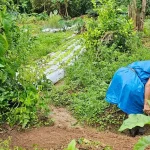
Remains of a stone hut at Budj Bim 2022 - Photo by Heather Milton, used with her permission

Remains of a stone hut at Budj Bim 2022. Photo by Heather Milton. Used with permission.

One of the world’s oldest creation stories also stems from Budj Bim, explaining the origins of the iconic volcano:

 

Post by @janggolan@mastodon.social
View on Mastodon


More Recommendations

How Africa is harnessing space technology for early warning systems against climate disasters · Global Voices - From Left, Head of the EU Delegation to Namibia, Ambassador Ana Beatriz Martins; African Union Commissioner for Agriculture, Rural Development, […]
Some Caribbean podcasts to tune into on International Podcast Day · Global Voices - Feature image designed using Canva Pro elements. Monday, September 30 is International Podcast Day. As of June 2024, there are […]
Beyond displacement: Examining the link between climate change and statelessness · Global Voices - The aftermath of Typhoon Sendong in the Philippines. Photo via Wikimedia Commons (CC BY 2.0). By Olivia Karp  This essay was written […]
Feelings of statelessness: Watching the Cantonese opera ‘The Flower Princess’ in the UK · Global Voices - Photo taken by Benson Wong, used with permission. This post is also part of Global Voices’ July 2026 Spotlight series, […]
Disease, drought, and conflict: How Yemenis are adapting to a compounding crisis · Global Voices - ICRC’s projects provided solar energy and clean water for hundreds of thousands of Yemenis in 2025 alone — vital for […]
Sheep kurt: The tradition of Kazakh dairy · Global Voices - Photo by Bauyrzhan Bismildin and assistant Alexander Leonov via Vlast.kz, used with permission. This story by Aliya Bolatkhan (translated from […]
Azerbaijan’s Gymnastics Federation tainted by abuse accusations · Global Voices - Image by Arzu Geybullayeva On January 16, Marina Vasilyeva, the deputy minister of youth and sports in Azerbaijan, was dismissed […]
Haris Pardede: Trailblazing football reporting in Indonesia · Global Voices - Bung Harpa has covered a football match at Baku Olympics Stadium, Azerbaijan. Photo used with permission Haris Kristanto Pardede is […]
How data gaps deepen climate injustice in the Himalayas · Global Voices - A Himalayan glacial lake. Image from Pexels. This article was submitted as part of the Global Voices Climate Justice fellowship, […]
The signal we cannot ignore: What the LONDA 2025 report reveals about Africa’s digital rights · Global Voices - Researchers, authors, and Paradigm Initiative team members stand on stage during the official launch of the LONDA 2025 report at […]
Meta removes Bangladeshi community archivists’ pages through false copyright claims · Global Voices - Photo by Bastian Riccardi from Pexels. Used under a Pexels License. For the past several months, a coordinated digital campaign […]
Do social security allowances empower or disempower endangered Indigenous groups in Nepal? · Global Voices - Festival preparation in Chepang village. Photo of Jimling Village in Rapti Municipality of Chitwan District, Nepal. Photo by Biswash Chepang. […]
Water pollution in DRC attributed to Chinese mining company · Global Voices - Some of the polluted water discharged into the city. Screenshot from the video “LUBUMBASHI: Polluted water discharged by CDM is […]
When women organise, democracy survives: Why gender justice cannot be a casualty of global crises · Global Voices -   Women Celebrating International Women’s Day in Mexico City, Mexico, March 2023. Photo by Miguel González on Pexels. By Christelle […]
Seeking independence from Chinese exports, Brazil enters bid to explore rare earths · Global Voices - Powdered rare earth minerals. Image from Wikimedia Commons, license: public domain. For the past decades, China has undoubtedly dominated the […]
Nationalistic performance versus Bushido traditions: Debates over Japanese cleanup at the 2026 FIFA World Cup · Global Voices - Trash bags used by Japanese fans during the 2026 World Cup. Screenshot from the YouTube channel of user @taiyojr.10. Fair […]
Support Global Voices as we launch our donation campaign · Global Voices - Members of the Global Voices community at the GV summit in Kathmandu, Nepal, in December 2024. Photo by Jer Clarke. […]
‘Galician identity and literature are deeply rooted in land,’ award-winning Galician writer explains · Global Voices - Galician countryside. NoelFeans/Flickr under licence CC BY 2.0. Every May 17, the autonomous region of Galicia, Spain, interrupts its routine […]
Central Asia takes on smog · Global Voices - Kyrgyzstan’s capital, Bishkek, covered in smog. Photo by Elina Turalyeva. Used with permission. This article was written by Olga Loginova […]
Poisoned waters: Indigenous communities fight to protect Thailand’s Kok River · Global Voices - Communities demand action as Kok River contamination remains unresolved. Photo from Prachatai, content partner of Global Voices. This edited article […]
Inside China’s hidden eating disorder communities · Global Voices - A low-calorie meal shared on Xiaohongshu in the ED networks. Edited screenshot. Fair use. On Chinese social media platforms, eating […]
The illusion of online public opinion in Lebanon’s political conflicts · Global Voices - The Qasmiya Bridge on the Litani River, which connects southern Lebanon to the rest of the country, was destroyed by […]
The lakes that should not exist in Pakistan’s mountain ranges · Global Voices - Ratti Gali Lake is an alpine glacial lake which is located in Neelum Valley, Azad Kashmir, Pakistan. Image by ARFayyaz […]
How Europe ships its waste to Morocco and calls it ‘recycling’ · Global Voices - Image by UntoldMag, used with permission By Khalid Bencherif and Federica Rossi This story, by Khalid Bencherif and Federica Rossi, […]
The political meaning of football: From Salazar’s playbook to Iran’s stadiums · Global Voices - Tractor FC fans during a game against Esteghlal FC on 18 May 2023. Photo by Amir Ostovari, Farsnews.ir via Wikimedia […]
The security we don’t see: A call for solidarity, not sympathy · Global Voices - Graffiti in the subway, underground in Vienna, Austria’s Favoriten district: ‘Solidarity not charity’ and ‘EU disarm!’ Photo by Herzi Pinki […]
’I don’t see Palestine as an isolated story‘: An interview with Vivien Sansour, founder of the Palestine Heirloom Seed Library · Global Voices - Palestinian farmers harvesting olives in the Jenin area, November 2015. Photo by TrickyH on Wikimedia Commons (CC BY-SA 3.0). By […]
From blooms to bytes: Will Kenya’s data center boom repeat the ‘Greenhouse Effect’? · Global Voices - Server racks in a data center. Image by Brett Sayles via Pexels. License: Free to use. By Julius Okoth Between the […]
The key to saving potato cultivation amid climate disruption in the Democratic Republic of the Congo · Global Voices - CAPSA Luotu seed potato repository. Image by GreenAfia GreenAfia first published this article on September 10, 2025. Global Voices republished […]
Reimagining Caribbean indenture in an artistically botanical afterlife · Global Voices - Image of the title wall of the art exhibition ‘The Botanical Afterlife of Indenture: Imaginative Archives,’ which took place at […]
Scroll to Top