Fishing vessels at the Bridgetown Fish Market, February 2025. Photo by Linton Arneaud, used with permission.
By Destini Cummings, Jared Koon Koon, Darius, Leacock, Alexia Lovell, Tyrie Oxley and Linton Arneaud
On July 1, 2024, Hurricane Beryl made landfall in Barbados. The Category 4 storm battered the island’s coast, toppling boats, destroying critical infrastructure, and severely disrupting one of the island’s most important sectors: the fishing industry. More than a year later, fisherfolk across Barbados are still grappling with the loss of their livelihoods and the daunting task of rebuilding from the wreckage.
Small-scale fisheries play a critical role in global and local sustainability, economic development, social well-being, and nutrition. For a semi-developed Caribbean island like Barbados, which relies significantly on its marine resources, the industry is essential. It provides livelihoods for many locals, contributes to the economy, and serves as an important source of employment and food security.
Beyond its economic value, the Barbados fishing sector plays a crucial role in maintaining the balance of aquatic ecosystems and supporting biodiversity conservation. Fish are a vital part of the Barbadian diet, a rich source of protein that bolsters food security and decreases reliance on imported food. Socially, fishing is deeply tied to the island’s heritage and identity. Traditional fishing villages like Speightstown, Oistins, and Holetown are not only economic hubs but also cultural landmarks that celebrate the island’s maritime history.
Echoes of Hurricane Beryl
The impacts from the storm were immediate and continue to be profound. At Oistins, one fish vendor’s wound from Beryl was still raw. “I could not bear to speak,” she admitted, “because if I did, I would cry. All of my source of income was gone, boats sunk and barely any fish to sell.” Another vendor, a boat owner who also lost her vessel, was just sitting with nothing to do. She spoke of her struggle to get back on her feet, with low funds and a child to support.

Large, reinforced concrete blocks are used to dissipate wave energy. Photo taken at the Bridgetown Fish Market by Linton Arneaud,used with permission.
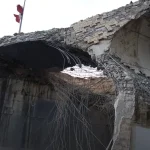
In the capital, Bridgetown, the damage was evident. The breakwater, a shell of itself, had many of its dolos — massive reinforced concrete blocks used to dissipate wave energy — toppled and sunken. “A lot of the fellas just want to get their boats back into the water and off of the land,” one fisherman explained, “so they are fixing them as much as they can, but [they] still can’t fish. It’s giving them a sense of hope.”
Other types of damage were less visible. One boat captain from Paynes Bay reported that most of the fishing aggregate devices (FADs) used to attract fish had been destroyed, significantly affecting their catch. It became clear that the impact of climate change had outgrown the current protective infrastructure.
A call for resilience

Fisherfolk at the Bridgetown Fish Market. Photo by Linton Arneaud, used with permission.
In the months following the storm, 54 individuals within Barbados’ fishery sector — boat owners, fishermen, fish vendors, processors, and other related workers at major fish landing sites that included Bridgetown Public Market, Oistins Fish Market, Pile Bay, Conset Bay, and Paynes Bay — were interviewed for a survey. A practical component of the University of the West Indies (UWI) Cave Hill’s Level 3 Fishery Biology course, offered by the Faculty of Science and Technology, the survey assessed the impact of Hurricane Beryl on the Barbados fisheries sector.
Beyond conventional engineering solutions, the findings highlight a growing need for a holistic approach that integrates nature-based solutions into disaster preparedness. These solutions, which utilise natural ecosystems to protect communities and infrastructure, are viewed as a crucial component of a more sustainable recovery. The survey results revealed a strong consensus among fisherfolk on several key improvements.
Charting a course for recovery
The main finding of the survey revealed a strong consensus for stronger infrastructure. While participants called for improvements like extending the height, length, and proximity of the breakwater, they also underscored the importance of nature-based solutions like coral reef restoration, which can reduce wave strength while boosting marine biodiversity. Natural approaches like this can serve as critical complements to traditional engineering, especially as current protective measures are no longer proving adequate against increasingly intense storms.

The main facility at the Bridgetown Fish Market. Photo by Linton Arneaud, used with permission.
The need for financial assistance, resources, and sustainable practices is inextricably tied to fisheries management concepts. Providing equipment and financing can assist fisheries workers in rebuilding and continuing operations, while simultaneously supporting sustainable methods that protect the long-term health of fish stocks and the processing environment. Without proper support, fishery-dependent communities may struggle to recover, leading to declines in employment, food security, and biodiversity.
Fisherfolk also expressed a need for more robust boats, built with stronger materials such as reinforced fibreglass, Kevlar, and marine-grade aluminium, to better withstand strong waves and winds. Better boat storage was also a common theme. A larger marina with strengthened anchoring points would allow for more space and prevent boats from colliding, they said; dry storage — on-land facilities made to endure hurricane-strength winds — were also identified as a crucial protective measure.
Answering the call
In response to these urgent needs, the Barbados Fisheries Division (BFD) has recognised the need for greater resilience. Chief Fisheries Officer Shelly-Ann Cox stated that understanding the importance of a robust infrastructure to protect livelihoods and ensure a stable fish supply is at the forefront of the BFD’s work.
The Beryl Emergency Response and Recovery Project (P507109), funded by the World Bank, is currently underway. This initiative is complemented by a project designed to enhance the resilience of the island’s fishing sector, supported by the UNDP and the government of Japan.

Docked fishing vessels and a catch at the Bridgetown Fish Market. Photo by Linton Arneaud, used with permission.
The focus is on key aspects of recovery, including vessel repair and replacement assistance, marina rehabilitation, and coastal protection. The projects also aim to strengthen resilience for future events by improving the National Emergency Management System (NEMS) and enhancing disaster preparedness. The BFD is also prioritising the construction of a marine travel lift and haul-up facility, slated for later this year, to further enhance the ability to safely manage vessels.
Ultimately, the survey findings highlight the necessity of combining disaster preparedness with fisheries biology to ensure that both human livelihoods and marine ecosystems remain resilient in the face of environmental threats, an approach that is central to securing a more sustainable future for Barbados’s vital fishing sector and its people.