Healing a region: How healthcare is bringing peace to Arauca, Colombia ยท Global Voices

MSF set up mobile clinics in villages affected by the conflict and where access to healthcare is insufficient. In this photo, a clinic was set up in the village of Laureles II, in Arauca. Photo by Santiago Valenzuela โ€“ MSF, used with permission.

This article by Samir Jones was originally published by Peace News Network on February 18, 2026. An edited version is being republished on Global Voices under a content partnership agreement.

Mariocy, a 39-year-old Venezuelan mother living in a rural area on the outskirts of Araucaโ€™s capital, says she constantly faces obstacles when it comes to finding fairly paid work and accessing basic healthcare for her family. โ€œFor us Venezuelans it is difficult to get a job here,โ€ she states in anย interviewย with Mรฉdecins Sans Frontiรฉres (MSF). โ€œIn Arauca, we have received healthcare only through mobile clinics of [humanitarian] organizations.โ€

Arauca is located in northeastern Colombia and shares a border with Venezuela, making it a common destination for Venezuelan migrants and refugees. Since 2022, the region has frequently appeared in headlines due to armed conflict between the National Liberation Army (ELN) and dissident factions of the Central General State (EMC). The indirect experiences of the civilians impacted by this conflict, however, are rarely discussed in the media. For many residents, โ€œpeaceโ€ is not defined by ceasefires or negotiations, but by access to basic needs. Can a family move freely? Can a mother reach a clinic for her sick child without crossing dangerous territory?

The crisis in Arauca is not only about battles and bullets. It is about how conflict seeps into daily routine. Aย recent analysis by the Global Protection Clusterย identifies these urgent risks as the โ€œillicit impediment and restriction of freedom of movement, confinement, and forced displacement.โ€ The same report notes that as of 2023, 34 percent of the departmentโ€™s population has been recognized as victims of the armed conflict, leaving thousands cut off from education, food, and especially basic medical needs. As Siham Hajaj, MSFโ€™s head of mission in Colombia, tellsย Peace News Network (PNN), โ€œFor the communities caught in the middle of clashes between armed groups and for thousands of migrants, access to healthcare has been hampered by multiple effects associated with the armed conflict.โ€

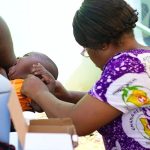
In Laureles II, MSF treated women with babies in their arms who had not received a full course of vaccinations or who were suffering from stomach illnesses due to poor water quality. Photo by Santiago Valenzuela โ€“ MSF, used with permission.

So where exactly do health and peace intersect? When families cannot move freely and experience limited access to primary medical care, health becomes a fault line that increases stress and mistrust. Services deteriorate, rumors spread, and worst of all, communities fracture. In a region heavily populated with displaced Venezuelan families, many are blamed for community hardships and become alienated. According to the Global Protection Cluster, Venezuelan families in Arauca are often denied services and face discrimination, including risks of gender-based violence and child recruitment.

Reliable, inclusive healthcare does more than treat illness. It can function as social glue that softens community strain and transforms clinics into safe spaces for everyone. That is exactly what MSF has been doing since March 2025. Rather than forcing patients to travel long distances through risky territory, MSF brings care to the rural, neglected, and conflict-affected municipalities of the department, including Tame, Arauquita, and Puerto Rondรณn. Hajaj says, โ€œBetween March 3 and November 13, 2025, [MSF] conducted 4,899 general medical consultations, 801 sexual and reproductive health consultations, 65 consultations for pregnant women, and 314 individual mental health consultations.โ€

Between March and November 2025, MSFย  implemented a medical project in the department of Arauca, situated in northeasternย Colombia near the border with Venezuela. Their work consisted of providing medicalย and humanitarian care.

Between March and November 2025, MSFย  implemented a medical project in the department of Arauca, situated in northeasternย Colombia near the border with Venezuela. Their work consisted of providing medicalย and humanitarian care. Photo by Guzmรกn Botella โ€”ย MSF, used with permission.

While these numbers are impressive, the real impact becomes clear through the stories of those receiving care from MSF. โ€œThe children get sick all the time,โ€ a pregnant Venezuelan mother who migrated to Araucaย tells MSF. โ€œI donโ€™t have a [Temporary Protection Permit] or a card but thank God I was found by a foundation and they are the ones who are helping me with the consultations.โ€

A mobile clinic and the accessibility to healthcare cannot end armed conflict. They can, however, create shared ground. Host communities and newcomers sit in the same waiting areas, rely on the same staff, and experience a rare form of fairness, where treatment is based on medical need. โ€œNeutrality and independence,โ€ says Hajaj, โ€œallowed us to reach thousands of patients in areas affected by armed conflict.โ€

This consistent, neutral healthcare approach strengthens social unity, reduces fear and exclusion, and rebuilds trust across divided communities. As Dr. Tedros Ghebreyesus, the Director-General of the World Health Organization (WHO), puts it, โ€œThere cannot be health without peace, and there cannot be peace without health.โ€ Through its work in Arauca, MSF has demonstrated that accessible healthcare is more than a service; it is a peace-building system that treats all people as worth serving.

However, providing healthcare in Arauca and other regions scarred by violence remains extraordinarily difficult.ย According to aย WHO reportย on health system recovery in fragile and conflict-affected situations, it is common for violence to damage infrastructure and clinics, drive health workers away, disrupt medical supplies, and prevent people from safely reaching care when they are unable or unwilling to access facilities in insecure areas. When roads are blocked or shut down without warning, even basic services can be beyond peopleโ€™s grasp. In places where a clinic can close at the sound of gunfire, neutral healthcare becomes the thin line that allows care to keep moving forward.


More Recommendations

Concerns grow as Jamaica ends Cuban medical programme ยท Global Voices - Feature image created by Janine Mendes-Franco using Canva Pro elements. Perhaps Jamaicans should have seen this coming when the government, […]
Tuvalu aims to become a โ€˜Digital Nationโ€™ amid rising sea levels ยท Global Voices - An aerial view of Tuvalu’s coastal adaptation project. Photo from the UNDP Climate Flickr page. CC BY-NC 2.0 This post […]
The discursive function of gendered online hate speech in Kosovo ยท Global Voices - Graphic made via Canva Pro. Courtesy of Sydney Allen. By Jetlir Buja This article was produced by Jetlir Buja from […]
How Kazakhstan resurrected the North Aral Sea ยท Global Voices - Kazakhstanโ€™s Kokaral Dam was built to trap water and save the North Aral Sea. Screenshot from the video โ€œThe Aral […]
Jamaican bobsledders bring unexpected joy to an island beset with post-hurricane stress ยท Global Voices - Photo of a display about the Jamaican bobsled team at the Jamaican Bobsled Cafรฉ in Montego Bay by David Drissel […]
Kenya outlawed the sharing of Indigenous seeds. A village choir is fighting back ยท Global Voices - A cross-section of soil with several green sprouts emerging, including one that looks like a musical treble clef, 2 that […]
After 30 years of cultural revival, the Siraya reclaim their Indigenous status in Taiwan ยท Global Voices - Siraya activist Cheng-hiong Talavan led the younger generation in singing an ancient Siraya song. Screenshot from Onini315โ€˜s YouTube channel This […]
When dry season never ends ยท Global Voices - An aerial photo of Guanacaste, Costa Rica. Image from Photo by Jean Paul Montanaro via Pexels. Free to use. Water […]
Introducing kobudo, Japanโ€™s traditional martial arts ยท Global Voices - The 49th Japanese Kobudo Demonstration at the Nippon Budokan. Photo taken by Jo Carter. Used with permission. Nowadays, most martial […]
Bosnian rock band Dubioza Kolektiv satirizes blind trust in artificial intelligence ยท Global Voices - Screenshot of thumbnail image of the YouTube video for the Dubioza kolektiv song โ€œYebigaโ€ featuring the character ฤipalo Junuz, played […]
Novel โ€˜Le Sang du Pouvoirโ€™ by Hubert Kolani delves into African power ยท Global Voices - Photo by Hubert Kolani. Used with permission. In spaces where freedom of expression is under threat, criticism seldom leads to […]
Chadian environmental activist Hindou Oumarou: โ€˜AI governance must respect Indigenous peoplesโ€™ ยท Global Voices - Ibrahim says AI has the potential to support, rather than replace, Indigenous peoplesโ€™ knowledge. She gives a positive example in […]
Melanesian nations vow to connect and expand marine protected areas ยท Global Voices - Coral reefs in Papua New Guinea. Photo by Brocken Inaglory. Wikimedia Commons. CC BY-SA 3.0 This post is part of […]
โ€˜Silence has become both more dangerous and more complicitโ€™: An interview with Lebanese-British artist, Amale Khlat ยท Global Voices - Amale Khlat, โ€˜Fishing on a Tridacnaโ€™ Cosmetic Vessel, 2023. 34 x 49 cm (13.4 ร— 19.3 in). Watercolor and archival […]
Three years of Pride: Santiago Mรฉndezโ€™s visual archive of queer Venezuela ยท Global Voices - Pride in Caracas, Venezuela, 2024. Photo by Santiago Mรฉndez. Used with permission. This post is part of Global Voicesโ€™ June […]
Hong Kong artist Steven Tang brings local signature dishes to life through culinary art ยท Global Voices - Hong Kong artist Steven Tang. Photo by Kyle Lam/HKFP. Used with permission. This report was written by Kelly Ho andย publishedย in […]
Invisible strategies: How fear of being outed shapes LGBTQ+ life online in Serbia ยท Global Voices - Pins displaying LGBTQ+ symbols and flags. Photo by Marek Studzinski on Unsplash: License. This article was produced by the NGO […]
How much will it take to rebuild Venezuela after the earthquakes? ยท Global Voices - Collapsed building in Tanaguarena, one of the most impacted areas in La Guaira, Ground Zero of the disaster. Photo by […]
Protecting Pangolins in India: When an armor is not enough ยท Global Voices - An Indian Pangolin found in the Kalakkad Mundanthurai Tiger Reserve (KMTR) in Tamil Nadu. Image via Wikipedia by A. J. […]
Citizenship in limbo: Why Assamโ€™s Citizenship Amendment Act (CAA) pathway struggled to gain traction ยท Global Voices - Anti-CAA Banner demonstrated at Cultural Protest organised by Artistes of Assam. 2019. Image via Wikipedia by Ankur Jyoti Dewri. CC […]
โ€˜The light plays tricks on usโ€™: Trinidadian photographer Marlon Rouseโ€™s โ€˜Sacred Objects, Fruit of the Landโ€™ ยท Global Voices - Photographer Marlon Rouse’s โ€œCaraili,โ€ part of his series โ€œSacred Objects โ€”ย The Fruit of the Land.โ€ Caraili (Momordica charantia) is a […]
Solidarity fields in Syria: Reviving local seed production ยท Global Voices - The Solidarity Fields in Jaramana initiative is an extension of the โ€œSolidarity Fields and Dignityโ€ project. Picture by Lahlah. Used […]
Sheep kurt: The tradition of Kazakh dairy ยท Global Voices - Photo by Bauyrzhan Bismildin and assistant Alexander Leonov via Vlast.kz, used with permission. This story by Aliya Bolatkhan (translated from […]
Researchers in Africa are using AI to fill the global health care gap ยท Global Voices - A child being given an injection. Image by Kwameghanaย via Wikimedia Commons (CC BY-SA 4.0 Deed). By Chukwudi Anthony Okolue In […]
The invisible migration: How urban refugees are powering Ugandaโ€™s economy ยท Global Voices - Students at Bondeko tailoring their clothes. Photo by Godfrey Luzinda. Used with permission. Thisย article by Ayebare Cinderella was originally published […]
Social networks fuel youth mobilization on Argentinaโ€™s streets ยท Global Voices - Students protest with a banner saying โ€˜Science and public university are people’s rights.โ€™ Photo by Diario UNO, used with permission. […]
The key to saving potato cultivation amid climate disruption in the Democratic Republic of the Congo ยท Global Voices - CAPSA Luotu seed potato repository. Image by GreenAfia GreenAfia first published this article on September 10, 2025. Global Voices republished […]
Wasting renewable energy comes at a high cost for the Dominican Republic ยท Global Voices - Feature photo via Canva Pro. By Zahiris Priscila Francisco Martรญnez Waste is costly. In the Dominican Republic, according to a […]
Before the algorithm decides: Queer storytelling as resistance in Nigeria ยท Global Voices - Still from the film โ€˜รฌfรฉ,โ€™ used with permission. By Pamela Adie This post is part of Global Voicesโ€™ April 2026 […]
How far-right โ€˜fear tacticsโ€™ affect girls seeking legal abortion in Brazil ยท Global Voices - Illustration by Noor, used with permission In a video posted by Chris Tonietto in early November 2025 on Instagram, the […]
Scroll to Top