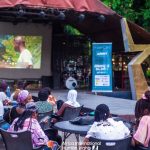
The Solidarity Fields in Jaramana initiative is an extension of the “Solidarity Fields and Dignity” project. Picture by Lahlah. Used with permission.
By Leida Zeidan
This article was originally published in Lahlah in Arabic on April 7, 2026. This translation is republished on Global Voices as part of a content-sharing agreement.
This post is part of Global Voices’ May 2026 Spotlight series, “Global crisis, local solutions.” This series offers stories of resistance and successful climate action, insight into how communities in the Global South are fighting back against the crisis, analysis of what this might mean for future generations, and more. You can support this coverage by donating here.
On a small plot of land on the outskirts of Jaramana, in rural Damascus, the earth has been transformed into a site for reviving local seed production. In stark contrast to the city’s crowded streets, the green expanses of this area represent a departure from the ordinary. It is an attempt to return to rural life, nature, and farming. On these grounds, the initiative known as “Solidarity Fields in Jaramana” was launched at the beginning of last March, when a group of organizers and farming enthusiasts began restoring the production of local and indigenous seeds by preparing the soil, sowing, covering, and irrigating it with the goal of recovering crop varieties that had nearly disappeared, amid the country’s deteriorating economic conditions and the decline of agriculture.
From Greece to Jaramana
The Solidarity Fields in Jaramana initiative is an extension of the “Solidarity Fields and Dignity” project, which operates across various regions of Syria with the aim of supporting agriculture and rebuilding the relationship between people and the land. It seeks to empower communities to produce their own food, share harvests with those in need, and create a different model of cooperative work, particularly as environmental challenges and climate change increasingly affect land and agriculture.
Muhannad Deeb, an artist and coordinator of the Solidarity Fields in Jaramana initiative, spoke to Lahlah magazine about the project’s origins. It emerged, he said, “from the convergence between the Shughl wa Fan [Work and Art] initiative and ‘Solidarity Fields and Dignity in Syria,’ which was established in 2025 as an extension of the Solidarity Fields project in Greece.”
The Greek Solidarity Fields project was founded by Suleiman Dakdouk, a Syrian refugee, and his fellow Syrians in Greece. Beginning with just 0.4 hectares, two cows, and three sheep, the project eventually expanded to more than 15 hectares, spread across displaced communities. The initiative was built on a principle of self-sufficiency, organizing work residencies, farms, poultry raising, crop harvesting and marketing, as well as the production of food items including dairy products, cheeses, beverages, and other daily necessities. It also established shops to market any surplus production.
The Shughl wa Fan initiative, for its part, was founded in 2008 as an artistic, cultural, and developmental project aimed at raising awareness within Syrian society about its role in preserving living spaces, and recognizing the impact of art on creating a better environment, engaging local communities alongside governmental institutions, and clarifying the role of artists in society. This alignment in vision and goals led to collaboration and ultimately to the establishment of the Solidarity Fields in Jaramana.
Deeb continues:
After connecting and meeting with the general coordinator of Solidarity Fields in Syria, Suleiman Dakdouk, the Jaramana Solidarity Fields was established in March 2026, work in the field began, and interested parties, farmers, volunteers, and friends were invited to engage with the experience.
Local seeds and food security
The importance of local seeds lies in the fact that they represent the primary source of planting material for farmers. According to FAO, community-based seed systems can account for 80 to 90 percent of total seeds consumed, particularly for self-pollinated crops. Ensuring a supply of local seeds also helps reduce dependence on food aid.
Local seeds are well-suited to local climates and low-input farming systems, and they carry wide genetic diversity, making them resistant to disease and adaptable to climate variation. FAO notes that community seed system activities tend toward integration and self-organization, encompassing the ways in which farmers produce, disseminate, and access seeds directly from their harvests, or through exchange and barter with friends, neighbors, relatives, and through local markets.
Deeb describes the heart of the Solidarity Fields work as relying on “diverse agricultural experiences that are shared to enrich the project,” adding that the initiative sources its seeds primarily from household gardens, “where most people rely on their home plots to produce vegetables.”
According to Deeb, indigenous seeds can be identified by experts, but the most reliable method remains obtaining them from a mature, locally grown fruit. Seed planting is the project’s first phase: the initiative has allocated approximately 300 dunams (around 75 acres) of farmland for cultivating the seedlings that emerge from these seeds. After the cultivation and harvest process is complete, the produce is distributed in a way that ensures the project’s continuity and the availability of authentic local seeds going forward.
Seeds are the fundamental source of human food and the carriers of the genetic traits of crop varieties and types. Over time, through improvement, selection, and adaptation, the highest-quality varieties have emerged. Improving seeds and obtaining high-quality varieties is essential to increasing production and meeting environmental challenges. FAO underscores that food security depends critically on farmers having access to good seeds appropriate to their environment. Without good seeds, there can be no good crops. This makes projects that provide local seeds particularly significant, especially in post-war and post-disaster periods.
The importance of Indigenous seeds
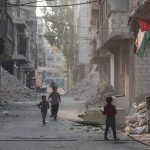
The war in Syria caused the rural population to shrink by 50 percent between 2011 and 2016, leading to heavy losses in crop and livestock production, the destruction of irrigation systems, damage to vast agricultural areas, and sharp increases in the costs of agricultural inputs such as seeds, fertilizers, and pesticides. The blockade of certain areas also prevented the transport of seeds, pushing farmers to rely on imported varieties. When war ravages a country, the continuity of its agricultural systems is also destroyed. Farmers may keep their lives but lose land and seed stocks carefully stewarded for generations, lacking the resources for reconstruction.
Deeb considers this initiative especially significant following the years of drought and conflict, arguing that it “helps increase the number of farmers adopting this approach, thereby expanding the areas cultivated with local seeds, particularly as production costs are reduced through the elimination of chemical pesticides and fertilizers.”
He also believes the initiative has the potential to bring about lasting change in agricultural practice and to influence farmers and local communities: “Most farmers rely on experience before adopting any method in their work, so it’s possible for the results of this experiment to influence farmers and the wider community, making it more widespread.”
Given the challenges facing agriculture in Syria and the decline in agricultural output in recent years, the production of local seeds represents a vital step toward ensuring sustainable farming and toward rebuilding the farmer’s relationship with the land and their dependence on it as a source of food, in the face of both climatic and political crises.