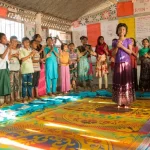
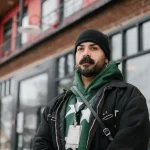
Siraya activist Cheng-hiong Talavan led the younger generation in singing an ancient Siraya song. Screenshot from Onini315‘s YouTube channel
This post is part of Global Voices’ August 2026 Spotlight series, “Indigenous Rights.” This series offers insight into the lives and experiences of Indigenous peoples to build connections across regions, center Indigenous experiences, and share the stories of leaders, activists, community members, and more. You can support this coverage by donating here.
Indigenous Siraya were officially recognized via executive decree as Taiwan’s 17th indigenous group on July 30. They are also the first plains tribe group to obtain Indigenous status after the passage of the Plains Indigenous Peoples Status Act in October 2025.
Like other Indigenous tribes in Taiwan, Siraya society was matriarchal, and its people, belonging to the Austronesian, spoke a distinctive language known as Sinckan, which was recorded through romanization by missionaries during the Dutch colonial era (1624–1662).
Siraya people settled in the southwestern plain areas of Taiwan’s main island long before the Qing Dynasty defeated the Kingdom of Tungning (1662-1683), established by Ming’s loyalist Zheng Chenggong, when some of the tribes were forced to relocate to the southeastern coast.
The tribal group practiced Animism and had unique ritualistic practices to worship the spiritual interconnectedness of the human and natural world. However, their culture and language almost vanished as a result of more than three centuries of forced assimilation, first under the Qing dynasty, followed by Japanese imperial rule, and then military dictatorship under the Kuomintang (KMT) of the Republic of China (ROC).
It has taken more than 30 years for the Siraya to rediscover, reconstruct, and revive their language and culture. Below is a video showing one of the very few surviving matriarchal rituals:
Comparing the mountains and the plains Indigenous groups
Under Qing colonial rule (1684–1895), the Indigenous peoples in Taiwan were divided into two categories: The “raw” or “uncivilized barbarians” (生番), who resided in the mountainous areas and resisted the Qing administration, and the “mature” or “civilized barbarians” (熟番), who resided in the flatland, paid taxes, and submitted to the government. Siraya people were categorized as mature barbarians.
The Qing government forced them to abandon their mother tongue; submit to Manchu rulers by shaving their hair; learn the Chinese language; and adopt Han surnames, rituals, and culture.
During the Japanese colonial period (1895–1945), the Japanese administrators continued dividing the Austronesian Indigenous peoples into two major categories: First, the plains Indigenous or Pingpu (平埔) peoples, who, along with Han settlers, were considered natives; second, the mountain Indigenous or the Takasago peoples, which consisted of nine unique ethnic groups. The Pingpu and Takasago peoples were geographically segregated by a military line built by the Japanese for administrative purposes, with the mountainous regions placed under military control.
After the KMT, the ruling party of the Republic of China, fled to Taiwan from mainland China upon the defeat of the Chinese Civil War in 1949, it adopted Japan’s colonial division, distinguishing Indigenous groups as “mountain compatriots” (山胞) and Pingpu peoples. But only those living in mountainous areas were registered as Indigenous peoples, while Pingpu tribes were treated like ordinary Han.
Under KMT military dictatorship (1949–1987), through education, administrative measures, and public shaming, the Pingpu tribes were forced to assimilate into Han’s culture. On the other hand, the mountain regions were designated as “restricted zones” which required special permits to enter. Thus, the KMT maintained exclusive access to the tribal communities and established patronage relations with Indigenous elites through public appointment and business licenses to sustain their single-party dictatorship with manipulated local elections.
The KMT government began to legally register Aboriginal land in Taiwan as Aboriginal Reserve Land in 1968, which granted the Indigenous tribes user rights and restricted the selling of land to Han Chinese. However, legal loopholes resulted in land seizure by developers, corporations, and local governments. It was only after Taiwan began democratizing in the early 1990s that Indigenous peoples had the space to protest for their rights.
Indigenous rights movements since democratization
Since that democratization, waves of Indigenous rights movements emerged and brought series of substantial policy changes — the derogatory term “mountain compatriots” was replaced with “Indigenous peoples” in 1994, the mandatory Han surname registration system was dropped in 1995, a cabinet-level Council of Indigenous Peoples was established in 1996 to coordinate related affairs, the collective rights of the Indigenous were codified in 1997, and Indigenous peoples’ right to education was codified in 1998.
However, Pingpu descendants’ claim for Indigenous status had been deferred as their ancestral lands are flatlands with developmental potential. Some insisted that the Pingpu have been assimilated into Han Chinese through intermarriage, and some were worried that an influx of new Indigenous members would expand the pool of privileged citizens, as Indigenous peoples in Taiwan are entitled to reserved seats in the legislature, as well as social and educational benefits through affirmative action.
It was only in 2022, through a landmark Constitutional Court ruling, that the Indigenous rights of Pingpu were recognized, which was later codified in the 2025 Plains Indigenous People Status Act. The Siraya people are the first among Pingpu to have successfully claimed their Indigenous status — a journey that took more than 30 years.
Like other Pingpu tribes, Siraya’s struggle began with land rights, as they were excluded from registering their ancestral lands under the Aboriginal Reserve Land policy. Their protests later evolved into legal battles and cultural movements among the Pingpu Indigenous tribes, including Siraya.
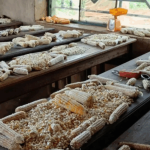
Among the Siraya activists, the dedication of the Talavan family stands out, having devoted three generations to reviving Siraya’s culture and language. The first generation, 85-year-old Cheng-hiong Talavan, founded the Tainan Pepo Siraya Culture Association (TPSCA) in 1999 to reconstruct Siraya people’s historical legacy and preserve their culture through oral history and collection of relics. His daughter Uma Talavan and her husband Edgar Macapili, who is a member of the Bisaya Indigenous people in the Philippines, decoded the Sinckan language through word-by-word translation of a Sirayan translation of “The Gospel of St. Matthew” written by early Dutch missionaries into English, Dutch, and Bisayan (an Austronesian language similar to Sinckan). The couple managed to recover 4,000 Sinckan vocabulary words and used the language to write children’s books and educational songs. The third generation, Euphone and Lici Talavan, have devoted themselves to revitalizing Siraya culture and spreading awareness.
Below are five ancient Siraya songs performed by young learners:
One Talavan family member, under the username @miss5langs, highlighted the significance of the recognition of Siraya’s Indigenous status via a post on Threads:
西拉雅正名,不是為了把任何人排除在外,也不是為了製造對立,而是希望那些曾經被歷史遮蔽的名字,終於能夠重新被看見。
也希望更多人能因為這次正名,願意去了解臺灣這片土地真正的歷史,理解平埔族群曾經走過的道路,理解語言與文化為什麼會消失,也理解這些族人並不是突然出現,而是一直都在。
即使現在的我生活在國外,我仍然會很驕傲地告訴身邊的人:我是來自臺灣,我是西拉雅族。這不是為了任何福利,也不是為了任何標籤,而是因為,這一直都是我的名字。
The recognition of the Siraya’s Indigenous status is not intended to exclude anyone or create division, but rather to ensure that the names once obscured by history can finally be seen again.
I also hope that, through this [identity] restoration, more people will be willing to learn about the true history of Taiwan, understand the paths the Pingpu peoples have walked, comprehend why their languages and cultures have disappeared, and realize that these peoples did not suddenly appear — they have always been here.
Even though I now live abroad, I will still proudly tell those around me: I am from Taiwan, and I am Siraya. This is not for any benefits, nor is it for any label — it is simply because this has always been my name.
In addition to Siraya, Kavalan, Ketagalan, Taokas, Pazeh, Papora, Babuza, Hoanya, and Makatau groups are classified as Pingpu, and they are also working to apply for official recognition of their Indigenous status.