Image taken from Freepik. Free use.
In less than a decade, Africa has become one of the most dynamic environments for growth in the global creative economy. Driven by a young demographic, fast-growing smartphone adoption, and an audiovisual and music culture that’s enjoyed worldwide, thousands of digital creators have emerged in Lagos, Accra, Dakar, Lomé, and Nairobi. However, there is an economic gap between the creators’ works and their income.
Creators left behind despite a growing market
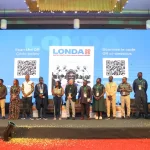
Nearly 85 percent of workers on the continent work in the informal sector, also known as the gig economy, where they engage in short-term, flexible jobs as a means of survival. Understanding what West Africa’s digital creators experience means assessing the gap between what they create and what they earn from it. The Africa Creator Economy Report 2.0, published by Communiqué and TM Global at the Africa Creators Summit in Lagos in January 2026, observed that the African creator economy is worth USD 3 billion today, with projections of over USD 17 billion by 2030.
The report also found that 60 percent of African creators earn less than USD 100 per month from their digital work, while 54 percent earn less than USD 62 per month. These are the individuals who create Afrobeat tracks that Spotify pushes to the top of the global charts, Instagram images that reach Parisian trend agencies, and popular short-form content on TikTok that is replicated elsewhere without any credit or compensation.
One role is no longer enough
Kofi Dotse is a Ghana-based travel writer, content creator, and creative producer who grew up in Accra. He hoped to become a producer, which he ultimately achieved, as well as being a content creator, editor, trade negotiator, and, since 2025, a trainer.
In an episode of his podcast Hors Script (Unscripted), “From Labor to Value… The Premium Creative Blueprint,” recorded in English in early 2026, he gave a detailed explanation of the process that shaped him:
Looking at the current ecosystem, you cannot appear to have just one hat, so a lot of creatives have had to take on several roles within the space.
However, despite accumulating all these skills, platform payouts are unpredictable, and the algorithmic compensation is largely disconnected from their efforts. Local brands, under budgetary pressure themselves, also seek to get as much as possible for as little as possible. As for consumers, the Africa Creator Economy Report states that 78 percent of young Africans spend very little on digital cultural experiences, due to a significant lack of buying power rather than their disinterest. Although creative work is free-flowing, it fails to monetize at the rate of its distribution. According to the same report, the most stable creators now get 25 percent of their income from digital products, digital courses, and e-books, and 14 percent from merchandising. This accounts for much more than the direct payments from platforms like Spotify or YouTube.
What’s more, skills development comes at a cost. Every hour spent learning about rights management or accounting is an hour taken away from the creative process itself. Skillfulness works like an invisible tax levied on talent. It is exhausting and, for most who are unable to manage, causes ongoing insecurity without contracts or social protection.
When money can’t cross borders
Stripe is a global financial services platform unavailable in almost all francophone Sub-Saharan African countries. The PayPal payment platform is partially available, though withdrawals are restricted. For creators based in Cotonou, Dakar, or Lomé, collecting payments from American or European customers poses obstacles that their counterparts in Berlin or Toronto couldn’t even imagine. This situation presents a structural bottleneck, preventing significant access to the global market.
In response to this exclusion, alternatives have emerged, including Selar, M-Pesa, and Chipper Cash. A blog post by software company Nestuge explains their real-world advantages and limitations. These tools have become the everyday infrastructure of an economy that official systems have refused to serve. Douglas Kendyson, the founder of Selar, explains that it aims to offer creators a direct and credible way to monetize their skills worldwide. According to a study published in the International Journal of Advanced Scientific Research, African creators who use these platforms have significantly higher levels of entrepreneurial autonomy than those who depend exclusively on Western platforms.
Ultimately, this informal economy operates outside any institutional framework, compensating for the lack of a structured and viable ecosystem. Much like the informal trade networks that serve the continent across national borders, it is blazing its own trail where the state and global market have failed to build connecting infrastructure. It’s a necessary infrastructure that’s as resilient as it is spontaneous.
Cultural data, profits elsewhere
A study on mapping the data labor supply chain in Africa found that thousands of workers, mainly in Sub-Saharan Africa, work as moderators, filtering traumatic content while annotating datasets to train artificial intelligence (AI) for major technology platforms, and that they contribute to systems that deny them any rights. The authors use the term “digital apartheid” to describe infrastructure in which access to tools, markets, and remuneration remains structurally unequal based on location.
Generative AI has added a layer of irony to the equation. Initiatives like Waxal, launched by Google to document some African languages, rely on thousands of African contributors. However, there is a structural problem. Once fed this open-source data, the machine generates content that circulates and is monetized, with the original language keepers receiving no revenue, shifting from digital inclusion to a new form of cultural extractivism.
A study, titled “Data Flows and Colonial Regimes in Africa: A Critical Analysis of the Colonial Futurities Embedded in AI Recommendation Algorithms in Africa,” shows that these same models are subsequently used to generate cultural African content, such as avatars, music, and visuals, which compete directly with the human creators whose work provided the source material. The system is restricted since value flows in only one direction.
The case of Shudu Gram is a prime example. This entirely digital supermodel, whose appearance mirrors that of a black South African woman, was created and marketed by a white British photographer, Cameron-James Wilson. She received substantial advertising budgets, imitating a culture with which she shares no origin.
Building alongside the system
Sedo Tossou, a Beninese creator, founded Sedo+, an African streaming platform, without raising external investor funding. In a sector obsessed with growth metrics, this decision was, indeed, a political statement. In an interview with Hors Script and a round-table in Lomé, he explained his reasoning with clarity that challenges the mainstream narratives of African tech:
Si tu n’as pas le pouvoir de l’argent, il faut que tu développes le pouvoir de la communauté. Le capital étranger cherche rarement à financer les récits africains et cherche à en contrôler le cadre. Cette distinction est fondamentale.
If you don’t have the power of money, you must develop the power of community. Foreign investment rarely seeks to finance African narratives, but rather to control their framework. That is a fundamental difference.
His assessment of the ecosystem focuses on its structure, especially the contractual stringency, rights management, and institutional capacity to protect what is created. This structure is often built in opposition to a framework that discourages informality but fails to provide an effective gateway into the formal sector. Specialists in edutainment — education through entertainment — now play a strategic role at the center of this transfer. Their success ultimately depends on their ability to merge knowledge and narrative to protect their value, making it incomprehensible to a market that seeks to quantify it at any cost.
Who will receive the USD 17 billion in 2030?
In 2020, a study by the German development agency Deutsche Gesellschaft für Internationale Zusammenarbeit (GIZ) titled “Governance of the platform economy in developing countries and emerging economies” had already underscored the absence of a robust regulatory framework in Africa. Without regulation on data, digital labor law, and taxation, there is a structural risk that income generated on the continent will flow outward to external actors. Three years on, in 2023, a study by Professors Tom Kwanya and Kutoma J. Wakunuma on platform regulation in Kenya showed that even in the most advanced countries in this area, the legal framework for click-worker (graphics labeler) protection remains underdeveloped.
Actors in this sector regularly identify three key matters as non-negotiable. Firstly, cultural data sovereignty. When African content is used to train AI models, the original creators must be identified, tracked, and paid. Secondly, click-worker protection. Moderation is work that deserves a decent salary, social security coverage, and legal recognition, not a subcontracting agreement hidden behind three layers of service providers. Lastly, international pay equity concerning geographical pay differentials is a structural choice.
Without these three fundamental changes, African creators will continue to see other non-African actors reap the benefits of their hard work instead.