Feature image created by Janine Mendes-Franco using Canva Pro elements.
Haiti has not played in the final phase of a FIFA World Cup since 1974. For 52 years, the national football team, known as “Les Grenadiers” (The Grenadiers), could never get past the Concacaf qualifying rounds — until now. Haiti’s national team has made a “historic return” to this year’s World Cup, having topped Group C during the third round of Concacaf qualifiers. Group C is a tough one, with heavyweights like Brazil, which has won the coveted trophy on five occasions, and Morocco, considered one of Africa’s most successful national football teams. Haiti currently stands at the bottom of the group, right behind Scotland.
Even after the long wait to see their national team perform on the world football stage, Haitians have maintained an endless love for “the beautiful game.” You can see football played everywhere in Haiti: in schools, in the streets, in backyards, on open fields, and in narrow corridors. Wherever there is a small open space, practically everyone — from children to adults — are playing. Football is truly the country’s national sport.
When gangs trump goals
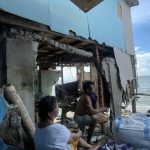
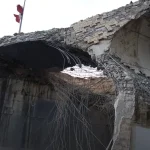
Yet, Haiti does not have many modern sports facilities. The few structures that existed are no longer useable because they are controlled by armed groups; some have been completely destroyed. The FIFA Goal Center in the municipality of Croix-des-Bouquets, for example, was the main training academy for youth football. The 400 Mawozo gang, led by Wilson Joseph (more commonly referred to as “Lanmò San Jou” — “Death Knows No Days”), took control of the area and according to various reports, several buildings on the FIFA Goal Center compound were set on fire.
Even the Sylvio Cator National Stadium in Port-au-Prince, the historic home of Haitian football, was not off limits for the gangs, which seized and damaged the facility in 2024. The Haitian Football Federation (FHF) confirmed that the stadium had been damaged, and that materials and equipment were stolen from the site. The Olympic Center, located in the Croix-des-Missions area, is also trapped in a zone controlled by groups like Chyen Mechan and Canaan-based gangs, leaving sport as one of the sectors hardest hit from the violence.
With things so difficult, the FHF, led by Monique André, has tried to support the team as much as possible. Because they could not play at home, the Grenadiers had to host all their “home” qualifying matches in Curaçao, another Caribbean island nation that qualified for this year’s World Cup.
Many were surprised by the success of the Haitian team, which predominantly comprises players living abroad and those with dual nationality, including star forwards Duckens Nazon, Wilson Isidor, Frantzdy Pierrot; midfielder Jean Ricner Bellegarde; goalkeeper Johny Placide, and defender Ricardo Adé. The only player coming directly from the local league is Wédensky Pierre, who plays for Violette Athletic Club. Local football competitions have completely stopped because of insecurity, though the league managed to organise a special short tournament aimed at keeping clubs and players active.
A significant anniversary
It is fitting that during one of the hardest times in Haiti’s history, on November 18, 2025, The Grenadiers officially qualified for the 2026 World Cup. The date is especially important because it marks the anniversary of the Battle of Vertières in 1803, the final battle of the Haitian Revolution that won the country its independence. Haitians all over the world celebrated. Back at home, the whole country was filled with excitement: Rara walking bands filled the streets in the evenings as people from all neighbourhoods and social groups celebrated together.
For one local fan, Marc, it was an unforgettable moment:
Jodi a mwen plis pase kontan, mwen jwenn fyète m ankò kòm ayisyen, mwen santi m ap vibre. Sa k pase a se plis pase yon senp kalifikasyon pou yon konpetisyon foutbòl […] se yon mesaj pou lemonn antye pou n di Ayiti pa rezime ak vyolans gang, salte ak mizè. Se yon pèp ki rich ki gen anpil bèl bagay li ka pwouve.
Today I am more than happy, I found my pride again as a Haitian, I feel myself vibrating. What happened is more than a simple qualification for a football competition […] it is a message for the whole world to say that Haiti is not reduced to gang violence, dirt and misery […] a rich people who have many beautiful things they can prove.
Right after Haiti’s qualification, team vice-captain Ricardo Adé, who plays professionally in Ecuador, sent a direct message to both the gangs and the government: “Ouvè peyi a” — “Open the country.” He repeated this request on social media and in interviews, pointing out that gangs continue to block the main roads connecting the capital to the north and south of the country.
Communities come together
As World Cup 2026 continues, people across Haiti have been enjoying the matches with great excitement: from the poorest working-class area to richer residential communities, neighbourhoods are decorated; public buses, private cars, and motorcycle taxis proudly fly the Haitian flag; street sellers sell thousands of team jerseys; and colourful banners adorn public squares across the country.
To help everyone watch the games, the Haitian government, through the Ministry of the Interior, provided big screen televisions to local and regional authorities, which allowed people in remote villages to gather in city halls, neighbourhood centres, and even some camps for displaced people, to watch the matches together.
Yet, the harsh reality the country faces remains unchanged. Even as Haitians watch the World Cup, armed gangs continue to attack local communities like Cité Soleil, where a wave of violence that began in May has been forcing thousands of residents to leave their homes.
A challenging ‘Round of 32’
The Grenadiers’ first round playoff group, often called the “group of death,” has not been kind to them. Their first match took place on Saturday June 13, in New Jersey, where the Haitian diaspora in the United States came out in their numbers to support the team as it faced Scotland. The Grenadiers lost the match 1-0.
In every city and state the team has since visited, local Haitian communities have come together to welcome the players, cheer them on, and show support. At the team’s match against Brazil in Boston, Massachusetts on June 19 — which The Grenadiers lost 3-0 — Haiti’s return to the world football stage became a source of pride and a break from daily political worries. Thousands of fans traveled across states to fill stadiums and show their love, bringing people together in a strong and meaningful way.
Despite this strong support, by their third match, the team knew it would be eliminated in the first round. Still, the players gave their all in their final game against Morocco, scoring two goals in a hard 4-2 loss.
Back home in Haiti, fan zones were full of people cheering until the end. On social media, fans expressed deep thanks to the players for their courage. Nadia, a Haitian woman living in the Dominican Republic, said:
Mwen fyè de pakou grenadye nou yo; sa fè 52 zan depi nou pat janm patisipe nan yon koup dimond foutbòl, men gras ak yo nou reviv moman istorik sa a, malgre nou pa rive kalifye pou dezyèm tou konpetisyon an, se sa nou tout te espere men domaj sa pa rive fèt, men patisipasyon Ayiti nan mondyal sa a, fè laprès entènasyonal chanje naratif la sou nou, paske depi yo pale de Haiti nan laprès entènasyonal yo souvan dekri vyolans gang, enstabilite politik ak mizè, ak grenadye yo lemonn antye dekouvri yon lòt aspè de Ayiti, mwen pa gen mo pou mwen remèsye grenadye nou yo; mwen fyè de yo.
I am proud of the journey of our Grenadiers; it has been 52 years since we last participated in a football World Cup, but thanks to them we relived this historic moment. Even though we didn’t manage to qualify for the second round of the competition, which is what we all hoped for but unfortunately didn’t happen, Haiti’s participation in this World Cup made the international press change the narrative about us. Because whenever they talk about Haiti in the international press they often describe gang violence, political instability and misery, but with the Grenadiers the whole world discovered another aspect of Haiti. I have no words to thank our Grenadiers; I am proud of them.
The Grenadiers’ World Cup may be finished, but they achieved something important: they brought a moment of happiness and unity to a country going through a difficult situation, and showed the world Haiti’s resilience.