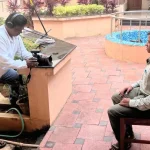
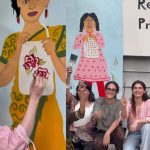
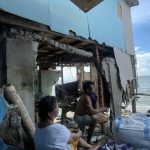
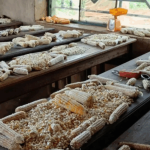
Construction taking place along the access road leading to the Rastafari Indigenous Village, located in Montego Bay Gardens, Portobello, Jamaica. Photo by Arlene Alberga-McKenzie, used with permission.
This article first appeared in Petchary’s Blog on July 28, 2025. An edited version is being republished on Global Voices with the author’s permission.
There is something I call “the Cult of Development.” What is development in the eyes of our politicians? Why, it’s concrete, steel, asphalt: roads, highways, buildings, town centres, acres of small, box-like homes, sometimes built on agricultural land. Four years ago, Prime Minister Andrew Holness touted the idea of a “new city” in beautiful, rural St. Elizabeth, on Jamaica’s south coast, and he revived it at the “grand opening” of yet another KFC outlet in Black River, adding that his government is all for “urban development.” We seem to have dropped the word “sustainable” lately.
In 2017, I was invited to write three articles for a Jamaica Social Investment Fund (JSIF) website on a relatively new project: the Rastafari Indigenous Village, located in Montego Bay Gardens, in Portobello, to the northwest of the island. The website now appears to have been taken down. JSIF is a state agency, founded in 1996 as part of the government’s national poverty alleviation strategy, the focus of which was on small-scale projects intended to create employment and uplift communities.
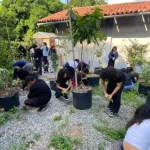
I visited the site to learn more about it. The route was bumpy, but upon arrival, the road opened into a serene clearing. Buildings made of bamboo and other natural materials were grouped in a circle, complete with flowers, herb gardens, and tall trees surrounding the space. The Montego River flowed nearby; I could hear it, in full flow after some good rains.
I learned that the village had been officially opened in 2014, thanks in part to initial funding from the World Bank and the land having been made available by the Nelson family — this, according to “Firstman,” an advocate for sustainable development whom I interviewed while there. World Bank officials were proudly given a tour in 2016, and the site was received with enthusiasm by visitors and locals alike.
To this day, the space has very high rankings on TripAdvisor, where the reviewers can be quite tough — the site is currently listed as Number 47 of 360 things to do in Jamaica, which is quite something. The photos capture a good sense of the true enjoyment of it, with one tourist describing the tour as “a refreshing cultural experience.” It has been, by all accounts, a great success.
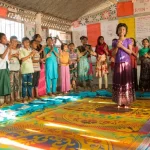
My articles on the Rastafari Indigenous Village focused on ital cooking, Rastafari celebrations, and drum-making. Residents were kind, courteous and engaging, and conducted tours for visitors on a regular basis: walking barefoot through the river, having drumming lessons, tasting ital food, eating fresh fruit beautifully prepared and, of course, learning more about Rastafari beliefs and culture. Yet, the project has fallen by the wayside — quite literally.
The village was not just a tourist attraction; it was where people lived. When I visited, it already had a homey feel, where daily routines and observances took place. There was a sense of community. Fast forward to 2025, where the photos on the Rastafari Indigenous Village’s website tell the whole story. It is quite a shock: the rumbling trucks and diggers of the China Harbour Engineering Company (CHEC), men in hard hats, trees and homes clinging to the edge of limestone precipices.
Village residents — and those in surrounding communities — call it their “Time of Trial.” The road construction has created all kinds of damage to the land immediately surrounding the village. Apart from the inevitable deforestation, it has also changed its contours. When it rains, the runoff water and rubble pour into the village, down what was once a road, emptying now into the once beautiful Montego River. The villagers have also suffered from terrible air quality, incredible noise, and the smell of damaged drains.
Under the rules of the Cult of Development, this bypass was deemed necessary because there were too many traffic jams (i.e. too many cars) in Montego Bay. The snarl-ups were hampering the pace of — you guessed it — development in the town. At least one section will become a toll road, for those who can afford it. Meanwhile, on YouTube, promotional videos proclaim, “This is the NEW Jamaica!” — the bypass has got its first layer of asphalt! There are many other videos, some with drone footage, to peruse, including one that describes how the now polluted Montego River is to be “redirected.” Really?
There is some vague talk about relocating this peaceful haven; let us see if it happens. Meanwhile, it is effectively closed, since access to it is extremely challenging.
This is not just about the loss of landscapes. It is about the destruction of our cultural heritage — not an old building, many of which are now destroyed anyway, but something less “tangible,” a word UNESCO uses. It is the loss of strength and resilience and belief, that had been built up in the village. It is the loss of those hands that protect, preserve, and sustain that heritage. It is part of the steady erosion of identity, for Rastafarians and for Jamaicans on the whole, especially our young people.
It is the loss of oral tradition, tales that make Jamaicans who they are, half-forgotten stories that teach, enlighten, and encompass so much: Rastafari, yes, but also the complex history of the Maroons and the need to include their wild Cockpit Country in protective arms. Our manifold relationships with the ocean, with birds, precious herbs and unique flora … all these things are apparently not appreciated by officialdom. It’s the number of rooms and seats on airplanes that count.
The guardians of Jamaica’s closely interwoven natural and cultural legacies are disregarded as political leaders are dazzled by new fried chicken restaurants, shiny highways and high-rise buildings. That’s what people want, we are told, and the menial jobs that go with them.
Some time ago, I attended an online “consultation” on the planned bypass. It consisted of a long presentation showing all the maps and plans, followed by a half-hour Q&A segment in which only one or two questions were answered, and the most difficult concerns and comments ignored. This is why Jamaica needs to ratify the Escazú Agreement, which speaks to the need for meaningful public participation. This was an example of how not to do it, and then check the box.
Support Global Voices as we publish more articles like this one
Learn more about our donation campaign.
I find myself getting nostalgic for Jamaica’s 90s brand of community tourism, when visitors and locals alike craved authentic experiences — and they still do. Tourists don’t want to come and look at more concrete. So tell me… what is unique about Jamaica? When foreigners think of our island, one of the first things that comes to mind is Bob Marley and Rastafari. For curious foreign visitors, the Indigenous village brought Rastafari to life, gave it meaning. Moreover, it was about making personal connections — not in the servile, unequal way that tourists interact with Jamaicans at all-inclusive hotels, but as humans — something natural and real.
In our pursuit of the Cult of Development, Jamaica is losing its way, its humanity. Motor cars, trucks and concrete have won the day. I wish the residents of the Rastafari Indigenous Village the very best of luck as they try to find their way through the unpleasantness of officialdom. I am asking them not to give up the fight for the remarkable and unique thing that they have nurtured — and hopefully will again.
In the words of the village’s co-founder, Arlene Alberga McKenzie, “Rastafari stands in the gap to remind our present of the many journeys of our past […] We understand the value of the past in relation to the present and our future. The demand on the village is for connection: with the earth, the plants and trees, and with the stories of survival.”