‘Indigenous languages and cultures are surviving, and will continue to survive’: Interview with Juang-language writer Kshetrabasi Juanga · Global Voices

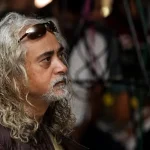
Kshetrabasi Juang being interviewed by Opino Gomango in Mysore, India

Kshetrabasi Juang being interviewed by Opino Gomango in Mysore, India. Image by the author.

This post is part of Global Voices’ August 2026 Spotlight series, “Indigenous Rights.” This series offers insight into the lives and experiences of Indigenous peoples to build connections across regions, center Indigenous experiences, and share the stories of leaders, activists, community members, and more. You can support this coverage by donating here.

The majority of the world’s languages are primarily spoken, not written. So, the knowledge of the speaker communities is oral, yet Wikipedia and other Wikimedia projects require written citations.

The OpenSpeaks Archives is developing a process for Wikimedians to cite oral knowledge from Indigenous and other low-resourced language communities, including nearly 20 language communities from India, Nepal, and Sri Lanka. This process includes audio-visual documentation, creating technological and educational resources, and community capacity building.

This interview series captures the stories of some of our collaborators documenting oral knowledge through audio-visual means. The first one is with Kshetrabasi Juanga, an educator, writer, and speaker of the Juang language. Juang is a vulnerable, Indigenous language with around 30,000 speakers from the eastern Indian state of Odisha.

Opino Gomango and Subhashish Panigrahi interviewed Kshetrabasi Juanga on behalf of Rising Voices, in person and by phone, respectively. The following is a video interview with Kshetrabasi Juanga by Opino Gomango for OpenSpeaks Archives and is public via a Creative Commons license.

Kshetrabasi Juanga (KJ): Some work has been done. The Odisha government has worked on the language through the MLE program. The Academy of Tribal Language & Culture (ATLC) has published tri-language books. The Eastern Regional Language Centre (ERLC) has published a primer and a grammar book. The Central Institute of Indian Languages (CIIL) conducted a significant research programme on Juang. But our people, society, and culture — our festivals, marriage ceremonies and songs — are rarely documented.

Rising Voices (RV): How useful is audio-visual documentation for your language?

KJ: This is helpful and a welcome step. Juang is shifting. But while globalisation is bringing more languages to people through technology, our language and culture risk becoming stagnant. Documentation is essential, and that is why this work matters.
Imagine someone from the next generation doing their PhD on tribal languages and cultures. When they do, they will find a great deal of information waiting for them. It will also be invaluable for young speakers. Today’s children are tomorrow’s young people, and if they one day watch videos in Juang, they will feel that some effort has been made to preserve what is theirs. Those videos will remain on Wikipedia and beyond.

Suppose a recording is made today, in 2026. When someone listens to it decades from now, they will be able to understand how the language was gradually changing, how a culture was being challenged, and how it survived. I think of it like a bitumen road. In some places, the surface has cracked, the bitumen risen, and green grass has pushed through. I see our language like that green grass surviving despite countless vehicles crushing it every day. No matter how globalised the world becomes, Indigenous languages and cultures are surviving, and will continue to survive.

RV: How will audio-visual documentation help Juang speakers?

KJ: It will be very helpful, especially for those interested in our language and culture. It will mean a great deal to young children aged three to twelve. From a child psychology perspective, children in that age range can learn multiple languages and cultures simultaneously. What we are building now will serve them directly.
And how about subtitling/captioning documented audio/video?
Consider two groups of Juang speakers. There are those who have moved away from rural areas due to urbanisation — perhaps one per cent live in cities today. If a Juang person living in a city comes across this documentation, it will feel like history to them. They will find self-respect and feel proud.

And then there are those who remain in their communities, holding on to a way of life that carries deep moral value. In the Juang tradition, if four or five people are walking together, holding bows, arrows, and spears, it signals that sad news is coming—that someone in a village has passed away. Such traditions carry meaning that cannot easily be written down. Or consider how our mothers collect firewood: They go out, gather dry wood and twigs, stack them, and break branches piece by piece. No one else takes those branches — everyone knows someone has kept them there. That trust, that unspoken moral code, is something a society outside our community can learn from. The subtitles help them understand. To me, documenting these traditions will create an invaluable resource for the entire humankind.

OG: How have you contributed to addressing gaps in documenting the Juang language and culture?

KJ: I’m documenting our traditional knowledge through my YouTube channel, Majang Studio Vlogger. It has videos on how to ignite a fire with stones and how to take shelter under palm leaves during the rainy season. It’s so hard to record these in books. I couldn’t record as well as expected, but I’m trying. People are moving away from many traditional techniques. I continue to share my identity as an Adivasi through whatever means are available. More documentation needs to be done on a scale.

More Recommendations

A Myanmar artist navigating statelessness and activism in France · Global Voices - Artist Yadanar Win at a protest for Myanmar in Paris. Photo by: Stéphane Ferrer. 2024. Used with permission. This post […]
Cameroonians turn to private solar grids in response to prolonged power cuts · Global Voices - Solar panels. Image from PHere. Free to use. CC0 1.0 In Mile four of the New Council area in Bamenda, […]
In Brazil, a new test reveals misidentified torture victim from the dictatorship period · Global Voices - People holding placards take part in a press conference disclosing the identities of two missing political figures from the 1970s: […]
AI cameras are surveilling the roads in Dhaka, Bangladesh · Global Voices - Two security cameras mounted on a pole. Representative image by user Atypeek Dgn via Pexels. Used under a Pexels License. […]
Jamaican bobsledders bring unexpected joy to an island beset with post-hurricane stress · Global Voices - Photo of a display about the Jamaican bobsled team at the Jamaican Bobsled Café in Montego Bay by David Drissel […]
Nepali Poet Viplob Pratik on literature, language, and a life shaped by words · Global Voices - Poet Voplob Pratik. Photo: Prabhat R Jha. Used with permission. Viplob Pratik is a leading contemporary Nepali poet, novelist, lyricist, […]
Reimagining Caribbean indenture in an artistically botanical afterlife · Global Voices - Image of the title wall of the art exhibition ‘The Botanical Afterlife of Indenture: Imaginative Archives,’ which took place at […]
Morocco, AFCON, and the controversies that trailed Africa’s biggest football event · Global Voices - Morocco vs Niger match in the 2026 FIFA World Cup Qualifiers at the Moulay Abdellah Stadium in Rabat. Image by […]
How the number 27 blew away West Indies cricket · Global Voices - Feature image created using Canva Pro elements. By Vaneisa Baksh On July 14, 2025, the West Indies men’s cricket team […]
When dry season never ends · Global Voices - An aerial photo of Guanacaste, Costa Rica. Image from Photo by Jean Paul Montanaro via Pexels. Free to use. Water […]
Australia’s Budj Bim features one of the world’s oldest aquaculture systems · Global Voices - Screenshot from ‘World Heritage Nomination – Budj Bim Cultural Landscape’ by YouTube user Gunditj Mirring. Fair use. Australia has one […]
Between flames and smoke, Brazil tries to fight record breaking wildfires · Global Voices - Wildfire at the National Park, in Brasília, Brazil’s capital, on September, 15, 2024. Image: Fabio Rodrigues-Pozzebom/Agência Brasil, used with permission […]
Azerbaijan’s Gymnastics Federation tainted by abuse accusations · Global Voices - Image by Arzu Geybullayeva On January 16, Marina Vasilyeva, the deputy minister of youth and sports in Azerbaijan, was dismissed […]
Sub-Saharan Africa: Why do less than 12 percent of Africans have AI access? · Global Voices - Photo of Folli Herbert Amouzougan, used with permission. This post is part of Global Voices’ April 2026 Spotlight series, “Human […]
Too afraid to leave home: ICE’s toll on Latino HIV care in the United States · Global Voices - Albé Sanchez. Photo by Liam James Doyle for Uncloseted Media and Rewire News Group. Used with permission. By Sam Donndelinger […]
Bosnian rock band Dubioza Kolektiv satirizes blind trust in artificial intelligence · Global Voices - Screenshot of thumbnail image of the YouTube video for the Dubioza kolektiv song “Yebiga” featuring the character Đipalo Junuz, played […]
Cameroonian rice farmers caught between national ambition and rural realities · Global Voices - Farmers harvesting rice in a rice field (paddy) in Cameroon. Screenshot from the video “How to grow rice in Cameroon?” […]
’I don’t see Palestine as an isolated story‘: An interview with Vivien Sansour, founder of the Palestine Heirloom Seed Library · Global Voices - Palestinian farmers harvesting olives in the Jenin area, November 2015. Photo by TrickyH on Wikimedia Commons (CC BY-SA 3.0). By […]
Three years of Pride: Santiago Méndez’s visual archive of queer Venezuela · Global Voices - Pride in Caracas, Venezuela, 2024. Photo by Santiago Méndez. Used with permission. This post is part of Global Voices’ June […]
Caught between silence and visibility: LGBTQ+ experiences in Mozambique · Global Voices - Photo taken by LGBTQIA+ activists. Maputo, Mozambique: 2024. Used with permission. In Mozambique, the lack of laws criminalizing LGBTQ+ identities […]
Why Venezuela’s earthquakes were so devastating: Geology, vulnerability, and years of structural neglect · Global Voices - Map of the earthquakes’ impact across seven Venezuelan states, highlighting Ground Zero: La Guaira. Screenshot taken from the YouTube video […]
The importance of mangroves in addressing climate change in Ghana · Global Voices - Mangrove forest in Ada, Ghana. Image by Amuzujoe on Wikimedia Commons (CC BY 4.0). This story was written by Malachi Dorwu and originally published […]
Climate success stories: A pleasant surprise · Global Voices - The Nanda Devi range, part of the Great Himalayas, seen from Landour, India. Photo by Ameya Nagarajan. Used with permission. […]
Cocoa farmers in southeast Cameroon are adapting to EU regulations, but they still want a fair price · Global Voices - Cocoa farm in Ekombitie. Photo by Leocadia Bongen, used with permission. Forty cooperative cocoa farmers gathered at the chief’s home, […]
Pitching power: Unpacking the T20 Cricket World Cup crisis between Bangladesh and India · Global Voices - Supporters at the India vs Bangladesh CWC15 quarter final at the MCG, Australia. Image via Flickr by Tourism Victoria. CC […]
Concerns grow as Jamaica ends Cuban medical programme · Global Voices - Feature image created by Janine Mendes-Franco using Canva Pro elements. Perhaps Jamaicans should have seen this coming when the government, […]
Cricket’s greatest all-rounder, Barbados’ Sir Garfield Sobers, dies at 89 · Global Voices - Statue of Sir Garfield Sobers at Barbados’ Kensington Oval. Photo by Winton Edghill on Wikimedia Commons (CC BY-SA 3.0). An […]
Haiti’s ‘Grenadiers’ bring hope and joyful moments at World Cup 2026 · Global Voices - Feature image created by Janine Mendes-Franco using Canva Pro elements. Haiti has not played in the final phase of a […]
How much will it take to rebuild Venezuela after the earthquakes? · Global Voices - Collapsed building in Tanaguarena, one of the most impacted areas in La Guaira, Ground Zero of the disaster. Photo by […]
Healing a region: How healthcare is bringing peace to Arauca, Colombia · Global Voices - MSF set up mobile clinics in villages affected by the conflict and where access to healthcare is insufficient. In this […]
Scroll to Top