Caught between silence and visibility: LGBTQ+ experiences in Mozambique · Global Voices

A woman lies on the ground, one hand covering her mouth, the other with several condoms in their packets spilling out of it

Photo taken by LGBTQIA+ activists. Maputo, Mozambique: 2024. Used with permission.

In Mozambique, the lack of laws criminalizing LGBTQ+ identities is often taken as a sign of tolerance. However, for many transgender people and LBQ (lesbian, bisexual, and queer) women, their everyday reality tells a different story. In schools, health facilities, workplaces, religious spaces, and on digital platforms, discrimination continues to affect access to rights, opportunities, and social participation.

Although legal persecution is less obvious than in some countries in the region, such as  Nigeria, activists say exclusion often works through silence, invisibility, and institutional neglect.

“As nobody writes about us, we become invisible,” said Pepetsa Fumo, a Trans activist with Transform, an organization working for the recognition and inclusion of trans people in Mozambique. 

Schools as spaces of exclusion

For many activists, exclusion begins in the education system, where school curricula are profoundly heteronormative, leaving little room for discussions about sexual orientation, gender identity, or diversity.

One example of this institutional resistance to inclusion is that officials have withdrawn any references to sexual orientation from Mozambiquan school materials. According to activists, this environment contributes to bullying, psychological violence, and a high dropout rate among LGBTQ+ students. Many teachers receive little or no training on diversity, human rights, and inclusion, limiting their ability to create safe learning environments, as Pepetsa noted in an interview with GV.

“The challenge begins in the ministry itself, and in the way teachers are trained to not respect diversity.”

These educational inequalities often continue into adulthood, affecting employment opportunities, economic security, and social mobility.

Economic survival beyond recognition

Economic vulnerability has become one of LGBTQ+ activists’ most persistent worries. Many Trans people and LBQ women face difficulties in accessing formal employment, professional training, and alternative income-generating opportunities. While various community initiatives aim to support people economically, they face significant structural barriers, including limited funding, a lack of management training, and dependence on external support.

“Today you have work, tomorrow it’s over. Then you’re back to taking a break in the shade again,” Pepetsa observed.

Organizations such as Por Ela (By Her) try to address these challenges by prioritizing LBQ women-led businesses and promoting community leadership and entrepreneurship initiatives. But for activists, economic empowerment cannot be separated from wider struggles for dignity, recognition, and citizenship.

Health and the limits of visibility

Healthcare is another area where both advances and exclusion coexist. Years of campaigning have developed for greater recognition of Trans communities in response to HIV and AIDS, but still, activists often question the language used in public policy. 

“I am not a ‘key population.’ I’m Darius. Don’t confuse me with this category,” said one interviewee in an interview with GV.

Although trans people have gained greater visibility within some institutions, LBQ women remain largely absent from debates and health programs. Many health professionals are trained in analyzing LGBT key populations and communities, but they rarely receive training about the specific needs of LBQ women. According to activists, this invisibility has real consequences. Cases of violence against lesbian women, for example, are often recorded only as gender-based violence, without considering if their sexual orientation motivated the attack.

Digital spaces: Between empowerment and vulnerability

For many  LGBTQ+ communities in Mozambique, digital platforms have become essential tools for organizing, mobilizing, and raising awareness. Social media allows queer communities to share experiences, publicly document respect for rights in practice, build networks of solidarity, and amplify community voices. However, the same spaces also expose activists and human rights defenders to online harassment, surveillance, and violence. 

Queer activists, trans people, and women human rights defenders recount experiences of hate speech, intimidation, disinformation campaigns, and public exposure that reproduce wider patterns of social exclusion. These issues are arising at a time when debates on digital governance and cybersecurity are becoming more prominent in Mozambique. While officially politicians focus on technological development and digital security, activists argue that the discussion should also include freedom of expression, privacy, and civic participation.

 Beyond the paradox

The experiences of trans people and LBQ women in Mozambique demonstrate that exclusion is rarely limited to only one sphere of social life. Educational barriers, economic precariousness, inequalities in access to healthcare, and digital violence reinforce each other, creating cycles of vulnerability that go far beyond identity issues. 

For activists, this is above all a discussion about citizenship, participation, and democratic inclusion. Recognition is important, but it is not enough. Real inclusion requires access to rights, economic opportunities, security, and representation — in both financial spaces and in digital environments. 

In a global context characterized by the advance of anti-rights movements and the expansion of digital surveillance, the experiences of LGBTQ+ communities in Mozambique highlight the importance of bringing debates on gender, diversity, and digital justice closer to the lived realities of communities in the Global South. 



More Recommendations

Bosnian rock band Dubioza Kolektiv satirizes blind trust in artificial intelligence · Global Voices - Screenshot of thumbnail image of the YouTube video for the Dubioza kolektiv song “Yebiga” featuring the character Đipalo Junuz, played […]
Who is talking about artificial intelligence in Ecuador? · Global Voices - From left to right: Mónica Reinoso (Defensoría del Pueblo), Susana Cadena (Datalat), Carlos E. Flores (Openlab), Marco Insuasti (Mintel) and […]
Kenya’s smallholder farmers are challenging a law preventing them from sharing indigenous seeds · Global Voices - Illustration by Minority Africa, used with permission. This story by Jackson Okata was originally published by Minority Africa and a shorter […]
The importance of mangroves in addressing climate change in Ghana · Global Voices - Mangrove forest in Ada, Ghana. Image by Amuzujoe on Wikimedia Commons (CC BY 4.0). This story was written by Malachi Dorwu and originally published […]
Beyond displacement: Examining the link between climate change and statelessness · Global Voices - The aftermath of Typhoon Sendong in the Philippines. Photo via Wikimedia Commons (CC BY 2.0). By Olivia Karp  This essay was written […]
Australia’s Brewarrina fish traps may be the oldest human construction in the world · Global Voices - Brewarrina Fish Traps October 2025 – author’s photo Australia has two of the world’s oldest aquaculture sites, where fish and […]
Tuvalu aims to become a ‘Digital Nation’ amid rising sea levels · Global Voices - An aerial view of Tuvalu’s coastal adaptation project. Photo from the UNDP Climate Flickr page. CC BY-NC 2.0 This post […]
Australia’s summer weather extremes bring wide-ranging natural emergencies · Global Voices - Far North Queensland highway bridge collapse. Screenshot from 9 News Australia video: “Prime Minister heads to flood emergency zones”. February […]
Why gender diversity matters in technology · Global Voices - The intersection of transgender rights and technology. Image courtesy of Global Voices. This editorial was written by Sheena Magenya and […]
Award-winning tragicomedic film by Croatian director traces the birth of fascism · Global Voices - The Italian publisher Arnoldo Mondadori and author Gabriele D’Annunzio (in the middle in uniform). Photo by Archivi Mondadori on Wikimedia Commons […]
In Guadeloupe, ‘Creole gardens’ give climate lessons in a spirit of solidarity · Global Voices - A typical example of a Creole garden. This one is tended by Hugues Occibrun, who is trying to bring back […]
AI hype narrative reaches the public healthcare system in El Salvador · Global Voices - Image by Global Voices on Canva Pro. This story is part of Undertones, Global Voices’ Civic Media Observatory’s newsletter and […]
Climate change brings changes to North Kivu’s agricultural practices in the DRC · Global Voices - A maize variety exhibition. Photo by Hervé Mukulu from GreenAfia, used with permission This article by Hervé Mukulu was first […]
Who was here first? The two meanings of ‘Indigenous’ in Europe · Global Voices - A performance at the Karl May Festival in Bad Segeberg, Germany, in 2007. European books, films, comics and public performances […]
‘Silence has become both more dangerous and more complicit’: An interview with Lebanese-British artist, Amale Khlat · Global Voices - Amale Khlat, ‘Fishing on a Tridacna’ Cosmetic Vessel, 2023. 34 x 49 cm (13.4 × 19.3 in). Watercolor and archival […]
How one community in Trinidad & Tobago pushed the culinary boundaries of pigeon peas · Global Voices - Pigeon peas image via Canva Pro. By Natalie Briggs When I first met Florence Warrick-Joseph, there were two things I […]
Waves of change: Can ocean renewables solve rising electricity costs in Jamaica? · Global Voices - Feature photo via Canva Pro. By Edgar Lewis Following the ferocious Hurricane Beryl last July, scores of Jamaicans expressed outrage […]
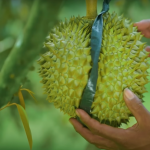
China has an insatiable appetite for durian. Is it a boon or a curse for Indonesia? · Global Voices - An Indonesian farmer checking on a durian. Image from YouTube screenshot. Fair use. This article was submitted as part of […]
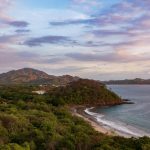
When dry season never ends · Global Voices - An aerial photo of Guanacaste, Costa Rica. Image from Photo by Jean Paul Montanaro via Pexels. Free to use. Water […]
What explains the global stardom of Dimash Qudaibergen, Kazakhstan’s cultural phenomenon? · Global Voices - Dimash performing Kazakhstan’s national anthem. Screenshot from the video “National Anthem of the Republic of Kazakhstan – Dimash Qudaibergen” from […]
Inside China’s hidden eating disorder communities · Global Voices - A low-calorie meal shared on Xiaohongshu in the ED networks. Edited screenshot. Fair use. On Chinese social media platforms, eating […]
Kendo 101: A beginner’s guide to Japanese sword fighting · Global Voices - A kendo match. Photo taken by Flickr user Vincent Diamante under CC: BY-SA 2.0 Kendo (剣道), often referred to as […]
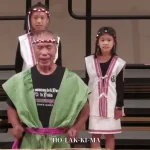
After 30 years of cultural revival, the Siraya reclaim their Indigenous status in Taiwan · Global Voices - Siraya activist Cheng-hiong Talavan led the younger generation in singing an ancient Siraya song. Screenshot from Onini315‘s YouTube channel This […]
Woman journalist in Pakistan takes action against online harassment · Global Voices - Photo by Serje Lahoud from Pexels. Used under a Pexels Licence. A war that began between the United States and […]
‘The light plays tricks on us’: Trinidadian photographer Marlon Rouse’s ‘Sacred Objects, Fruit of the Land’ · Global Voices - Photographer Marlon Rouse’s “Caraili,” part of his series “Sacred Objects — The Fruit of the Land.” Caraili (Momordica charantia) is a […]
AI-ready data centers are booming in Indonesia but water woes loom · Global Voices - Nongsa Digital Park in Batam, Indonesia. Screenshot from YouTube video of Channel News Asia. Fair use. This post is part […]
How an AI research tool helped challenge support for police violence in Brazil · Global Voices - Art by Marcas, used with permission. This article, written by Daniel Stanley, Marianna Araujo and Diogo Santos, is published here […]
‘Indigenous languages and cultures are surviving, and will continue to survive’: Interview with Juang-language writer Kshetrabasi Juanga · Global Voices - Kshetrabasi Juang being interviewed by Opino Gomango in Mysore, India. Image by the author. This post is part of Global […]
Harassment and security threats forced the cancellation of a Pride-themed community event in Malaysia · Global Voices - Promotional poster for the cancelled “Glamping with Pride” event. Photo from ARTICLE 19 website. Fair use. A two-day wellness program […]
Archiving Nepal’s medicinal plants and Indigenous knowledge for future generations · Global Voices - Sanjib Chaudhary, while speaking his language, Eastern (Saptariya) Tharu. Photo by Subhashish Panigrahi in CC BY-SA 4.0. This post is […]
Scroll to Top