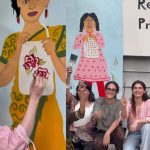
Photo by Christian Gutiérrez Martínez on Pexels.
By Brindaalakshmi K.
Author’s note: This article specifically looks at the impact of the U.S policy
changes on a sub-group, LBQT (Lesbian, Bisexual, Queer, Trans) people
within the LGBTQ+ spectrum in South Asia, to understand the policy
impact on people gender-assigned female at birth or trans-feminine
people.
“Women aren’t even allowed to choose their own life partner. So a same sex relationship is not an option,” Sandii, founder and general secretary of Mobbera Foundation in India, told me.
Many activists working with the LBQT+ communities in South Asia share this opinion. As a gender professional from Pakistan said, “LGBT issues and rights are seen as Western ideas.”
Given the mainstream understanding of trans identities in many countries in the region, trans people are often subjected to increased violence by religious forces, especially in places where homosexuality is criminalised, like in Pakistan and Bangladesh. However, queer activists believe that women’s sexuality is often erased. Nafisa, a queer woman from Pakistan, told me that there is a culture of invisibility: “You can be who you are, but don’t say things out loud. My Allah is OK with it. It is not Islam but the culture.” She added, “Here [in Pakistan] I’m hyper aware of being a woman. I forget I’m queer.”
Following USAID’s 90 percent funding cut, the Trump administration’s attempts to stifle gender expression have had a direct impact on gendered bodies worldwide — not just in access to resources and critical services, but also in getting recognition for their identity.
I have been in conversation with non-profits, networks and funders working with the LBQT+ community in South Asia and the Caribbean nation of Belize to report on the impact. Despite a history of criminalising homosexuality, varying levels of legal milestones related to LGBTQ+ rights were achieved in India, Pakistan, Nepal, and Belize since 2017 — Trump’s first term in office. However, according to Joy Chia at the Astraea Lesbian Foundation for Justice, anti-trans rhetoric has been steadily increasing, and violence towards trans feminine people has multiplied enormously in Pakistan and Bangladesh in recent years. In addition, an LBQT+ rights activist from Nepal shared, “The actions by the US have now given the anti-queer actors in Nepal more power. There have been protests against LGBT rights. LBQ+ activists who are visible have been targeted, and those in the closet find it difficult to come out.”
Shifting political priorities and their impact
According to a 2025 report by the Kaleidoscope Trust (UK), funding cuts to LGBTQ+ organisations and programmes are leading to an increasingly hostile security environment. Across nations, governments are shifting their political priorities with the change in the US position on gender issues, following which, big European donors — the Netherlands, Switzerland, Denmark and Germany — have been shifting their funding priorities. Alex Farrow, CEO of Kaleidoscope Trust, said, “With the change in US position, other countries no longer feel a moral obligation to support these issues. Earlier, activists and organisations felt vindicated with the moral support from the US. The US held soft power to do things that might not happen otherwise.”
However, the Mother’s Movement in Sri Lanka applauded the Trump administration’s attack on LGBTQ+ communities, requesting in a letter to the US embassy in the country that its fight continue.
In recent years, Astraea Foundation, through its work, has been noticing changes in the US and abroad that seem to have similar goals — consolidation of power and control over civil society. Joy Chia said that this policy shift has increased Astraea Foundation’s need to ensure its partners are safe from government overreach and scrutiny. “Shrinking civic space has been seen across South Asia since 2017. From a grant-making perspective, moving money and resources into South Asia has been deeply affected.”
Funding cuts further limit available support
Jean Chong of Asia LBQ Network shared that funding cuts have been a recurring discussion among LBQT+ organisations in South Asia. Even though they do not receive funds directly from the US government, these organisations access funds through intermediaries who redistribute them to smaller organisations. The funding cuts have impacted the intermediaries, and as a result the smaller LBQT+ organisations and those working on gender issues.
“A lot of them get funding from feminist funds like Astraea, which has lost a lot of money from USAID,” Chong said, adding, “This has had a cascading effect, because LBQ groups are usually very poor and have only one or two grants. So losing one grant could mean losing fifty percent or more of their funding.”
Many sources observed the consistent pattern with every Republican administration in the US of cutting down funds for women’s health, abortion, contraceptives, HIV and LGBTQ+ rights. However, the pinch has been steep following the administrative change, especially given the generous funding for these organisations provided by the Biden administration. The archived website of the Global Equality Fund by the US government that supported grassroots LGBTQ+ organisations, mentions that it provided emergency support to individuals and organisations in over 100 countries.
Funding cuts have led to reductions in life-saving programmes and in the size of teams in organisations. Many have shut down. The uncertainty about the future of their ability to do impactful work has led to a significant increase in stress and burnout, impacting the overall wellbeing of individuals working on these issues.
Reimagining movement-building opportunities
Some within the LBQT+ community in the region view the recent funding crisis as an opportunity to move beyond Global North funding. A gender professional from Bangladesh told me, “Lots of funds were available over the last 15–20 years without sufficient change. Organisations have been doing the bare minimum with no larger vision. [They] receive funding and organise meetings, photos, and reports, to check the boxes for the funders’ sake but with little policy impact or real change.” Another from Pakistan agreed: “It is good to lose funding because then we will revamp the way we work. The first world creates problems, then they give money to solve these problems. But there’s no real-life impact.”
Organisations have been forced to reimagine the ways to raise funding to remain afloat, including fundraising beyond their work on rights-based issues. One head of a non-profit organisation working on queer issues in Bangladesh said they are exploring themes like climate change to sustain the work they do. “We are contemplating sharing resources and services with other [organisations] like renting out our spaces, catering, providing business to each other to sustain and rotate the funds. These conversations are still in a planning stage and will see the light once we run out of all our existing funds.” Similar ideas are emerging halfway across the world in Belize. Charrice Talbert, president of Promoting Empowerment Through Awareness for Lesbian/bisexual women in Belize (PETAL), said her organisation plans to raise funds by providing printing services for school students, among other ideas.
Joy Chia at the Astraea Foundation shared about the rise of local philanthropic opportunities, particularly in India. Following the Trump administration’s decision to discontinue foreign funding, three transgender clinics, including India’s first trans clinic, Mitr in Hyderabad, were shut down. Subsequently, the clinic reopened as Sabrang clinic in July 2025 with philanthropic support from Tata Trusts. In February 2025, Godrej Industries, Keshav Suri Foundation and Radhika Piramal, executive director of VIP Industries, in her individual capacity, launched the Pride Fund to support LGBTQ+ community organisations.
In addition, Jean Chong shared that the Asia Feminist LBQ Network is helping set up an independent fund, the Queer Feminist Fund (QFF), as a ground-up, regional feminist funding initiative to provide flexible core support to grassroots collectives and initiatives that are often excluded from mainstream philanthropy. Alternative means of supporting movement building are under discussion in some cases and being tested in others; however, consistency and sustainability of these newer means remain a concern for most, and are nowhere close to sufficient to meet current on-the-ground needs.
Worsening state of the left-out ‘L’ in LGBT
Conversations about the US policy changes have also brought to light the pre-existing invisibilisation and misogyny experienced by LBQT+ people, and the silencing of the severity of their experiences because of political and policy developments. “Most LBQT+ organisations are much smaller than most LGBTQ+ organisations in the region, which have mainly focused on gay and transgender issues for a long time,” said Chong. Sources from across South Asia attribute the invisibilisation of LBQ+ persons to the long-running government programmes on HIV that mainly focus on gay men and trans women. “Within LGBTQIA+ spaces, gay men are visible. For women, there is no space. Gay men should use their privilege to create space for queer women,“ shared Nafisa, speaking about Pakistan. Similarly, a queer woman working on LGBTQ+ rights in Bangladesh said that the public sees their organisation as a youth organisation. “We cannot be seen working on queer rights.”
Continued criminalisation of homosexuality in Bangladesh, Pakistan and Sri Lanka has led to clubbing the rights of sexual minorities with gender diversity and gender issues. “We frame everything under gender diversity. We can’t talk about LBQ issues. It will become an existential threat if we did,” said a gender professional from Pakistan. Within the LBQT spectrum, hijras (an Indigenous identity in the transgender spectrum) are overrepresented, subjecting them to more violence, while LBQ+ persons remain invisible, according to a source working on these issues in Bangladesh. “The organising for LBQ+ persons has been more in the last decade or so. Funders also noticed this gap and tried to support women-led organisations,” she added.
In contrast, Belize does not recognise the rights of transgender people. Currently, there is no way to change their gender on national documents or gain access to any kind of gender affirmative care in the country. Several organisations in Belize work on LGBTQ+ rights; however, PETAL is the only one working for the rights of LBQ women in the country, says Charrice Talbert, who heads the organisation. Further, Belize recognises the rights of heterosexual couples who live together in a common-law relationship. Magistrate Margaret McKenzie explained, “Belize does not recognise same sex relationships when it comes to legal issues. A common-law relationship between a man and a woman is legally accepted. When there is a breakup of that relationship, either party can get legal remedies.”
Whereas, in South Asia, class and caste privilege also impact the access and visibility of LBQ women and non-binary persons. “Sustaining oneself in Dhaka also means that they are from a stronger socio-economic class,” said the source in Bangladesh. LBQ+ women from smaller cities and towns fear being seen in any queer events, giving rise to online engagement of the LBQ community, and with smaller private events like book readings that go beyond queer topics. In Pakistan, however, queer women seem to be absent even in online spaces for fear of being outed. Talking about her challenges with finding community, Nafisa said, “In Islamabad, I met no queer women on Bumble. In Lahore, I met two women and one of them is married to a man. It is a lot to sustain two lives in Pakistan. I try not to think about companionship.”
A Nepali queer woman said, “In Nepal, we are still talking about brahmin marrying a brahmin. If there’s no acceptance of caste, then [acceptance for] queer people will take a long time.” Nepal is the only country in the region that allows registration of same sex marriage following a temporary Supreme Court ruling in 2023, although this registration does not guarantee equal rights as offered to heterosexual couples. Another Nepali LBQ+ activist noted that lesbian women remain excluded in government programs for allowances provided for widowed women. “If a woman is over 20 years of age and widowed, they are entitled to an allowance. This is for heterosexual women. Lesbians cannot get this allowance if their partner dies.”
Similar discrimination against LBQ+ women is prevalent in India, which decriminalised homosexuality in 2018. This is one among many other latent forms of misogyny and re-discrimination and LBQ+ erasure that is prevalent in decriminalised contexts, owing to the lack of deliberate attempts by the state to amend policies and laws for LBQT+ inclusion.
Worsening the existing erasure experienced by LBQT+ persons in countries with regressive and misogynistic politics and policies, the Trump administration’s position on gender issues has further pushed this community into the shadows. Most sources believe that the status quo is likely to remain the same, if not worsen in the near future. But hope may still prevail. In the words of Alex Farrow, the CEO of Kaleidoscope Trust, “In 1990, 114 countries criminalised homosexuality. By 2008, this was 78. That’s a 30 percent reduction in under 20 years – achieved without major US or UK funding. So we did it before, and we will do it again. As a movement, we are agile.”
One also hopes that this time, may this movement drive more countries to not only decriminalise homosexuality but also uproot their internalised misogynistic thinking at its core.