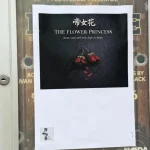
Eloisa Cartonera books, made by unhoused workers. While the project was born in Argentina, it has expanded to other Latin American countries, like Perú, Ecuador, Chile and Colombia. (Creative Commons)
This story is part of Global Voices’ May 2026 Spotlight series, “Global crisis, local solutions.” You can support this coverage by donating here.
Across Latin America, recycling plays a far more critical social and economic role than global averages might suggest. Despite worldwide advances in waste management, the region’s average recycling rate remains strikingly low — around four percent. Yet, within this limited formal system, an estimated two million people make a living through informal recycling, forming an essential but often invisible backbone of urban waste recovery.
For many of these workers, recycling is more than an environmental practice: it’s a means of survival. Women, migrants, displaced populations, and unhoused individuals living in precarious urban conditions are among those who depend on collecting, sorting, and selling recyclable materials to sustain their daily lives. In this context, waste becomes both a resource and a lifeline.
So, how do different initiatives across the region support these communities? And how can recycling-focused projects go beyond environmental benefits to foster dignity, generate income, and open pathways toward social inclusion for some of the most vulnerable people in Latin America’s cities?
Eloísa Cartonera: Books made by cartoneros in Argentina
Eloísa Cartonera is one of Latin America’s most distinctive independent publishing projects. Founded in Buenos Aires in 2002, during Argentina’s devastating economic crisis, the initiative emerged at a time of mass unemployment, social unrest, and growing poverty following the country’s 2001 collapse.
The project works with cartoneros (people who collect and sell discarded cardboard), many of whom are unhoused or living in precarious conditions. Eloísa Cartonera buys cardboard at fair prices and employs workers to handcraft and paint books, turning recycled materials into unique works of art. Profits from sales are shared among the workers and organizers.
Founded by writer Washington Cucurto, visual artist Javier Barilaro, and a group of artists and activists, the collective also promotes accessible literature by publishing both emerging and established Latin American authors, many of whom donate their rights to support the project.
Each book is individually painted with colorful tempera, making no two copies alike. More than two decades later, Eloísa Cartonera has inspired over 50 similar cartonera publishing houses around the world.
Amazoniko: From recyclers to urban environmental leaders in Colombia

The Amazoniko team collects recyclable materials after teaching community members how to sort and separate their waste. Photo by Amazoniko. Used with permission.
Amazoniko was born in 2017 with an idea that goes far beyond recycling. For its founder, Daniel Rodríguez Paredes, the problem was never just the trash itself, but the loss of all the environmental, economic, and human value behind each piece of waste. “When a material ends up buried or improperly disposed of, not only is an object lost, but water, energy, human labor, and natural resources are also wasted,” he explained to Global Voices in a phone call. What began as a platform to facilitate recycling from homes ended up becoming a circular economy model that connects citizens, businesses, recyclers, and processors.
In Colombia, thousands of recyclers work in informal conditions, often without contracts, social security, or recognition. Faced with this reality, Amazoniko decided to put people at the center of the system. The project seeks to understand the needs of those who sustain the recycling chain every day: from households that require environmental education to recyclers who need better working conditions and economic stability. The platform organizes collection routes, improves access to quality materials, and promotes a different narrative around the recycler, who is no longer seen as marginalized but rather as an “environmental advisor” within the communities. In addition to improving income and stability, Amazoniko promotes incentives such as digital tips and microloans linked to the recyclers’ performance.
The human impact of the project is reflected in stories like that of Cristian, Amazoniko’s first recycler. He began by cycling around the city collecting recyclable materials and helped build the system through his daily experience. Today, he is the company’s operations director and one of the most important figures in the operation. For Daniel, his story demonstrates that social inclusion is not just about connecting vulnerable people to a project, but about recognizing their abilities, opening up real opportunities for growth, and dignifying a historically stigmatized job.
Venezuelan migrants recycle to survive
For many Venezuelan migrants in Colombia, recycling has become an important means of survival and economic integration. Colombia hosts one of the largest populations of Venezuelan refugees and migrants in the world, with more than three million having crossed the border in recent years in search of safety, employment, and access to basic services. Faced with barriers to formal employment, many migrants turn to informal work, including collecting and selling recyclable materials.
In Barranquilla’s southeastern neighborhoods, such as Brisas del Río, recycling provides a source of income for both Colombian and Venezuelan families living in vulnerable conditions. Since 2019, the United Nations Refugee Agency (UNHCR), together with Pastoral Social Cáritas Barranquilla and support from the Italian Agency for Development Cooperation (AICS), has implemented programs aimed at dignifying the work of environmental recyclers. The initiative has included training, protective equipment, and support services for recycling workers and their families.
Like many informal settlements across Colombia, Brisas del Río faces significant challenges, including inadequate access to water, sanitation, transportation, healthcare, and education. In this context, recycling functions not only as a waste-management activity, but also as a pathway to livelihood, community integration, and resilience for displaced populations.
Since 2022, 45 recyclers have received training and safety materials to help them carry out their work more effectively and with lower health risks. As one participant explained on the project’s website, “Recycling is our way of supporting ourselves now.” For many Venezuelan migrants, collecting recyclable materials offers a vital source of daily income in communities where poverty, informality, and limited access to public services remain widespread.
In Ecuador, 70 percent of recyclers are women
Recycling plays a crucial yet often undervalued and stigmatized role in society, despite being essential to the transition toward a circular economy. People working as street waste pickers — mostly women — form the first link in the recovery chain, collecting and sorting materials that contribute directly to urban cleanliness and resource reuse.
In Ecuador, around 20,000 people work as recyclers, 1,500 of them organized through the National Reclycers of Ecuador (Renarec), which groups under its umbrella more than 50 organizations dedicated to reducing waste, and protecting street workers and recyclers against precarity.
As told by UN Ecuador, The experience of Doña Blanca Lara, a recycler in Quito, illustrates this reality. After a life marked by hardship and responsibility for her family, she and her daughter rely entirely on recycling for their livelihood, earning small and variable incomes depending on the type of material collected. Despite their contribution to environmental sustainability, they face discrimination, unsafe working conditions, and limited social protection.
Across Ecuador, thousands of recyclers share similar experiences, with high levels of informality and gender inequality. Although their work is essential to waste management and environmental recovery, it remains largely invisible, highlighting the need for greater recognition, institutional support, and social awareness of their economic and environmental contribution.