From Binalbagan to Belém, Filipino farmers push for agroecology and climate justice · Global Voices

National Agroecology Workshop and Fair

MASIPAG organized the National Agroecology Workshop and Fair in Quezon City, Metro Manila. Photo from Facebook post of MASIPAG. Used with permission.

Ahead of the UN Climate Change Conference 30th Conference of the Parties (COP30), Filipino farmers and agroecology advocates have organized a series of initiatives showcasing the link between land reform and climate justice.

Initiated by MASIPAG, a network with more than 500 people’s organizations, these activities highlighted that farmer-led agroecology “is a viable solution towards climate change and ultimately a pathway towards climate justice.”

In October, MASIPAG and its partners organized a national agroecology workshop and fair, it submitted a petition declaring the resistance of Negros Island farmers against the planned ordinance in favor of genetically modified organisms (GMOs), it conducted a community consultation in the Negros town of Binalbagan about the health impacts of GMOs, and it led a study session about the concept of Genuine Agrarian Reform and Sustainable Agriculture (GARSA) with farmers from the southern island of Mindanao.

MASIPAG’s national advocacy officer, Eliseo Ruzol Jr, and MASIPAG farmer-leader representing women, Nay Nena, told Global Voices in an email interview about the significance of these initiatives.

These activities underscore the need to critically interrogate the techno-scientific solutions promoted in global climate fora and to prioritize farmer-led, ecological, and socially just approaches to food and climate resilience.

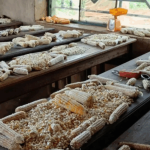
The agroecology fair and workshop were held in the country’s capital region and featured products from local farmers and merchants as well as a solidarity cooking session. Earth Island Institute-Asia-Pacific (EII-AP), one of the groups that joined the fair, organized an outdoor kitchen and turned Filipino dishes into‬‭ symbols‬‭ of‬‭ urgent‬‭ advocacy for environmental protection. Robert Ray Medrano,‬‭ campaign coordinator of‬‭ EII-AP, explained the link between the live cooking event and the call for environmental action.

Every‬‭ dish‬‭ we‬‭ cook‬‭ reflects‬‭ a‬‭ struggle‬‭ — of‬‭ fishers,‬‭ farmers,‬‭ and‬‭ communities‬‭ fighting‬‭ for‬‭ the‬‭ right‬‭ to‬ food,‬‭ land,‬‭ and‬‭ livelihood. Food‬‭ is‬‭ not‬‭ only‬ nourishment but a call to action for sustainability and justice. We‬‭ cannot‬‭ talk‬‭ about‬‭ food‬‭ security‬‭ without‬‭ justice. Protecting‬‭ our‬‭ farmers,‬ fishers, animals, and ecosystems is the true recipe for a sustainable future.

Cooking session

Cooking session highlighted the link between food security, cultural heritage, and climate justice. Photo from Earth Island Institute-Asia Pacific. Used with permission.

MASIPAG’s petition to local authorities in Negros, which is recognized as the capital of organic farming in the country, reflected the demand of more than 50 local farming associations against GMOs while demonstrating the advantages of agroecology.

MASIPAG’s experience demonstrates that zero-tillage can be successfully implemented without dependence on GMOs or destructive chemical inputs, highlighting the viability of agroecological alternatives.

The petition warns that the passage of the ordinance “will only deepen farmers’ dependence on imported seeds and chemical inputs, reduce agricultural biodiversity, and erode traditional farming practices and knowledge systems that have sustained Negros’ food security for generations.”

MASIPAG also submitted a position letter signed by more than 3,000 individuals from two districts of Negros against the planned GMO ordinance.

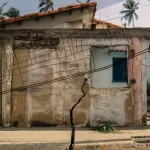
In Binalbagan, Negros, around 65 farmer leaders gathered in a forum and discussed the dangers posed by GMOs to the people’s health and local ecosystem.

Negros capitol

Farmers submit a petition addressed to the governor of Negros Occidental opposing a planned ordinance that will allow GMO crops. Photo from MASIPAG. Used with permission

The study session on GARSA focused on the role of land reform in the campaign for climate justice.

This framework emphasizes two inseparable pillars which are the redistribution and protection of land for smallholder farmers, and the promotion of agroecological practices that ensure ecological balance, food security, and climate resilience.

It also gave attention to the promotion of women’s rights amid the lingering “macho feudal” values in rural areas.

GARSA also demands confronting the deeply embedded culture of macho-feudalism in the countryside. This means valuing reproductive work, eliminating gender-based discrimination, and ensuring that women who are central to seed keeping, food production, and community care are fully recognized in all processes as rights-holders and decision-makers.

MASIPAG’s activities in Negros were affected as two strong typhoons wrought damage in the region, which affirmed the value of their advocacy for land reform and climate justice

Everyone’s commitment and realization that agroecology is a lived reality, not a mere alternative, is what stood out. The experience itself became a lesson that even amid worsening climate disruptions, farmer-led agroecology continues to inspire, unify, and strengthen communities determined to build a just and resilient food system.

MASIPAG told Global Voices that they plan to connect what transpired during COP30 with their grassroots initiatives.

MASIPAG will focus on amplifying the outcomes and way forward from these key activities while sustaining our work on the ground. Most immediately, we will be releasing an op-ed video connecting COP30 discussions with our grassroots initiatives and the insights drawn from the recent National Agroecology Workshop and Fair.

From the Philippines to Brazil, MASIPAG and climate justice advocates were able to share their views about the key issues discussed during COP30, and more importantly, clearly demonstrate their commitment to promoting grassroots-led initiatives on traditional farming practices and cultivating community support for the protection of the environment.

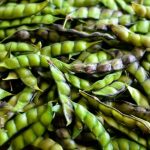
Bagsakan of farmers' products

Local farmers sell their produce at the fair. Photo from IBON Foundation. Used with permission.


This story was supported by AWID.


More Recommendations

What changes will arise from the Brazilian Supreme Court’s ruling on personal marijuana use · Global Voices - Image: Art by Global Voices. Free Use. Kindle Media/Pexels In a historic decision in June 2024, Brazil’s Supreme Court (STF), […]
Somalia: Drought, fuel prices, and conflicts heighten famine risk · Global Voices - A market in Somalia. Image by Jjumba Martin for Mercy Corps. As of May 2026, Somalia, a country with a […]
Tobago’s coral reefs brace for ‘imminent threat’ · Global Voices - Brain coral photo via Canva Pro. From hotter temperatures that contribute to ocean acidification and coral degradation to instances of […]
China has an insatiable appetite for durian. Is it a boon or a curse for Indonesia? · Global Voices - An Indonesian farmer checking on a durian. Image from YouTube screenshot. Fair use. This article was submitted as part of […]
Trinidad’s border communities face rising citizen security risks amid U.S.-Venezuela tensions · Global Voices - The Independence variant littoral combat ships USS Tulsa (LCS 16), right; USS Manchester (LCS 14), centre; and USS Independence (LCS […]
Can AI help build peace? African youth are showing a path forward · Global Voices - Four friends with laptops smile and take a selfie at a monument in Cotonou, Benin. Photo by Iwaria via Pexels. […]
How data gaps deepen climate injustice in the Himalayas · Global Voices - A Himalayan glacial lake. Image from Pexels. This article was submitted as part of the Global Voices Climate Justice fellowship, […]
Morocco, AFCON, and the controversies that trailed Africa’s biggest football event · Global Voices - Morocco vs Niger match in the 2026 FIFA World Cup Qualifiers at the Moulay Abdellah Stadium in Rabat. Image by […]
A ‘Time of Trial’: Rastafari haven disrespected and ruined in Jamaica · Global Voices - Construction taking place along the access road leading to the Rastafari Indigenous Village, located in Montego Bay Gardens, Portobello, Jamaica. […]
Nepali Poet Viplob Pratik on literature, language, and a life shaped by words · Global Voices - Poet Voplob Pratik. Photo: Prabhat R Jha. Used with permission. Viplob Pratik is a leading contemporary Nepali poet, novelist, lyricist, […]
Coastal villages struggle to recover after oil spill disaster near Philippine capital · Global Voices - Coast Guard personnel and residents inspect a coastal area near an abandoned fuel tanker in Bataan. Source: Facebook page of […]
In Guadeloupe, ‘Creole gardens’ give climate lessons in a spirit of solidarity · Global Voices - A typical example of a Creole garden. This one is tended by Hugues Occibrun, who is trying to bring back […]
‘Galician identity and literature are deeply rooted in land,’ award-winning Galician writer explains · Global Voices - Galician countryside. NoelFeans/Flickr under licence CC BY 2.0. Every May 17, the autonomous region of Galicia, Spain, interrupts its routine […]
Hong Kong NGOs call for policy interventions to help vulnerable groups withstand heat hazards · Global Voices - Greenpeace HK 2023 campaign urging the government to revamp its three-tier heat warning system. Photo taken by Mandy Cheng/HKFP. Used […]
Invisible strategies: How fear of being outed shapes LGBTQ+ life online in Serbia · Global Voices - Pins displaying LGBTQ+ symbols and flags. Photo by Marek Studzinski on Unsplash: License. This article was produced by the NGO […]
AI cameras are surveilling the roads in Dhaka, Bangladesh · Global Voices - Two security cameras mounted on a pole. Representative image by user Atypeek Dgn via Pexels. Used under a Pexels License. […]
Chadian environmental activist Hindou Oumarou: ‘AI governance must respect Indigenous peoples’ · Global Voices - Ibrahim says AI has the potential to support, rather than replace, Indigenous peoples’ knowledge. She gives a positive example in […]
Not your grandma’s Tai Chi: Master Sun reveals the truth behind the flow · Global Voices - Master Sun Peiqiang. Used with permission. When most people picture Taijiquan, better known as Tai Chi (太极拳), two contrasting images […]
How one Kenyan community is building a new future on reclaimed ground · Global Voices - A woman sells beadwork outside a traditional Maasai dwelling. Photo by Cooper Austen. Used with permission. By Sydney Leigh Smith […]
How far-right ‘fear tactics’ affect girls seeking legal abortion in Brazil · Global Voices - Illustration by Noor, used with permission In a video posted by Chris Tonietto in early November 2025 on Instagram, the […]
Countless endangered species are making a comeback due to global conservation efforts · Global Voices - An Amur leopard (CC BY 2.0), a coral reef (CC BY 2.0), and two greater one-horned rhinoceroses (CC BY-SA 4.0). […]
‘The Eternaut’ and civil resistance in the algorithmic age · Global Voices - Scene from ‘El Eternauta’ (TV Series, 2025). Photo: Netflix, used with permission. This article, written by the International Institute of […]
The last masters of Afro-Colombian machete fencing fight to save their tradition · Global Voices - Maestro Porfirio spars with a student, practicing defensive techniques. Photo by Rowan Glass, used with permission. This story by Rowan […]
Palestinians are being locked out of the digital economy · Global Voices - Screenshot from video ‘Gaza’s electricity crisis deepens as Israeli strikes threaten vital solar panels,’ uploaded to YouTube by Al Jazeera […]
Melanesian nations vow to connect and expand marine protected areas · Global Voices - Coral reefs in Papua New Guinea. Photo by Brocken Inaglory. Wikimedia Commons. CC BY-SA 3.0 This post is part of […]
How much will it take to rebuild Venezuela after the earthquakes? · Global Voices - Collapsed building in Tanaguarena, one of the most impacted areas in La Guaira, Ground Zero of the disaster. Photo by […]
Interactive map honors LGBTQ+ people’s historic presence in Prague · Global Voices - Screenshot of the interactive Prague Gay Map from Teplá Praha (Queer Prague). In the Czech Republic, the debate on LGBTQ+ […]
Cocoa farmers in southeast Cameroon are adapting to EU regulations, but they still want a fair price · Global Voices - Cocoa farm in Ekombitie. Photo by Leocadia Bongen, used with permission. Forty cooperative cocoa farmers gathered at the chief’s home, […]
A Myanmar artist navigating statelessness and activism in France · Global Voices - Artist Yadanar Win at a protest for Myanmar in Paris. Photo by: Stéphane Ferrer. 2024. Used with permission. This post […]
Sub-Saharan Africa: Why do less than 12 percent of Africans have AI access? · Global Voices - Photo of Folli Herbert Amouzougan, used with permission. This post is part of Global Voices’ April 2026 Spotlight series, “Human […]
Scroll to Top