When climate change impairs beekeeping in the Democratic Republic of the Congo ยท Global Voices

A beehive in the DRC.

A beehive in the DRC. Screenshot from YouTube.

Icicongo originally published this article by Elisha Kindy on March 20, 2026. Global Voices republished the article as part of a content partnership agreement.

Climate change negatively impacts human, animal, and plant species worldwide. For example, in the Democratic Republic of the Congo (DRC), this crisis is leading beehives, vital for food security in this country and the continent as a whole, to run dry.

Read more: Climate change brings changes to North Kivuโ€™s agricultural practices in the DRC

In the city of Butembo, North Kivu, a region in eastern DRC, the climate crisis is directly affecting the beekeeping sector. Honey production is plummeting, as beehives now produce very little, and trees do not bloom, putting beekeepers in a precarious situation.

Ndando, a locality about 10 kilometers south of Butembo, was once bustling with the buzz of bees. Now itโ€™s silent. Wearing a head-to-toe beekeeping suit, with an uncapping knife and bucket in one hand, and a smoker in the other, Mwanzi Zephanie, a well-known beekeeper in this region, offers a guided tour of her hives.

An example beekeeping suit.

An example of a beekeeping suit, such as the one Mwanzi Zephanie wears. Screenshot from YouTube.

However, the first one is empty, as are the second and the ones after, leaving the beekeeper demoralized:

Cโ€™est la premiรจre annรฉe que cela se produit, ร  cause du dรฉrรจglement climatique. Avant, le miel รฉtait abondant, surtout ร  partir du quatriรจme mois de lโ€™annรฉe jusquโ€™au mois de juillet. Mais cette annรฉe, tout a changรฉ. Des insectes inconnus attaquent les ruches et certaines abeilles finissent par sโ€™en aller. Consรฉquences : le miel devient de plus en plus rare.

This is the first year this has happened due to climate change. Before, honey was abundant, especially from April to July. But this year, everything has changed. Unknown insects attack the hives, and some bees leave. Honey has consequently become increasingly scarce.

For more than three decades, Mwanzi Zephanie has maintained ten or so beehives. She makes a living from this profession and is proud of her work. It gives her a sense of identity. But now, thereโ€™s nothing to attract honeybee colonies. No flowers, no nectar, just the obvious after-effects of irregular rainfall, prolonged droughts, and an unpredictable climate.

Beekeeping at risk

The fall in honey production directly impacts Butemboโ€™s local markets. According to traders, a liter of honey that sold for USD 7 in the first half of 2025 is trading at USD 10โ€“12 in the first half of 2026, due to dropping production levels. This inflation leaves consumers vulnerable. Honey, known for its nutritional and therapeutic properties, is becoming a luxury product.

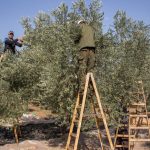
Beekeepers beekeeping in the DRC. Screenshot from YouTube.

Beekeepers beekeeping in the DRC. Screenshot from the video โ€Following the Honey Harvest with Representatives for the Rikolte DRC Organization, Part IIโ€ on the Groupe Academia RD Congo YouTube channel

Vutsapu Michaรซl, Board President of Academia Group, a nonprofit organization that promotes beekeeping and environmental protection in the region, stated:

Le climat ne nous laisse plus le choix.

The climate doesnโ€™t leave us much choice.

Concerned, he suggests an urgent change:

Nous assistons ร  la disparition progressive des fleurs mellifรจres. Si rien nโ€™est fait, lโ€™apiculture va disparaรฎtre. Il est urgent de repenser nos pratiques et de prรฉparer les producteurs aux exigences du climat actuel.

We are witnessing the gradual disappearance of nectar-rich flowers. If nothing is done, beekeeping will disappear. We must rethink our practices and equip producers for the current climate requirements.

According to Michaรซl, the organizations and NGOs that could assist struggle to support the communities. He explains:

Aujourdโ€™hui les pรฉpiniรจres forestiรจres sont aussi affectรฉes. Mais les formations sur le changement climatique coรปtent de plus en plus cher, et les sensibilisations sur cette question demeurent insuffisantes.

Today, forest nurseries are also affected. However, climate change training is increasingly expensive, and climate awareness remains inadequate.

Conforming to changing climate cycles

Despite this crisis, Vustapu Michaรซl recommends targeted reforestation with nectar-bearing trees, especially calliandra, grevillea, and eucalyptus. He explains:

Ces arbres rรฉsistent mieux aux variations climatiques et fournissent un nectar rรฉgulier.

These trees better withstand climate variations and provide nectar regularly.

This environmentalist, therefore, encourages local beekeepers to train in modern beekeeping and maintains that traditional hives are less resilient to climate disruptions.

Les ruches modernes protรจgent mieux les colonies dโ€™abeilles et amรฉliorent la production. Les apiculteurs doivent se conformer aux cycles climatiques plutรดt quโ€™aux saisons habituelles, afin dโ€™รฉviter des pertes inutiles.

Modern hives better protect bee colonies and improve production. Beekeepers must conform to climate cycles rather than the usual seasons to avoid unnecessary losses.

As such, he suggests halting deforestation, limiting slash-and-burn agriculture, restoring wetlands, and protecting local tree species.

Read more on IciCongo: When honey causes a stir in the eastern DRC

However, to meet the demand for firewood, timber, and building materials, the eucalyptus plantations, which are very prevalent in the region, are increasingly being felled.

Gloire Mulondi, land-use planning expert and lecturer in the Faculty of Agronomy at the Catholic University of Graben in Butembo (North Kivu), explains how the situations are connected.

Cette coupe massive prive รฉgalement les abeilles dโ€™une ressource essentielle : le nectar.

This large-scale logging also deprives bees of an essential resource, nectar.

In addition to the impact of climate change, armed conflicts in North Kivu have caused heightened insecurity in honey-producing areas and led to mass displacements. According to a producer, this is a driving factor. The ongoing hostilities prevent producers, who fear for their safety, from freely accessing production areas.

Read our special coverage: DRC: Poor despite its wealth


More Recommendations

Nepali music for an Everest-sized challenge ยท Global Voices - A screenshot from Resham เคฐเฅ‡เคถเคฎ โ€“ Prakash Dutraj, one of the songs in the GV Nepali playlist. Screenshot via YouTube. […]
Climate change brings changes to North Kivuโ€™s agricultural practices in the DRC ยท Global Voices - A maize variety exhibition. Photo by Hervรฉ Mukulu from GreenAfia, used with permission This article by Hervรฉ Mukulu was first […]
How Kazakhstan resurrected the North Aral Sea ยท Global Voices - Kazakhstanโ€™s Kokaral Dam was built to trap water and save the North Aral Sea. Screenshot from the video โ€œThe Aral […]
Disease, drought, and conflict: How Yemenis are adapting to a compounding crisis ยท Global Voices - ICRCโ€™s projects provided solar energy and clean water for hundreds of thousands of Yemenis in 2025 alone โ€” vital for […]
Solidarity fields in Syria: Reviving local seed production ยท Global Voices - The Solidarity Fields in Jaramana initiative is an extension of the โ€œSolidarity Fields and Dignityโ€ project. Picture by Lahlah. Used […]
โ€˜Indigenous languages and cultures are surviving, and will continue to surviveโ€™: Interview with Juang-language writer Kshetrabasi Juanga ยท Global Voices - Kshetrabasi Juang being interviewed by Opino Gomango in Mysore, India. Image by the author. This post is part of Global […]
Haitiโ€™s โ€˜Grenadiersโ€™ bring hope and joyful moments at World Cup 2026 ยท Global Voices - Feature image created by Janine Mendes-Franco using Canva Pro elements. Haiti has not played in the final phase of a […]
The return of Kokpar as Kazakhstanโ€™s modern national sport ยท Global Voices - A kokpar play during a scrimmage. Photo by Albert Otkjaer, via Vlast.kz. Used with permission. This post by Albert Otkjaer […]
Inside Chinaโ€™s hidden eating disorder communities ยท Global Voices - A low-calorie meal shared on Xiaohongshu in the ED networks. Edited screenshot. Fair use. On Chinese social media platforms, eating […]
Australiaโ€™s Brewarrina fish traps may be the oldest human construction in the world ยท Global Voices - Brewarrina Fish Traps October 2025 โ€“ author’s photo Australia has two of the worldโ€™s oldest aquaculture sites, where fish and […]
The human cost of the data center push in Latin America ยท Global Voices - A data center. Image via Canva. This post is part of Global Voicesโ€™ April 2026 Spotlight series, โ€œHuman perspectives on […]
Meet Filip Ondruลกek, the Austrian-Slavic chef who believes that local food reflects national history ยท Global Voices - Filip Ondruลกek is an internationally recognized chef, ecologist and activist with Austrian and Slavic roots, who combines his interest in […]
From blooms to bytes: Will Kenyaโ€™s data center boom repeat the โ€˜Greenhouse Effectโ€™? ยท Global Voices - Server racks in a data center. Image by Brettย Sayles via Pexels. License: Free to use. By Julius Okoth Between the […]
China has an insatiable appetite for durian. Is it a boon or a curse for Indonesia? ยท Global Voices - An Indonesian farmer checking on a durian. Image from YouTube screenshot. Fair use. This article was submitted as part of […]
Protecting Pangolins in India: When an armor is not enough ยท Global Voices - An Indian Pangolin found in the Kalakkad Mundanthurai Tiger Reserve (KMTR) in Tamil Nadu. Image via Wikipedia by A. J. […]
Invisible strategies: How fear of being outed shapes LGBTQ+ life online in Serbia ยท Global Voices - Pins displaying LGBTQ+ symbols and flags. Photo by Marek Studzinski on Unsplash: License. This article was produced by the NGO […]
Controversy ensues in Mongolia after the government lifts the ban on springtime horse racing ยท Global Voices - Mongolian child jockeys after participating in a springtime horse race. Screenshot from the video โ€œHunii Erhiin Undesnii Komiss 2015โ€ณ from […]
A lack of electricity and internet access hinders AI adoption in Sub-Saharan Africa ยท Global Voices - Screenshot of the video, โ€œWhy there are so many power outages in Africaโ€, from the Afrique en 365 jours YouTube […]
The invisible migration: How urban refugees are powering Ugandaโ€™s economy ยท Global Voices - Students at Bondeko tailoring their clothes. Photo by Godfrey Luzinda. Used with permission. Thisย article by Ayebare Cinderella was originally published […]
In Barra do Turvo, Brazil, women promote biodiversity and harvest healthy food at fair prices ยท Global Voices - Women farmers in Brazil. Photo by Joรฃo Ambrรณsio/O Joio e O Trigo, used with permission. This article was published on […]
How one Kenyan community is building a new future on reclaimed ground ยท Global Voices - A woman sells beadwork outside a traditional Maasai dwelling. Photo by Cooper Austen. Used with permission. By Sydney Leigh Smith […]
AI hype narrative reaches the public healthcare system in El Salvador ยท Global Voices - Image by Global Voices on Canva Pro. This story is part of Undertones, Global Voicesโ€™ Civic Media Observatoryโ€™s newsletter and […]
Songs of resistance: Nepalโ€™s Indigenous communities fight to preserve their musical heritage ยท Global Voices - Pilru, a terracotta musical instrument made by Tharus and Kumhars of Nepal’s southern plains. Photo by Sanjib Chaudhary. Used with […]
Who was here first? The two meanings of โ€˜Indigenousโ€™ in Europe ยท Global Voices - A performance at the Karl May Festival in Bad Segeberg, Germany, in 2007. European books, films, comics and public performances […]
From Binalbagan to Belรฉm, Filipino farmers push for agroecology and climate justice ยท Global Voices - MASIPAG organized the National Agroecology Workshop and Fair in Quezon City, Metro Manila. Photo from Facebook post of MASIPAG. Used […]
Rubbish as a resource: How communities in Mozambique transform waste into climate solutions ยท Global Voices - A mountain of plastic in Banten, Indonesia. Photo taken by Tom Fisk.ย Used under a Pexels license. This post is part […]
A global shift from gender movements is directly impacting LBQT communities ยท Global Voices - A protest in Washington DC, USA, calling on officials to protect transgender youth. Image from Flickr. License CC BY-SA 2.0. […]
Bosnian rock band Dubioza Kolektiv satirizes blind trust in artificial intelligence ยท Global Voices - Screenshot of thumbnail image of the YouTube video for the Dubioza kolektiv song โ€œYebigaโ€ featuring the character ฤipalo Junuz, played […]
After 30 years of cultural revival, the Siraya reclaim their Indigenous status in Taiwan ยท Global Voices - Siraya activist Cheng-hiong Talavan led the younger generation in singing an ancient Siraya song. Screenshot from Onini315โ€˜s YouTube channel This […]
โ€˜Silence has become both more dangerous and more complicitโ€™: An interview with Lebanese-British artist, Amale Khlat ยท Global Voices - Amale Khlat, โ€˜Fishing on a Tridacnaโ€™ Cosmetic Vessel, 2023. 34 x 49 cm (13.4 ร— 19.3 in). Watercolor and archival […]
Scroll to Top