
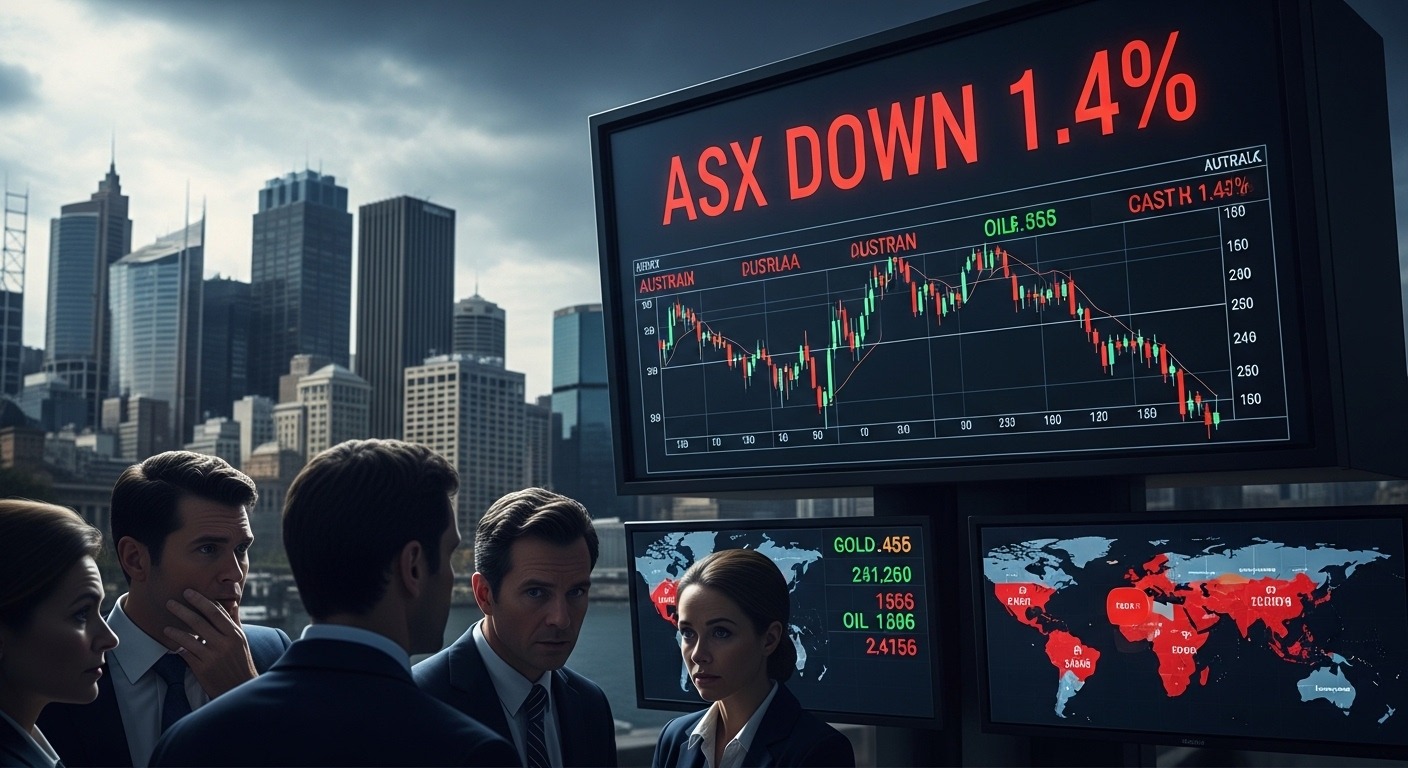
It was a difficult end to the week for Australian investors, with the ASX falling 1.4% on Friday — coincidentally landing on Friday the 13th. Despite the sharp daily drop, the broader picture remains more balanced, with the market still finishing 2.4% higher for the week following a series of strong profit announcements from Australia’s largest companies.
Historical data shows there is no meaningful connection between Friday the 13th and market performance. Trading days that fell on the date over the past four years reveal no consistent pattern of fear-driven sell-offs, dispelling any superstition-driven explanations for the latest decline.
Individual Stocks Hit Hard
While the broader weekly performance remained positive, Friday’s session was marked by significant losses across several major stocks.
One of the hardest hit was OTL, which plunged 23% after admitting its previous revenue forecast had been overstated. The company revealed it had mistakenly double-counted revenue from certain defence contracts, forcing it to revise its outlook downward. The error severely dented investor confidence.
Retailers Nick Scali and Kogan (referred to in the transcript as Cockle and Nick Scarley) were also heavily sold off after their latest profit results failed to meet market expectations. Despite reporting earnings, investors reacted negatively to weaker-than-anticipated performance metrics.
Meanwhile, banking giant Westpac reported a quarterly profit increase to $1.9 billion. However, its shares still declined as margins came under pressure due to intense competition in the home loan sector. Investors appear increasingly concerned that aggressive lending competition will continue to erode profitability across the banking industry.
Global Markets Add to the Pressure
Australian markets were not alone in their downturn. Overseas, major global markets also posted significant losses, triggered by another sell-off on Wall Street. U.S. banking, software, and technology stocks were particularly hard hit.
The pullback reflects growing concerns that many stocks, especially in the technology sector, may be overvalued after extended rallies. There is also a notable shift in investor sentiment regarding artificial intelligence. Earlier optimism centered around how AI could enhance business productivity and profitability. Now, investors are increasingly questioning how AI could disrupt industries, reduce competitive advantages, or threaten existing business models.
Commodities and Currency Weaken
Commodity markets also experienced sharp declines. Gold, silver, oil, and iron ore prices all fell significantly during the session, adding to the negative tone across financial markets.
At the same time, the Australian dollar slipped below 71 US cents. While the currency’s decline reflects broader global pressures, it remains relatively firm by historical standards.
A Broader Perspective
Despite Friday’s sell-off, the ASX’s weekly gain suggests underlying resilience. Strong corporate earnings earlier in the week helped cushion the broader impact of global volatility.
However, several risk factors remain in play:
-
Concerns about elevated stock valuations
-
Pressure on banking margins
-
Volatility in commodity prices
-
Uncertainty surrounding AI’s long-term economic impact
-
Continued weakness in global markets
Markets are increasingly sensitive to earnings disappointments and forward guidance revisions, as demonstrated by OTL’s sharp decline. Investors appear less willing to tolerate errors or underperformance in an environment where valuations remain stretched.
Conclusion
Friday’s market decline reflects a combination of domestic disappointments and global uncertainty rather than superstition. While the ASX endured a rough session, the weekly gain highlights that investor confidence has not completely eroded.
Going forward, attention will likely remain focused on corporate earnings quality, global tech sector valuations, commodity price movements, and broader economic indicators. Volatility may persist, but as history shows, even a Friday the 13th does not dictate long-term market performance.