
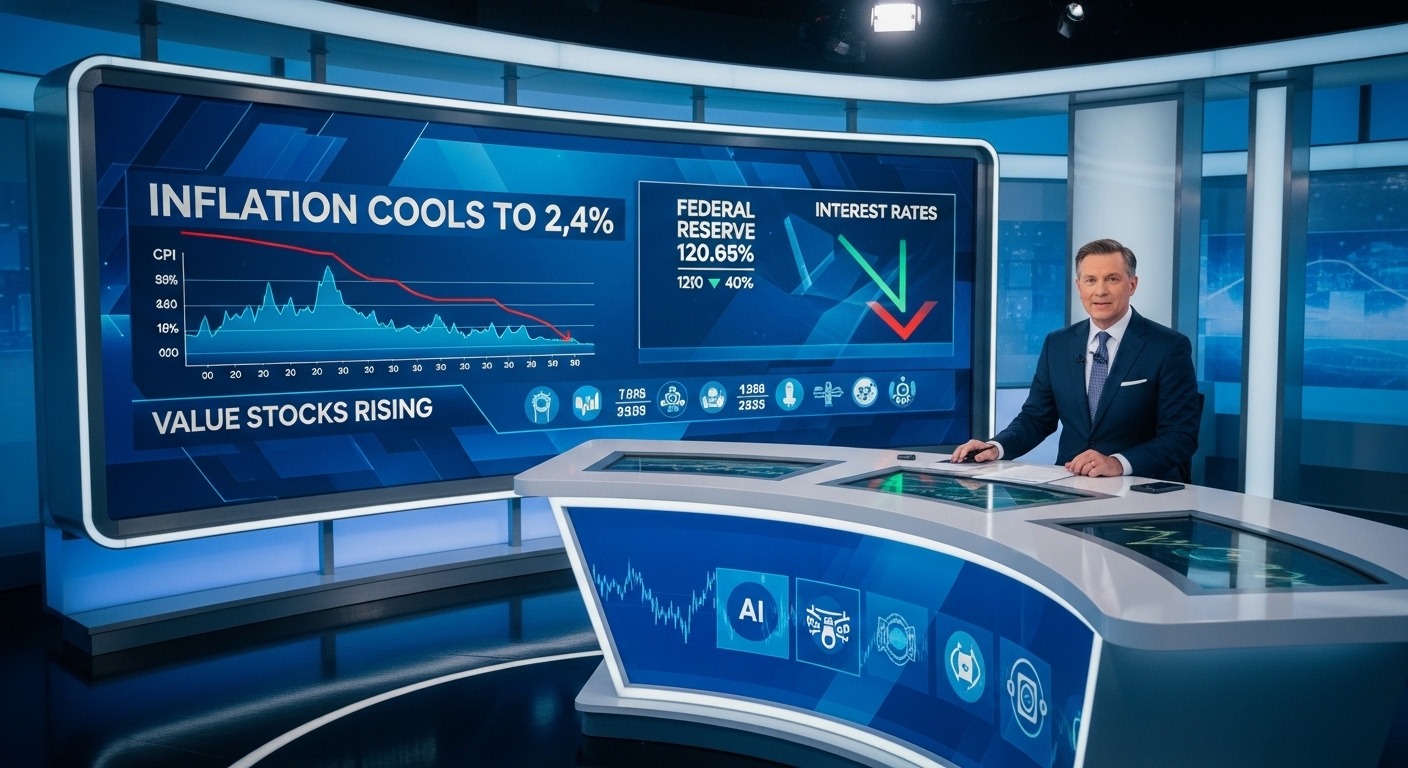
Inflation in the United States continues to ease, with the latest Consumer Price Index (CPI) showing prices rising 2.4% year-over-year, lower than many economists expected. Declines in gas prices and used vehicle costs were the main drivers behind the softer inflation reading, offering relief to both consumers and financial markets.
Speaking on the outlook, Jeremy Siegel, Professor of Finance and Chief Economist at WisdomTree, described the recent economic data as “very good news.” He pointed out that despite earlier concerns around rising jobless claims and layoffs, January labor market data remained solid, reinforcing the view that the economy is holding up better than feared.
What This Means for the Federal Reserve
The cooler inflation print strengthens expectations that the Federal Reserve could move closer to interest rate cuts later this year. While the Fed is not expected to act before its June meeting, Siegel believes monetary policy still has room to ease.
According to him, a federal funds rate in the low 3% range would be more appropriate given current economic conditions and long-term Treasury yields. However, he cautioned that upcoming data releases will play a crucial role in determining the timing and pace of any rate cuts.
Stock Market Rotation Gains Momentum
Markets initially rallied on the CPI news, but a broader shift appears to be underway beneath the surface. Siegel highlighted what he called the “revenge of value stocks,” suggesting the long-discussed rotation away from mega-cap technology stocks may finally be real.
While artificial intelligence remains a powerful force, rapid technological change has made it difficult to identify long-term winners. This uncertainty has opened the door for value and smaller-cap stocks, many of which are just beginning to adopt AI to improve productivity and profit margins.
AI’s Disruption and a Growing Concern
Despite optimism around productivity gains, Siegel warned that AI’s disruptive impact is spreading across multiple sectors, sometimes in exaggerated ways. Commercial real estate, transportation, and other industries have faced sharp market reactions tied to AI-related fears.
Above all, he emphasized cybersecurity as the biggest long-term risk. As financial systems become increasingly digital and AI-driven, protecting critical infrastructure is becoming as important as traditional national security.
With inflation easing, wages still outpacing price growth, and the labor market finding its footing, the economic backdrop appears more stable than earlier in the year. Investors now face a key question: whether cooling inflation will give the Fed enough confidence to cut rates—and whether the market’s leadership is truly shifting away from big tech toward value-driven opportunities.
For now, the data suggests cautious optimism, with June shaping up to be a pivotal month for both policymakers and investors.