
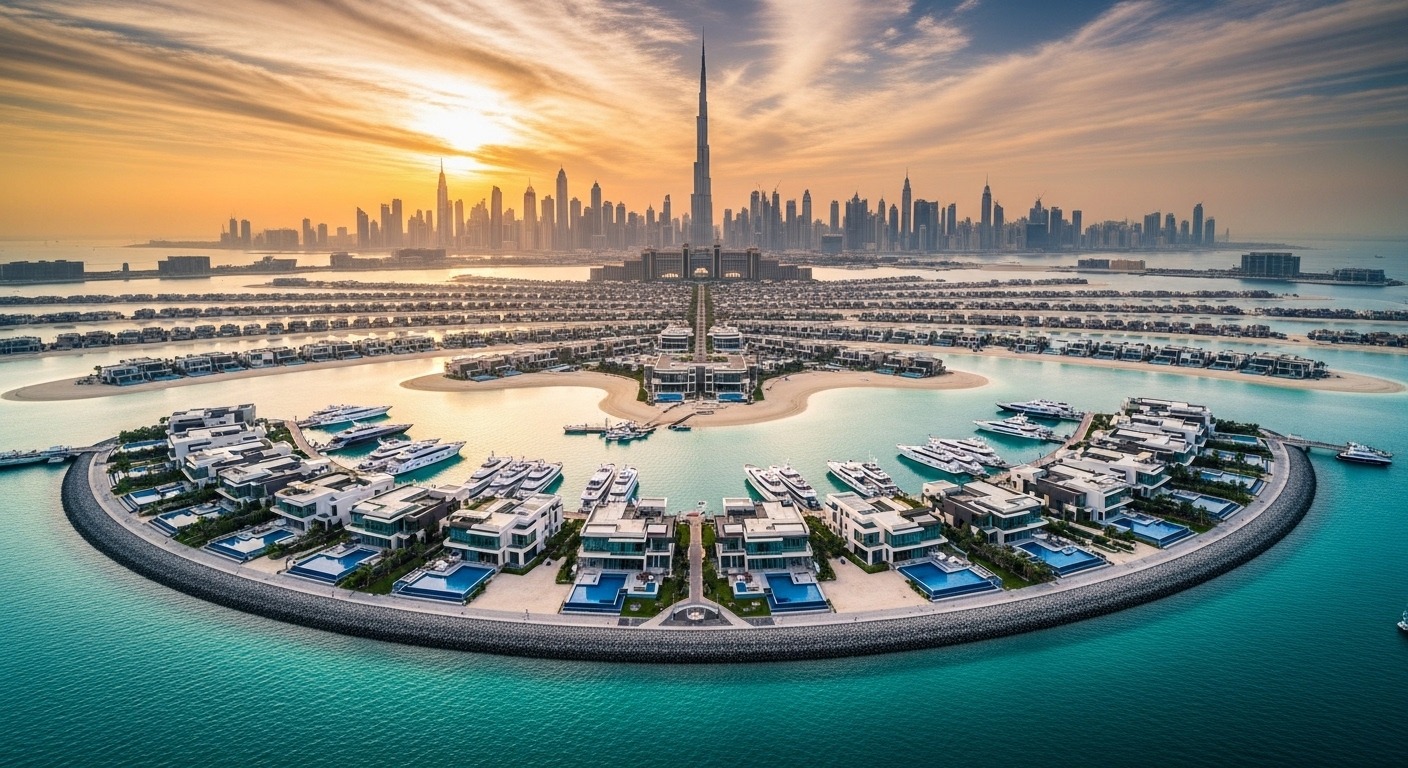
Dubai is once again capturing global attention—and this time, the comeback is rising from the sea. At the heart of this revival is Palm Jebel Ali, the world’s largest palm-shaped artificial island, a megaproject that symbolizes Dubai’s renewed confidence and ambition.
Palm Jebel Ali is not just big—it is transformative. When completed, it will feature over 2,000 luxury villas, 80 hotels, a sea village, a yacht club, and a mega mosque. Most remarkably, it will more than double Dubai’s existing coastline, creating vast new prime waterfront real estate near the city.
Déjà Vu: Dubai Has Been Here Before
This is not Dubai’s first attempt at reshaping the sea. Back in 2007, the city stunned the world with Palm Jumeirah, an engineering marvel that quickly became a global icon. But soon after, the 2008 global financial crisis hit, freezing construction across the city almost overnight.
Property prices collapsed, projects were cancelled, and Dubai World requested delays on billions of dollars in debt. Confidence in Dubai evaporated, and the city’s glittering rise appeared to be over.
From Dusty Outpost to Global Luxury Hub
Dubai’s story, however, began much earlier. In the 1990s, it was still a little-known desert city until the sail-shaped Burj Al Arab rebranded Dubai as the epicenter of luxury. That success triggered a construction boom focused on high-end real estate—real estate that demanded one thing above all else: premium coastline.
With limited natural shoreline, Dubai chose to manufacture its own.
Learning From the Crisis
The collapse of 2008 forced Dubai to grow up. Financial support from Abu Dhabi stabilized the economy, restructured debt, and reshaped governance across the UAE. The most visible symbol of this shift was the renaming of Burj Dubai to Burj Khalifa, acknowledging Abu Dhabi’s backing.
This moment changed everything. Dubai moved from reckless simultaneous megaprojects to phased development, tighter regulations, and more sustainable planning—without abandoning its bold vision.
Palm Jebel Ali reflects these lessons. Advanced land-reclamation techniques, including vibro-compaction, densify sand to prevent liquefaction. A massive crescent-shaped breakwater shields the island from storms and tides. GPS-guided dredging has allowed engineers to “3D print” the island with extraordinary precision.
The result is not just reclaimed land, but a stable foundation designed to support a city—roads, utilities, villas, and hotels—on top of the sea.
Dubai 2.0: Bigger, Smarter, Stronger
Today’s Dubai is no longer just recovering—it is thriving. Global wealth is flowing in again, attracted by tax advantages, fast visas, and political neutrality. This time, growth is supported by real population increases, not just speculative investment.
Palm Jebel Ali represents Dubai 2.0: still ambitious, still record-breaking, but smarter, more resilient, and engineered for the long term.
Dubai is back—not because it forgot the past, but because it learned from it and rebuilt on stronger ground, both literally and financially.