
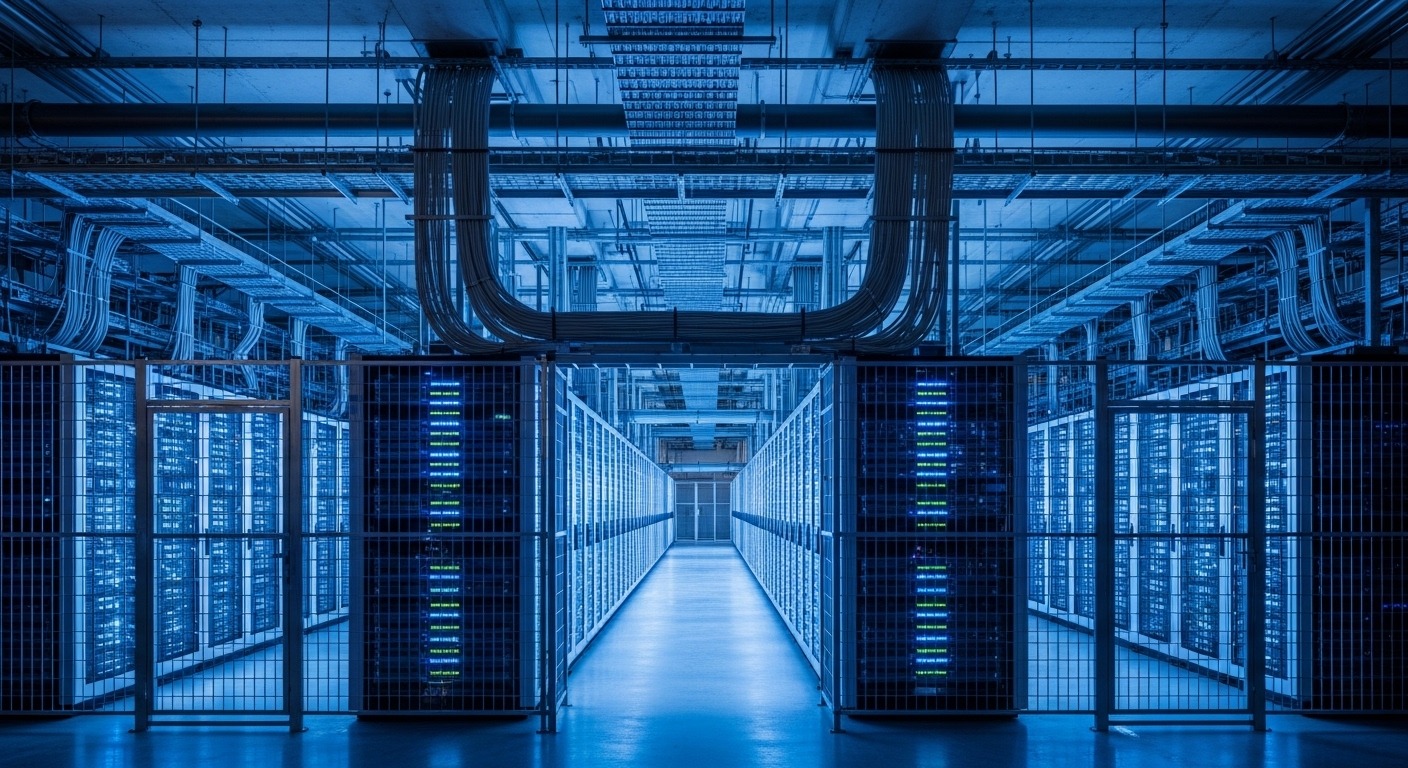
Most of us think of the internet as something abstract—an invisible cloud that magically delivers videos, messages, and AI answers in seconds. But the truth is far more physical. The internet lives in real buildings, filled with cables, servers, people, and power systems working nonstop. One of the most important places where this happens is the Dallas Infomart, a massive data center complex operated by Equinix .
This building isn’t just another server warehouse. It is one of the most connected structures on Earth. If you’re watching videos, asking an AI a question, or using cloud services, there’s a good chance your data packets have passed through this very location.
A Building That Bypasses the Internet
What makes this place special is that the world’s biggest companies don’t use the internet here the same way we do. Instead of sending data across the “big bad internet,” they connect directly to each other. Think of it like neighbors sharing a private road instead of driving on crowded highways.
The Dallas Infomart spans about 1.5 million square feet and contains thousands of fiber-optic cables. Over 140 networks peer with each other here at terabit speeds. This direct connectivity reduces latency, improves reliability, and keeps critical services fast and stable.
Security Like a Fortress
Getting inside a data center like this is no joke. Security is layered and intense. Before anyone reaches the servers, they must pass through multiple checkpoints—ID verification, access badges, fingerprint scanners, and something called a “man trap.”
A man trap is a small room with two doors. One door must close before the other opens, ensuring no one sneaks in behind an authorized person. Once inside, visitors are escorted at all times. Even going for coffee requires permission. This level of security exists because these buildings protect billions of dollars’ worth of equipment—and a huge chunk of the global internet.
Inside the Server Halls
When you finally enter the data center floor, the experience is surreal. Endless rows of server racks hum with activity. These racks belong to major companies—cloud providers, telecoms, AI firms—but you won’t see their names anywhere. That’s intentional. Hiding labels protects trade secrets and prevents competitors from learning too much just by looking.
Some companies store their equipment in locked cages, accessible only by their own fingerprint and badge. Others go even further, enclosing cages from floor to ceiling. The message is clear: only authorized hands touch this hardware.
A natural question arises: how do you power and cool something this massive, especially with modern AI workloads that consume enormous energy?
Unlike traditional data centers with raised floors, this facility uses solid slab floors that can support heavier racks. Cool air is pushed from the sides, while hot air rises and is vented upwards. On the roof, massive cooling systems work like a giant liquid-cooled gaming PC, circulating cooled water back down into the building.
Power reliability is just as critical. In case of a grid failure, the facility can run entirely on diesel generators for up to 36 hours at full load. For something as essential as the internet, downtime is not an option.
Skipping the Public Internet
One of the most powerful features of this location is how it allows companies to bypass the public internet altogether. Instead of routing traffic through unpredictable paths, businesses can connect directly to cloud providers like AWS, Azure, or Google Cloud using private links.
Even better, Equinix offers a virtual networking system called Fabric. With a single physical connection, companies can create multiple virtual connections to different providers in seconds. No waiting months for new cables—just a few clicks in a control panel. This software-defined approach makes global connectivity faster, cheaper, and more flexible.
The Human Side of the Internet
Despite all the technology, what truly keeps this data center running is people. Many employees here have worked for over 20 years. Their experience, discipline, and passion ensure that everything—from security to cooling—works flawlessly.
It’s easy to forget that behind every AI response, video stream, or cloud app, there are real humans maintaining the systems that make it all possible.
Final Thoughts
The internet isn’t magic. It’s steel, fiber