
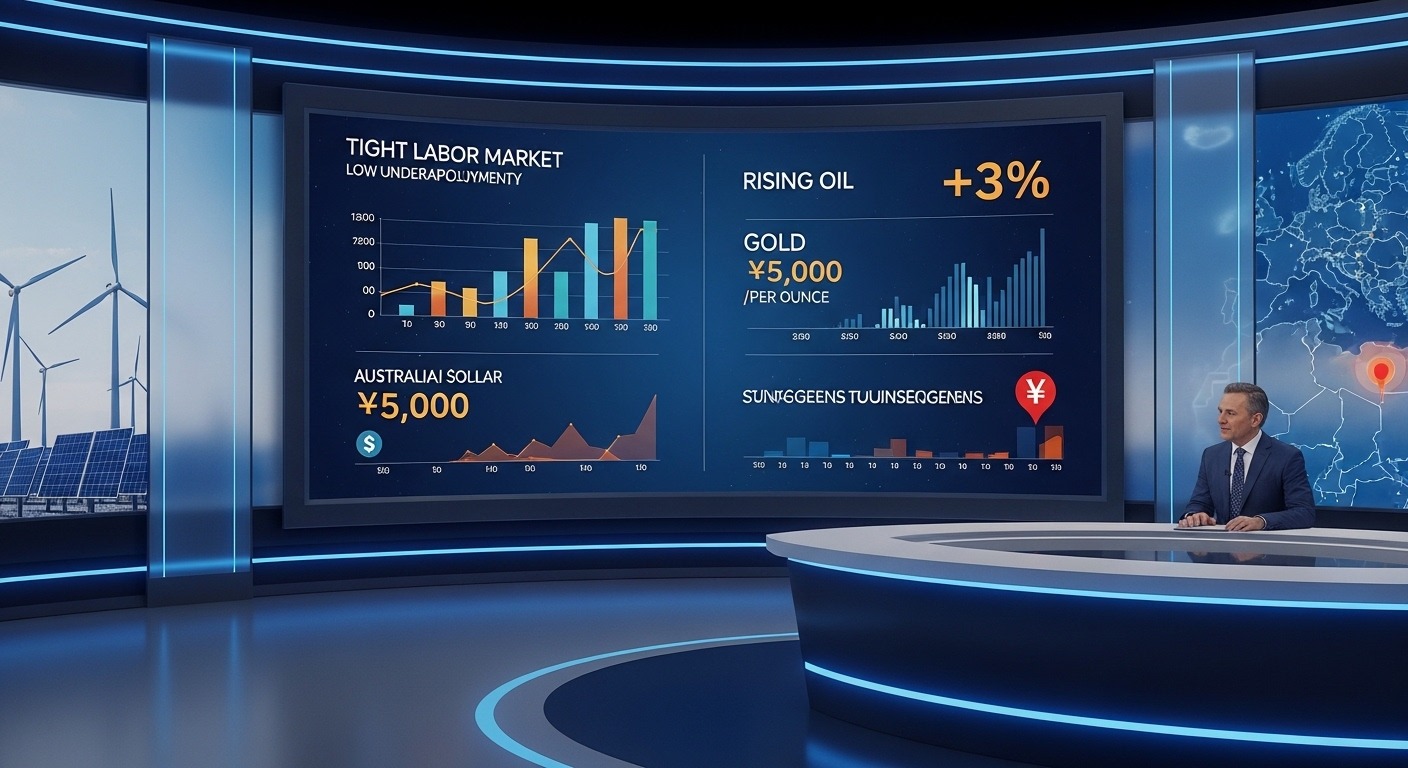
Australia’s labor market continues to show remarkable resilience, with underutilization data revealing just how tight employment conditions have become. While total employment naturally grows alongside population increases, what stands out is the intensity of workforce participation and demand for labor.
Underutilization — which combines unemployment with underemployment (people who want more hours but cannot get them) — provides a clearer picture of workforce pressure. Apart from the temporary disruption during COVID, the trend shows a steadily tightening labor market. There are fewer available workers, and the number of people seeking additional hours has declined significantly. In short, businesses are competing for labor in a constrained environment.
Earnings Season Brings Mixed Results
Meanwhile, earnings season continues to produce sharp market reactions. Health insurer Medibank, jewellery retailer Lovisa, and digital payments firm Zip Co all reported results that fell short of market expectations. Investors responded swiftly, sending shares lower as disappointment set in.
This reaction highlights the market’s elevated expectations. Even in a relatively stable economic environment, companies that fail to meet forecasts are being punished sharply.
Global Markets Steady Despite Geopolitical Risks
Overseas, U.S. markets finished higher, with futures indicating no major shift in direction in the near term. This stability comes despite growing concerns about potential military conflict in the Middle East. Investors appear cautious but not yet panicked, suggesting that geopolitical risks are being monitored rather than aggressively priced in.
However, one market that did react noticeably was oil. Crude prices surged roughly 3% amid fears that escalating tensions could disrupt global supply chains. Energy markets often respond quickly to geopolitical instability, and this latest movement reflects those concerns.
Gold remains elevated, hovering near the US $5,000 per ounce mark. The precious metal continues to act as a hedge against uncertainty, benefiting from both geopolitical risk and broader economic caution.
Currency Strength and Renewable Energy Investment
The Australian dollar continues to build on its recent strength. Notably, it is trading near record highs against the Japanese yen, signaling solid relative economic performance and investor confidence in Australia’s outlook.
In the final quarter of 2025, approximately $3.5 billion in renewable energy investments were finalized. These included four wind farms and one solar project, reflecting continued momentum in Australia’s clean energy transition.
The Bigger Picture
The economic landscape presents a mix of tight labor conditions, cautious financial markets, geopolitical uncertainty, and strong investment flows into renewables. While challenges persist — particularly global tensions and earnings pressure — significant capital continues to move into long-term growth sectors.
Australia’s economy appears to be balancing resilience with risk, navigating global volatility while maintaining strong domestic fundamentals.